A three-figure budget buys a natural, GIA-graded champagne diamond, and not a marginal one. On the 2026-10-03 data snapshot the 2,513 unique stones indexed here were listed from $92 to $594,710, with a median asking price of $1,433 — so roughly half the index sat at or below that figure. At $400 or $900 the question is not whether anything is available. It is which compromises you are making, and in what order.
The answer that matters most comes first, because it runs against the way these stones are usually sold: a small champagne diamond is inexpensive for its size, not for its color. The brown notation on a GIA report does take money off a price, but it does that work at larger sizes and close to none below a carat. A $500 champagne diamond is a $500 diamond mainly because it is small.
champ. is an index rather than a store. It reads the GIA report behind each listing, collapses the same physical stone into one card when several retailers hold it, and links out to whichever retailer you choose to buy from. Every figure below is a retailer asking price on the snapshot date given, not a record of a completed sale.
What a three-figure budget reaches
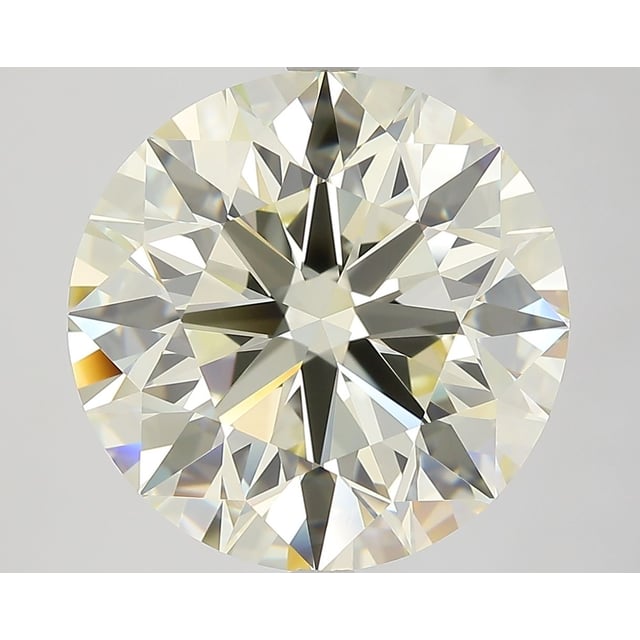
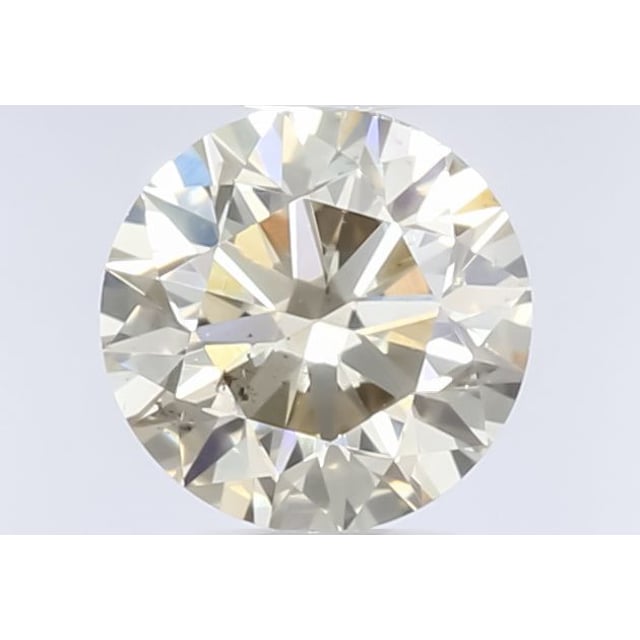
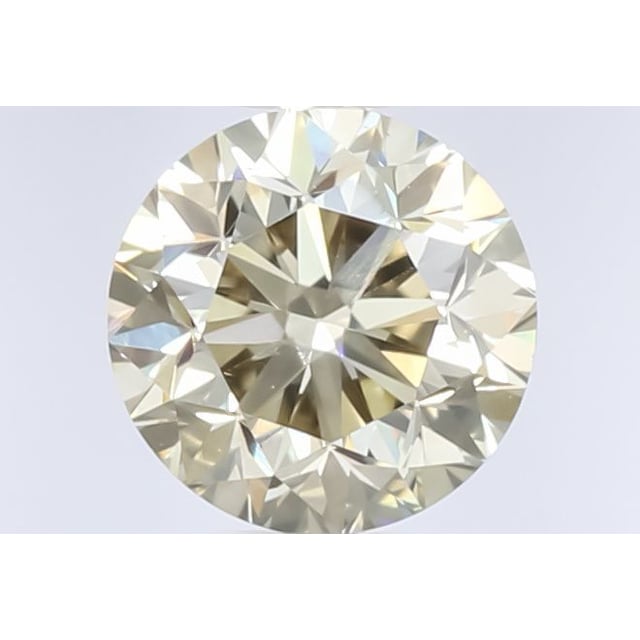
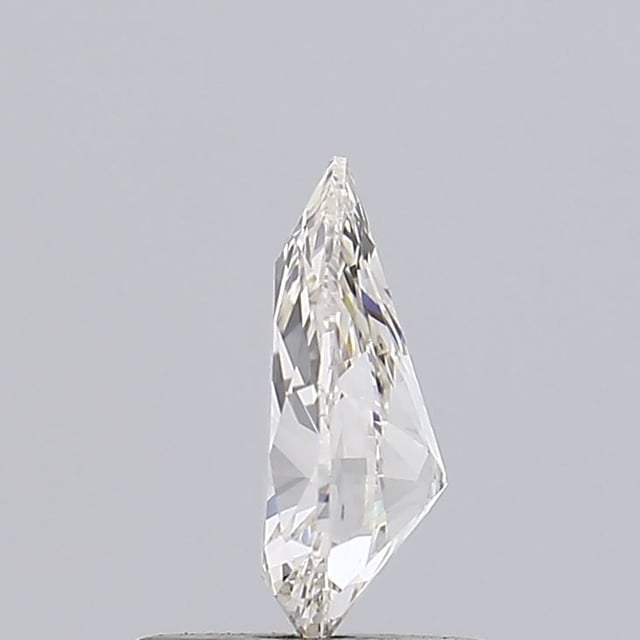
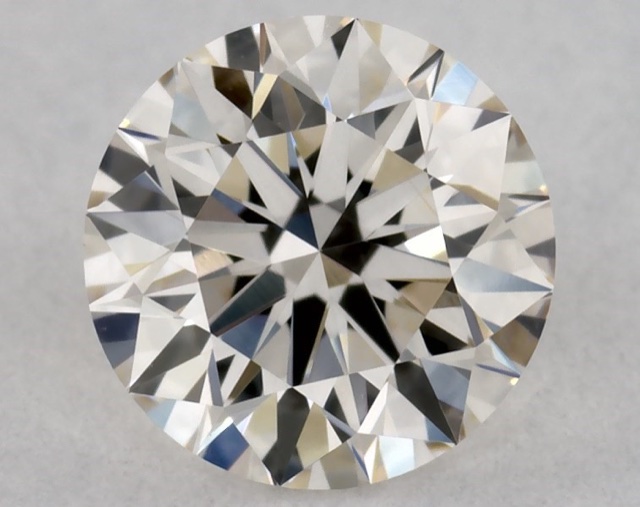
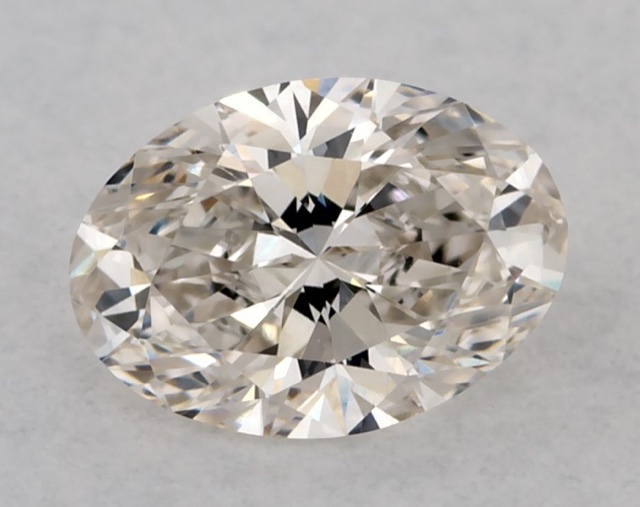
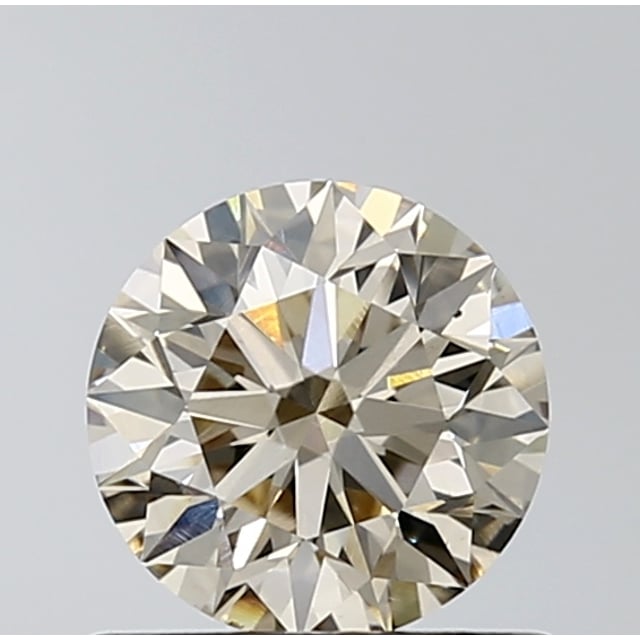
The stones pictured are live listings at the small end of the index with their asking prices attached — a more direct answer than any average.
Most of what a three-figure sum reaches is under one carat, and the under 1 carat listings are where to start; one carat and over is the band where the index median sits and where most engagement-ring shopping lands. Round is by far the deepest pool at any budget — 1,249 of the 2,513 stones on that snapshot — which matters more when money is tight than when it is not, because a deep pool is the only reason there is anything to compare.
Depth of tint narrows the choice at the bottom of the market more than most buyers expect. Of the stones live on that snapshot, 1,975 are Faint Brown, the lightest of the three D-to-Z notations, against 124 Very Light Brown and 17 Light Brown; 345 are Fancy Brown and 52 Fancy Light Brown on the colored-diamond scale. If you want a tint anyone will actually notice, you are shopping a much smaller set of stones than the headline count suggests — which is a supply constraint, not a price one.
Why the tint is not what makes a small stone inexpensive
Two different savings figures get quoted on this site, and only one of them isolates the brown notation.
The notation discount holds the color letter and the carat band fixed and compares brown-notation stones against stones of the same letter and weight whose GIA reports carry no brown wording. On the 2 September 2026 study that produced eleven matched cells with a median of 20%. Read down the smallest band, though, and the figure stops behaving: at 0.50 to 0.99 ct it was 19% at K, 1% dearer at L and 14% dearer at M. Every cell at 1.50 ct and over, by contrast, fell between 26% and 31%. Below half a carat there was no matched cell to report at all.
So the tint earns real money at sizes a three-figure budget does not reach, and close to nothing at the sizes it does. The cell-by-cell figures are in champagne diamond prices, and champagne diamond carat weight follows the same pattern up through the bands.
There is one well-established saving that does work at any budget, and GIA names the mechanism: certain weights are treated as magic sizes for their desirability — 1.00 carat, 1.50 carats, 2.00 carats — and although it is difficult to visually distinguish a 0.99 carat diamond from a 1.00 carat, the price difference can be significant. Buying at 0.90 ct instead of 1.00 ct steps below one of those thresholds. GIA's own framing of the unit is the check that keeps it honest: carat measures weight, not size, so compare the millimeter measurements between two candidates of the same shape rather than the carat figures alone.
The saving that is available at any budget
The champagne discount is the struck-through figure on every card, and it measures something wider: each stone is priced against a similar near-colorless G–H natural GIA diamond of the same shape, the same clarity grade with no widening, the same cut tier on GIA's Excellent, Very Good and Good scale, and a carat window drawn so it never crosses a trade threshold where price per carat steps up. The comparison figure is the lower quartile of those matched listings rather than the median, on the reasoning that a buyer compares against the similar stone they could actually buy. On the 2026-10-03 snapshot, 2,251 of the 2,513 stones were listed below that benchmark, at a median discount of 47%.
That number describes the size of a gap rather than a guaranteed saving: both sides are asking prices, and a warm stone is not an exact substitute for a near-colorless one. The method is on the prices page and in how our near-colorless price benchmark works.
The comparison that is fully like-for-like is the narrower one, and at a tight budget it is also the most useful. Because listings are matched by GIA report number, 1,135 of those stones were listed at more than one of the nine retailers indexed at the same time — one physical diamond, one report, two or more asking prices side by side. Nothing is uncontrolled in that comparison, because there is only one stone in it. Why the same champagne diamond costs different amounts works through what opens those spreads.
What our index shows, on the 2026-10-03 data snapshot (read 4 October 2026): 2,513 unique verified natural brown stones across 4,765 retailer listings at nine retailers, 1,135 of them listed at more than one retailer, a median asking price of $1,433 in a range from $92 to $594,710, and 2,251 stones listed below their matched near-colorless G–H benchmark at a median discount of 47%. By tint, 1,975 Faint Brown, 124 Very Light Brown, 17 Light Brown, 345 Fancy Brown and 52 Fancy Light Brown; by shape, 1,249 round. Counts are deduplicated by GIA report number; the listing figure counts each store row separately. All prices are retailer asking prices, not records of completed sales.
What to spend less on, and what not to
A tight budget is a sequence of trades. Some are cheap in appearance terms and some are expensive.
Reasonable places to give ground. Clarity is the first, within limits: GIA's own summary is that "Many blemishes and inclusions are not visible to the naked eye", and that a clarity grade weighs the number, size, relief, nature and location of those characteristics — so two stones at one grade are not interchangeable, and the grade is where looking starts rather than a verdict. A shy weight below a magic size is the second. A deeper notation is the third, if the warmth is what you came for. Fluorescence is the fourth; a missing fluorescence line is a gap in the listing rather than a grade.
Places not to. A grading report, first: without a GIA report number there is nothing to check a color claim against and nothing to match across retailers, and how we verify every stone sets out the two admission rules and how to read a report yourself. Imagery second — a photograph cannot establish a grade, but full-screen video is how you judge cut, outline and whether an inclusion shows. Proportions third, especially outside a round: GIA states that while it does not grade the overall proportions of fancy cut diamonds, a GIA Diamond Grading Report does contain an assessment of the diamond's Finish, which includes polish and symmetry, and it treats Excellent or Very Good on those as an indication of cut quality. On a round brilliant there is a GIA cut grade on the report to read instead.
Retailer terms are the last item and they are the retailer's to state: shipping, duties, returns and warranty vary by stone and destination, so read them on the page you are buying from rather than anywhere else.
From loose stone to a finished ring
Everything in the figure above is a loose diamond, so a three-figure stone is not a three-figure ring. The setting is a separate purchase, priced by whoever builds it, and comparing a loose stone against a finished piece is the commonest way to misread a budget. Natural champagne diamond rings gathers finished pieces with the setting included, and loose stone or finished ring sets out what each route lets you verify before you pay.
One last point of proportion: at this end of the market the stone is small enough that how it is set, and what sits beside it, moves its appearance further than a step of color grade does — and what faint brown means covers how little of the lightest notation reads face-up to begin with.