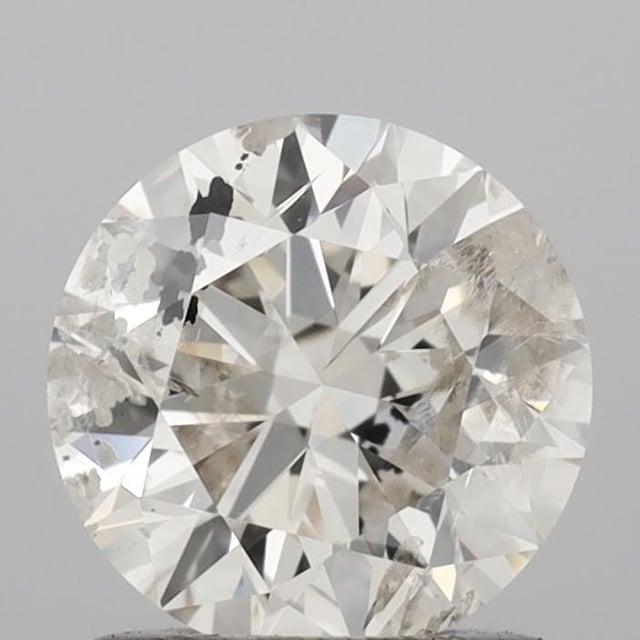
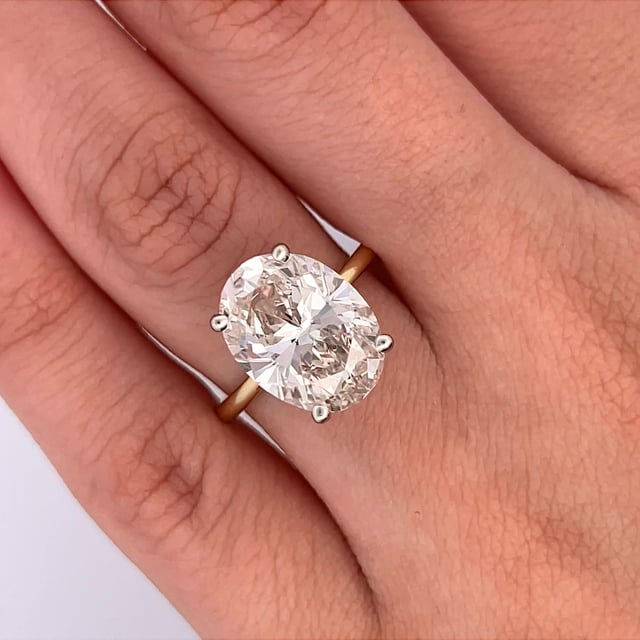
A champagne diamond does not have a single price. The same physical stone — one GIA report number, one set of measurements, one grade — is often listed by several online retailers at the same time, and each of them sets its own asking price on it. So a shopper who finds a stone at one store and a lower number for what looks like the same diamond somewhere else is frequently not comparing two similar stones at all. On this index it is often the identical stone, listed twice. Of the 2,822 verified natural brown diamonds indexed here, 1,194 are listed at more than one retailer at once.
That overlap is the reason this site exists. It reads the GIA report for each stone and keys the record to the report number, so where the same number turns up in more than one retailer's inventory the listings collapse into a single entry, and the per-stone page shows every retailer holding it, each with its own price. The comparison is between one physical diamond and itself, not between two stones that merely share a grade.
How one diamond ends up in several stores
Most online diamond retailers do not own the loose stones on their sites. The inventory is largely virtual: the same physical diamonds, held by cutting houses and wholesalers, are offered through shared feeds that several retailers list from at once. One of the retailers indexed here, for instance, lists a Nivoda wholesale feed; others carry stones whose GIA reports also appear elsewhere in the market, which is the fingerprint of the same underlying inventory reaching more than one storefront.
Because each listing is keyed to a GIA report number, the same stone is checkable across those storefronts. Two different diamonds can share a shape, carat, colour and clarity and still be different stones; only the report number is unique to one physical diamond. Matching on that number, rather than on a photograph or the four Cs, is what lets the 1,194 multi-listed stones here be recognised as single stones rather than counted several times. How each stone's colour is read off the report, and how you can resolve any report number yourself, is set out in how we verify every stone.
Why the asking prices differ
Once the same stone sits in more than one catalogue, the numbers diverge for reasons that have nothing to do with the diamond.
Margin. Each retailer prices the shared stone independently, adding its own markup over what the wholesaler is asking. The index cannot see those costs, but it can see the result: the same report number at more than one price.
Promotions and financing. A sale, a first-order discount or an interest-free payment plan changes the number a shopper sees without changing the stone.
Shipping, duty and handling. These are added by the retailer and vary by store and by where the stone is shipping from and to. A listed price and a delivered cost are not the same figure.
Timing. Retailers refresh prices on their own schedules, so the same stone can show a stale number at one store and a current one at another for a while.
None of these are completed-sale figures. Every price here is an asking price on a live listing — what a retailer is asking today — not a record of what anyone paid.
What our index shows, 2026-09-07
Of the 2,822 verified natural brown diamonds live on the site, 1,194 are listed at more than one retailer at once, matched by GIA report number. That overlap is what makes a same-stone price comparison possible: not two similar diamonds set side by side, but one physical stone with more than one asking price. The listing counts by retailer are in where to buy a champagne diamond.
How to read the comparison
On a per-stone page the useful move is to start from the report number and work outward. The number resolves in GIA's own report lookup, and every retailer shown is offering that one stone, so the prices are directly comparable in a way that prices for two different diamonds never are. That is the narrow thing a same-stone comparison does well: it removes the diamond as a variable, leaving only what each store is asking for it.
It does not, on its own, tell you which listing to buy. The listed price is not the delivered cost, and the terms behind it — shipping, import handling, return window, resizing, warranty and any current promotion — are set by each retailer and change without notice. A stone that is a little dearer at a store with a month-long return window and free shipping can be the cheaper choice once everything is counted. The prices are comparable; the offers around them still have to be read one by one, on the retailer's own site.
This is a different comparison from the tint discount
Two other price figures appear on this site, and neither is the one above. The notation discount sets a brown-notation stone against a stone of the same colour letter and carat band with no brown notation, and it is a market-wide observation across many stones, covered in the champagne diamond prices guide. The champagne discount, struck through on every card, sets a stone against a similar near-colourless G–H diamond matched on shape, clarity, cut and carat — how that benchmark is built is set out separately. Both compare a champagne diamond with a different diamond: an untinted one.
The same-stone comparison is the opposite. It holds the diamond fixed and lets only the retailer vary, so the gap it shows is not the price of the tint or of any grading difference — it is the price of where you buy. For the tint's own value, band by band, the prices guide is the place to look; to see how many stones are multi-listed within a single outline, the round champagne diamonds collection is the largest pool on the index. What each price difference measures depends entirely on whether the two numbers belong to one stone or two.







