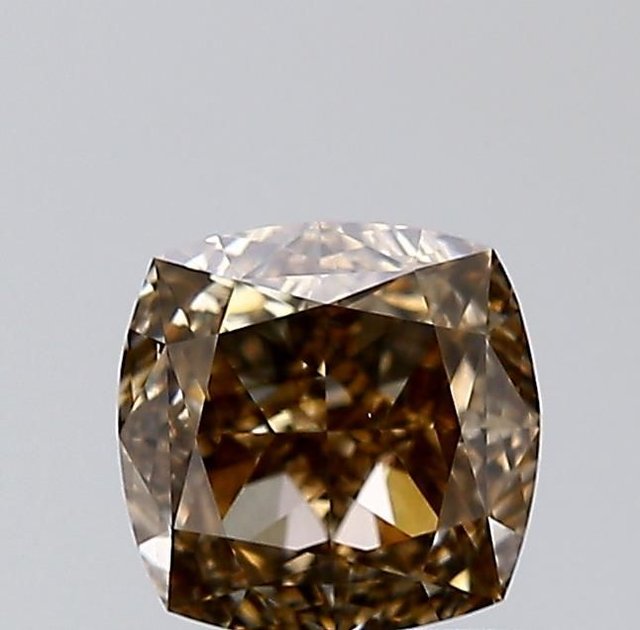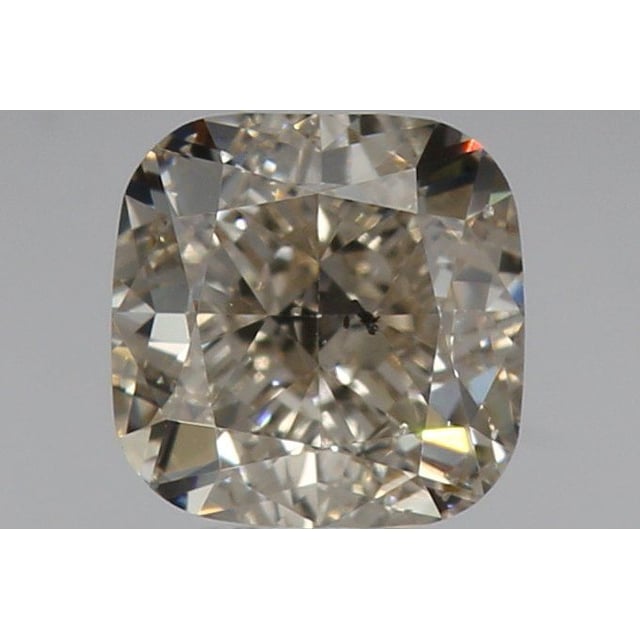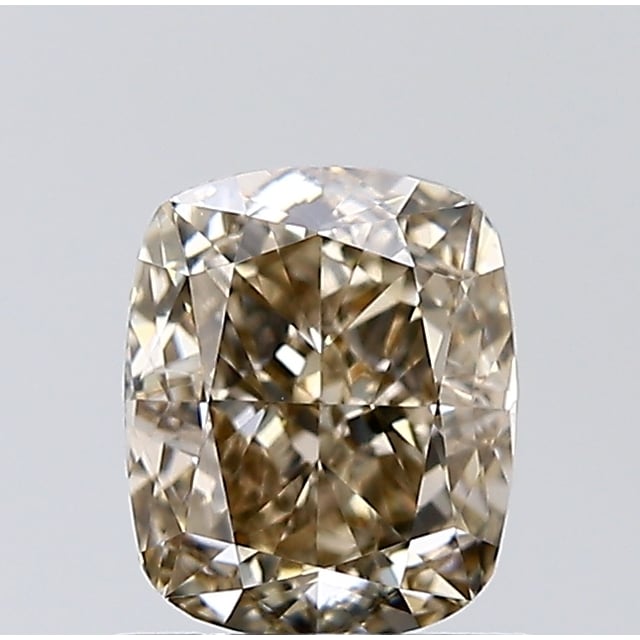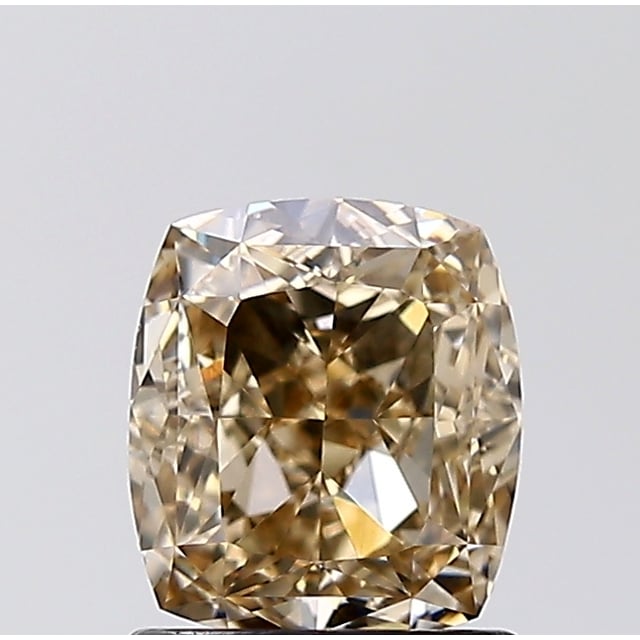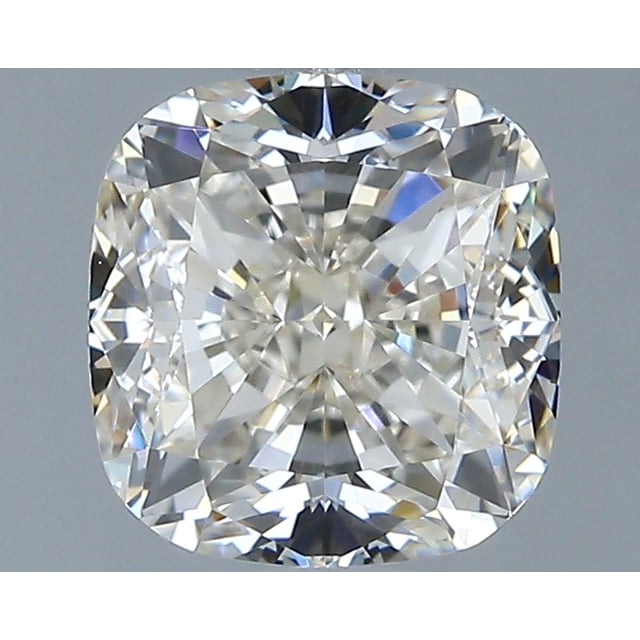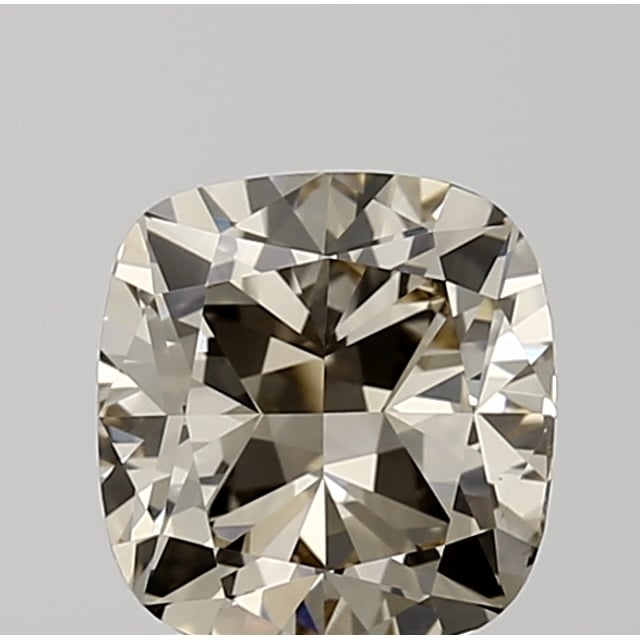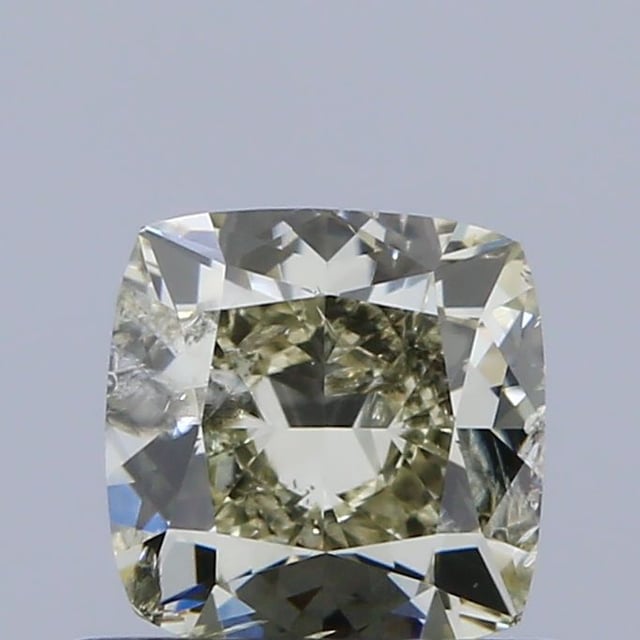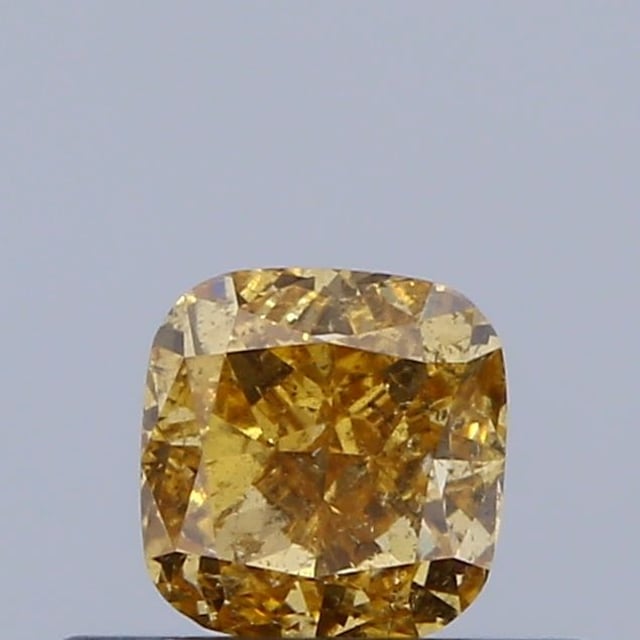
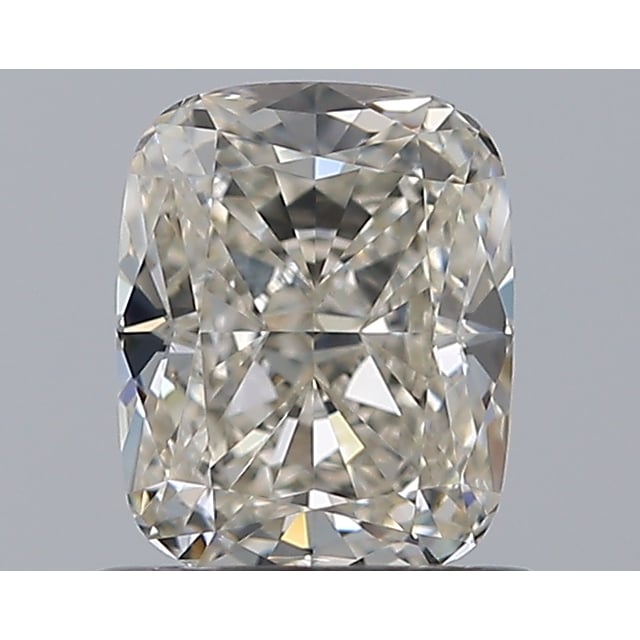
A cushion cut is a forgiving home for a champagne tint, and the single thing that decides how much of that warmth you actually see is the faceting style inside the outline. Two stones can both be sold as a cushion cut and behave in opposite ways: a chunky, open-faceted cushion returns light in broad flashes that let body color read across the table, while a crushed-ice cushion breaks light into small scattered sparkles that hide a tint the way a round brilliant does. Deciding which of those you want is the first move, and you can browse every cushion cut champagne diamond in one filtered list while you do.
The cushion is the fourth-largest shape pool on the site, behind the round, the pear and the oval, and it is the most classically warm outline on the list. The modern cushion descends from the old mine cut, the pillow-shaped antique that the earliest brown and yellow diamonds were cut into by candlelight. A champagne tint in a cushion reads as vintage rather than modern, and that is a large part of why the shape suits it. Of the 2,822 stones indexed here, the cushions carry both a faint brown notation and, on the separate fancy scale, fancy brown grades, so the shape is available across the range of warmth.
Crushed ice or chunky: the choice that shows the tint
The word "cushion" describes only the outline. Inside it, cutters use two broad faceting families, and they treat a warm tint in opposite ways.
A crushed-ice cushion has many small facets under the table, so light comes back as a fine, glittering scatter that some people compare to shaved ice. That scintillation is very good at masking body color, which makes a crushed-ice cushion the cushion equivalent of a round brilliant: it faces up sparkly and plays the tint down. The trade-off is that the sparkle can look busy or slightly soft rather than crisp, and it hides inclusions as effectively as it hides color.
A chunky, or antique-style, cushion has fewer and larger facets. Light travels further and returns in broad flashes rather than a fine scatter, so warmth in the body of the stone reads as an even glow that holds as the diamond moves. For a champagne buyer who wants the tint to be visible and deliberate, and who wants the vintage look the shape carries, this is the version to seek. It is the cushion analogue of the emerald cut's step facets, though gentler, because the cushion is still a brilliant style rather than a step cut. How the other outlines handle the same tint is set out in best shapes for champagne diamonds, and what "faint brown" means covers how the notation behaves face-up.
Neither style is named on the GIA report, and retailers do not label them consistently, so this is a judgment you make from the video and the magnified images rather than from the grading document. Watch the stone rotate: a fine, uniform sparkle is crushed ice; a pattern of larger, distinct flashes is the chunkier cut.
Ratio, outline and the culet
Cushions come square and elongated. A square cushion at a length-to-width ratio of about 1.00 to 1.05 is the classic pillow, and it spreads a champagne tint evenly across the stone. An elongated cushion at roughly 1.10 to 1.20 stretches toward an oval, lengthens the finger and concentrates a little more warmth at the ends. Because the ratio changes the face-up size as much as the look, read the millimeter measurements on each listing rather than trusting the carat figure to describe the size you will see.
Antique and old-mine-style cushions sometimes have an open culet, a small facet at the base that can look like a tiny window or a faint circle through the table. It is a feature of the older cutting style, not damage, but it changes the way the center of the stone looks, so check for it in the images if you want a fully closed appearance. High crowns and small tables are part of the same antique character and are worth looking for if the vintage look is what draws you to the shape.
Clarity and reading the report
A cushion is a brilliant-style cut, so it is more forgiving of inclusions than a step cut such as an emerald or Asscher, where long open facets frame every feather. The scatter of a cushion breaks up small inclusions, and a crushed-ice cushion does this more thoroughly than a chunky one. That is genuinely useful, but it works exactly like the effect on color: the same sparkle that hides an inclusion also hides warmth, so the two choices travel together.
The safe approach is the same one that applies to every stone on the site: judge the individual diamond, not the grade in the abstract. Read the clarity plot on the GIA report against the retailer's own magnified images, and note where an inclusion sits, since one under a corner behaves very differently from one beneath the center of the table. How we verify every stone explains the two rules that admit a diamond to the index and how to check any one of them against its report yourself.
What a cushion champagne diamond costs
Price on the index is driven first by carat weight and then by the tint, in that order, and cushions span the full range from small accent stones to large center stones. Because this guide has no cushion-only median to quote from today's snapshot, the honest way to price the shape is to browse it directly: the cushion collection lists the current stones with their asking prices, and the champagne diamond price guide sets out how price moves through the carat bands across all shapes.
Two figures frame the saving. Against a similar near-colorless G-H diamond, matched on shape, clarity, cut and carat and measured at the lower quartile of current listings, champagne stones with a saving run a median 44 percent below the white benchmark. That is the struck-through price on every card. It is an asking-price comparison rather than a record of completed sales, and a warm cushion and a near-colorless one are never a perfect match, so it describes the size of the gap rather than a guaranteed discount.
The second figure is about the same stone rather than a comparable one. Because the cushions on the site are drawn from as many as nine retailers, a single diamond, identified by its GIA report number, is often listed by more than one store at different asking prices. Why the same champagne diamond costs different amounts explains how that happens and how to use it, and the prices methodology sets out how the benchmark is built.