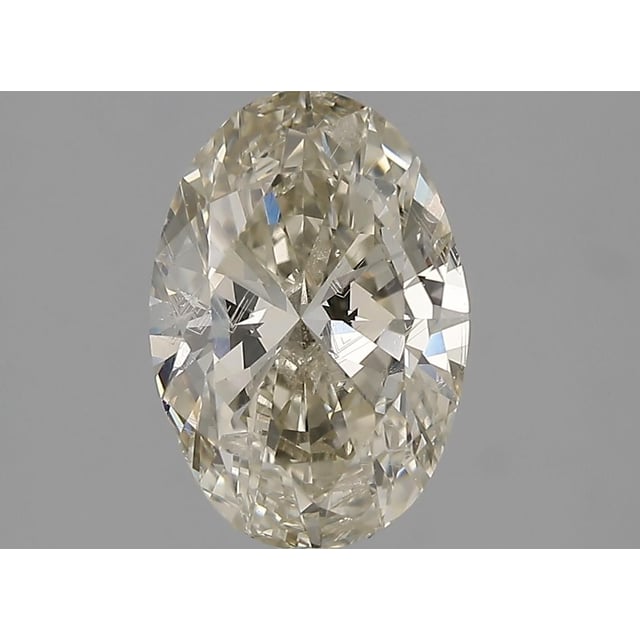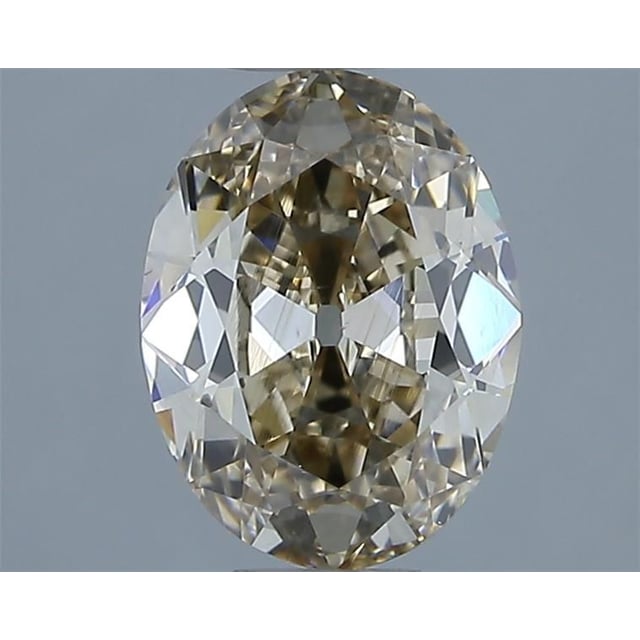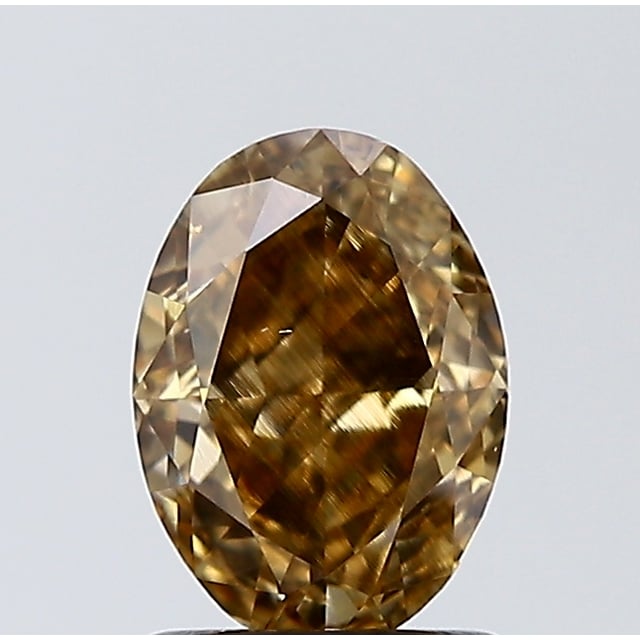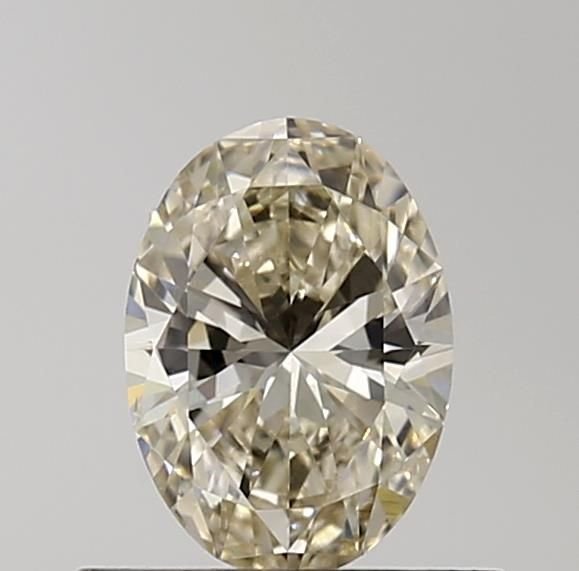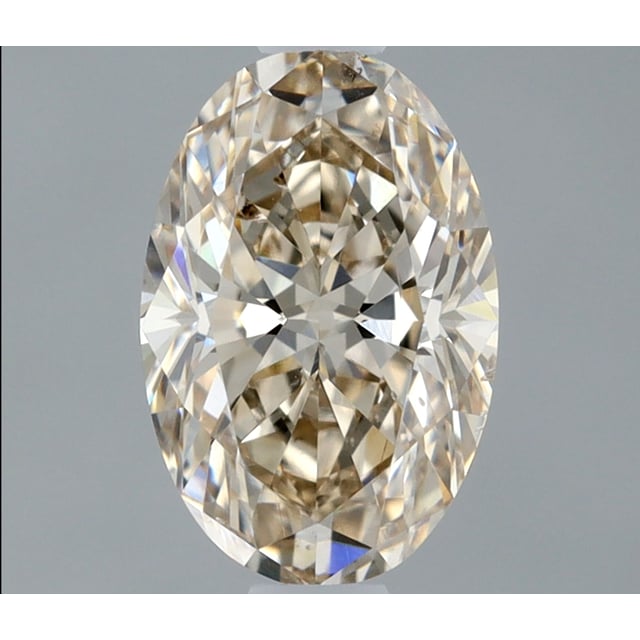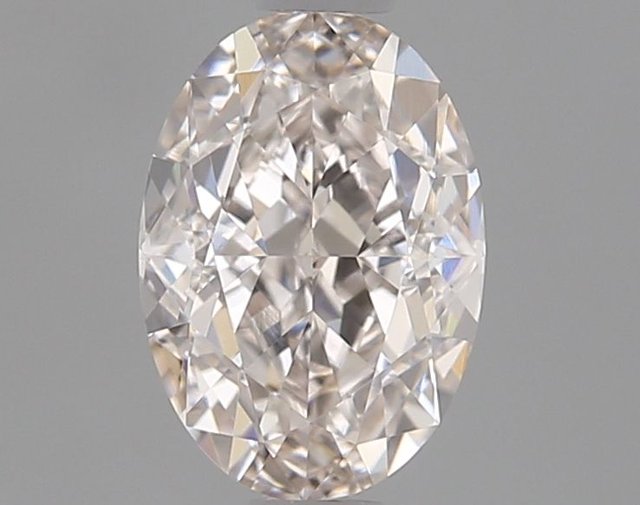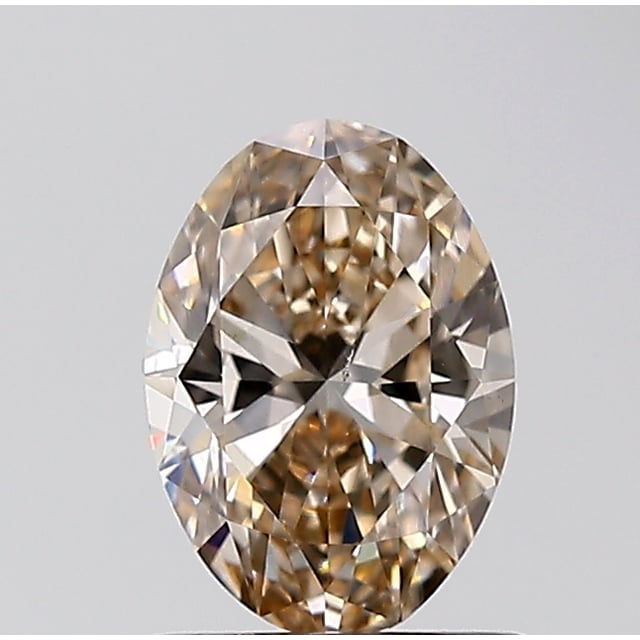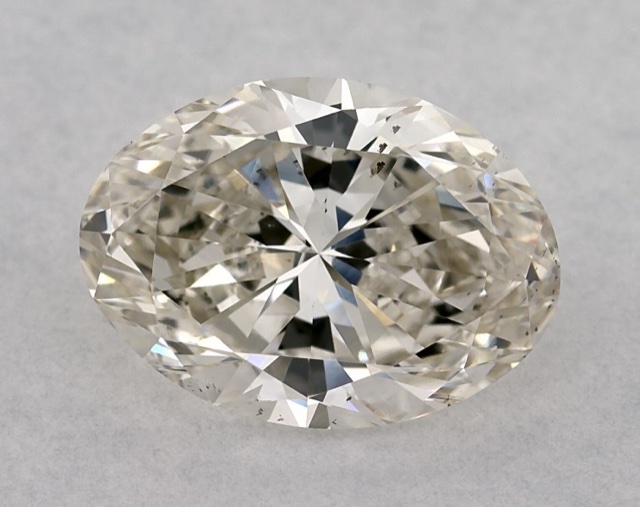
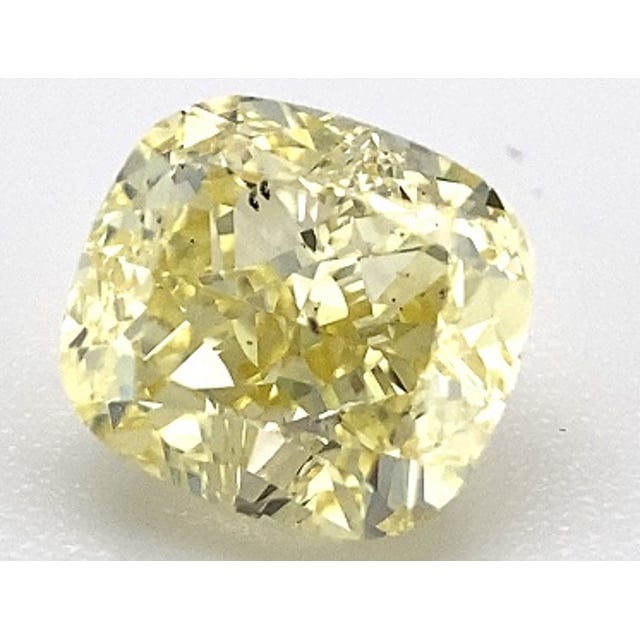
Length is the whole argument for an oval, and it is also what decides where the warmth goes. The crown is faceted like a round brilliant, but the outline is stretched, so light travels a longer path through the stone than it does in a compact shape. That longer path is what makes an oval look big for its weight — and what gathers any body color into the two ends rather than spreading it across the face. Choosing an oval in this color range is mostly a matter of understanding that trade: you can browse all oval champagne diamonds or go straight to oval champagne diamonds at one carat and over, but the ratio and the bow-tie are what separate them.
There are 334 ovals in the index on the 17 October 2026 build. The site lists both kinds of brown stone — a brown notation beside a letter on the ordinary D-to-Z scale, and a fancy-color grade in which brown is the dominant color — and champagne vs fancy brown sets out where the line between them falls. The oval median price is $1,437, which makes it the third most common shape here, behind rounds at 1,452 stones and pears at 358. All of it comes from the nine retailers the site tracks: Aurélinne, Blue Nile, Brilliance, Brilliant Earth, Leibish, Luvansh, Rare Carat, Ritani and With Clarity.
Where the 334 ovals sit in the index
On the 17 October 2026 build:
| Shape | Stones | Median price |
|---|---|---|
| Round | 1,452 | $1,069 |
| Pear | 358 | $1,917 |
| Oval | 334 | $1,437 |
| Cushion | 183 | $1,660 |
| Marquise | 119 | $1,529 |
| Heart | 114 | $1,321 |
| Emerald | 104 | $2,395 |
The oval's median price of $1,437 runs above the round median of $1,069, but that is a weight effect rather than a shape premium: ovals are bought large, and the shape's median is pulled up by the simple fact that people buy them that way. It sits below marquise, radiant, cushion, pear and emerald, and above only heart and round. All the shapes, with counts and medians, are lined up in best shapes for champagne diamonds.
The bow-tie
Every elongated brilliant — oval, pear, marquise — can show a bow-tie: a dark band running across the width of the stone at its waist. It is not an inclusion and not a color problem but light leakage. Pavilion facets in the middle of a long stone reflect the viewer's own head and shoulders back instead of returning light, and the darkened area follows the eye as the stone tilts.
Every oval has some bow-tie. The question is whether it reads as a soft gray shadow that adds contrast or a hard black bar that kills the middle third of the stone. Cut grade helps but does not settle it: the GIA does not issue a cut grade for fancy shapes, so an oval's cut designation is a proprietary judgment. Read it as a filter, not a verdict.
The only reliable check is your eyes. Look at video, not stills: a still photograph can be lit to erase a bow-tie entirely. Watch the stone rotate — a mild bow-tie breathes and shifts, a severe one stays a solid dark mass. If a listing offers no video, treat the bow-tie as unknown.
A brown notation has nothing to do with any of this. Bow-tie is geometry, the notation is body color, and the two behave separately — covered in more detail in what faint brown means.
Length-to-width ratio
Ratio is the oval's other governing number, and it is simple arithmetic: the length in millimeters divided by the width, both printed on the GIA report as the stone's measurements. A ratio close to 1 gives a rounded, almost cushion-like outline. As the ratio climbs, the stone reads longer and narrower.
Neither end is correct. What matters is that ratio changes three things at once:
- Apparent size. A longer outline covers more finger for the same weight, so higher ratios look bigger face-up.
- Bow-tie. Longer stones give the pavilion more room to leak in the middle. Very elongated ovals are the ones most likely to carry a pronounced bow-tie.
- Color pooling. The longer the stone, the longer the path light travels through it, and the more visible any warmth becomes at the ends.
That third point is what makes ratio a color decision as well as a shape decision when the grade carries a brown notation.
How an elongated brilliant pools warmth at the ends
Body color is a function of how far light travels through the crystal before it comes back out. In a round brilliant that path is roughly the same in every direction, so a faint tint spreads evenly. In an oval it does not: the two ends are the longest stretches of diamond in the design, light entering there takes the longest route out, and the tint concentrates, while the middle of the table stays comparatively bright.
The practical result: an oval with a brown notation tends to show its color as two warm zones at the tips rather than an overall wash. Whether that is a flaw depends on the setting. In yellow or rose gold the warm ends disappear into the metal. In platinum or white gold they show against a cold background, particularly with a halo, and a less elongated stone or a higher letter grade will read cleaner.
Two things reduce pooling: a shorter ratio, and a well-cut pavilion that keeps the stone bright. Brightness is the more powerful of the two — a K Faint Brown oval that returns light well will look whiter than a lazily cut stone two letters up the scale.
Why an oval looks larger than a round
Carat is weight, not size. A round brilliant carries a large share of its weight in the pavilion, below the girdle, where nobody sees it. An elongated brilliant spreads the same mass across a longer outline, so more of the weight ends up as visible surface area.
The eye adds its own bias: length reads as size more strongly than width, and an oval set north-south extends the line of the finger. Between the honest gain in spread and the perceptual gain from elongation, an oval wears larger than a round of the same weight — which is why so much of the oval inventory sits at one carat or more.
Price by weight
Weight, not shape, sets the price, and it is the main reason the oval's median price sits where it does. Across the index the median runs $290 under half a carat, $720 in the 0.50-0.99 ct band, $1,664 at 1.00-1.49 ct and $3,136 at 1.50-1.99 ct on the 17 October 2026 build, and the oval pool is drawn from the heavier part of that curve.
The reason an oval with a brown notation is worth considering at all is the gap against otherwise identical stones — the notation discount. Comparing the same color letter in the same carat band, D-to-Z stones with a brown notation against those without, the discount across the 11 matched cells of the 2 September 2026 study ran from -14% to 31%, with a median of 20%. The larger the stone, the wider the gap tends to open — the K and L stones in the 1.50-1.99 ct band came in 30% and 26% below their non-brown equivalents. That study covers the D-to-Z stones only; fancy-scale browns carry no color letter and are not part of it. The other figure, the champagne discount, is the struck-through price on each card: a similar near-colorless G–H diamond at the lower quartile of current listings, a median 44% among stones with a saving. Champagne diamond prices breaks both down.
Of the 2,822 stones indexed, 2,421 carry a brown notation on the D-to-Z scale — faint brown the lightest of those notations, very light brown the next step down and light brown the deepest — and 401 are graded on the fancy-color scale: 52 fancy light brown and 349 fancy brown. The GIA fancy scale runs on past Fancy Brown into darker and deeper intensities, but this site stops at Fancy Brown, because the grades beyond it read as cognac rather than champagne.