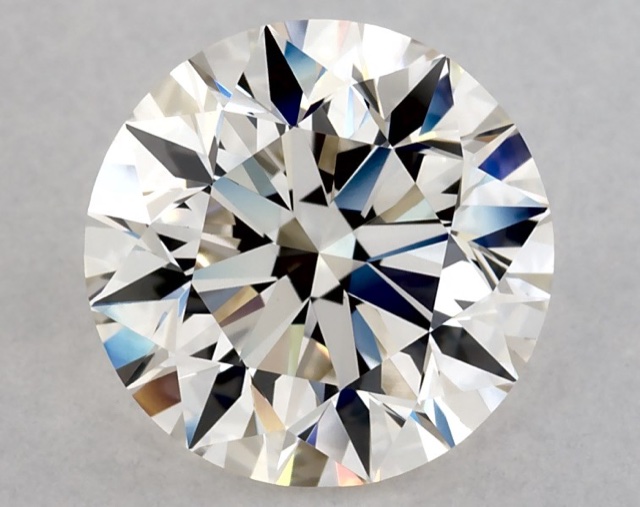
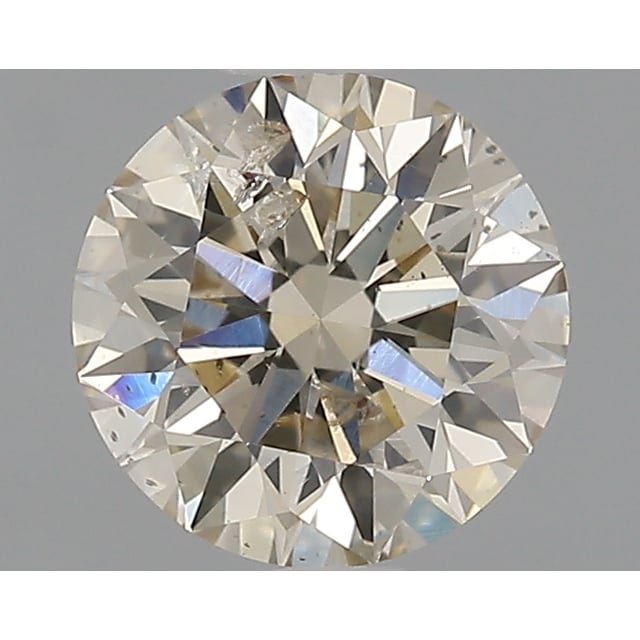
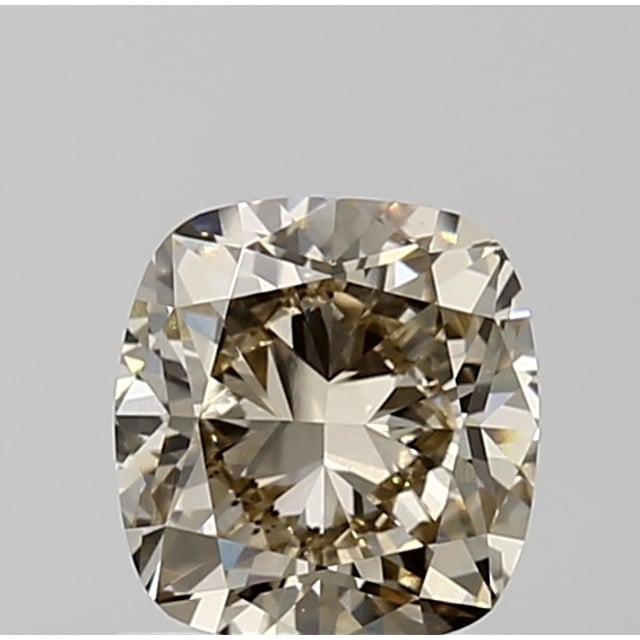
A champagne diamond's brown is almost always natural in origin, and that is not something a buyer has to take on trust. GIA puts the rule in one sentence: "All GIA reports designate a diamond's color as natural color or treated color." So for any individual stone the answer sits on its own grading report, in a place you can point at, and reading it takes minutes once you have the report number.
The direction of the treatment trade is worth knowing as well, because it runs opposite to what the question implies. In brown material, treatment is mostly used to take the brown out. GIA describes high pressure, high temperature processing — HPHT — as a stable treatment often used to turn brownish diamonds yellow or green, and writes separately that "Exposing diamonds to very high pressures and temperatures can lighten the color of some brownish diamonds". A brownish stone is the inexpensive starting material a treater buys in order to sell something else, and there is little commercial reason to spend money making a diamond look like the stone a shopper can already buy at a discount.
That leaves a small, checkable risk rather than no risk at all. This guide is the check: where origin appears on each kind of report, what treatment actually does to brown, which of three origins a warm stone can have, and what the verification behind every stone here does and does not test.
Where a report says "natural color" or "treated color"
Two report families matter, and a champagne diamond can arrive on either.
A D-to-Z grading report is what most of these stones carry. The color line reads as a letter with a hue notation beside it — K, Faint Brown — and that notation is the thing that makes a stone champagne rather than a retailer's description of it; what faint brown means covers how the wording is assigned. On this report the natural-or-treated designation is not part of the letter grade, so the treatment wording elsewhere on the document deserves as much attention as the color line.
A colored-diamond report is what a stone graded on the fancy scale carries, where brown is the dominant color and no letter is given. GIA publishes three of these — a Colored Diamond Grading Report, a Colored Diamond Origin Report and a Colored Diamond Identification and Origin Report — and the comparison it publishes for them lists a combined color grade and origin line on each, with testing for natural versus synthetic and for treatments among the services on the grading and identification versions.
Three further facts from GIA make the paperwork more useful than it first looks. Some treatments put a stone outside the laboratory's service entirely: GIA states it will not issue a report for a coated diamond and does not grade fracture-filled diamonds, so a report existing at all rules those two out. Stable treatments are reported rather than refused — GIA will issue reports for irradiated diamonds, and will grade annealed and HPHT-treated stones. And the disclosure goes on the stone as well as the paper: "As a further precaution, we laser-inscribe the girdles of diamonds identified as color-treated."
What treatment does to brown
Brown sits at both ends of the treatment process, which is why the subject gets muddled.
Brown as the starting material is the common case. HPHT processing lightens some brownish stones or turns them another color, and GIA calls it the most common treatment method used to create treated yellow diamonds.
Brown as a result happens too, in a sequence rather than a single step. GIA writes that "Heating irradiated diamonds to above 500o C will change most blue-to-green colors to brownish or orangy yellow to yellow, or, in rare cases, pink to red" — so a brownish appearance can be the outcome of irradiation followed by heat. That is a detection question rather than a shopping worry: the product aimed at is a saleable yellow or pink, not a champagne tint.
Either way, the identification is laboratory work. GIA says detecting color treatments often requires the sophisticated testing and instrumentation found only in the best equipped laboratories, and is reassuring about the outcome: "Whether a diamond's color is natural or artificially induced can almost always be determined." Read together, those say the question is answerable, and that the answer comes from a laboratory report rather than from an eye, a loupe or a photograph.
Three origins a warm stone can have
| Natural color | Treated color | Laboratory-grown | |
|---|---|---|---|
| Where the brown comes from | The stone as it formed | Induced after the stone came out of the ground | The growth process, or a treatment applied to grown material |
| What the report says | Color designated natural; a brown notation beside a letter, or a fancy grade | Color designated treated, with the process named where detected; girdle laser-inscribed by GIA where GIA identifies it | A laboratory-grown report, using the same color vocabulary as a natural one |
| Admitted to this index | Yes, when the color line carries a brown notation | Not screened for either way by the pass that admits a stone | No — the report type is checked first |
The third column is the one that shapes our code. A GIA report on a laboratory-grown diamond carries the same color vocabulary as a natural one, brown notations included, so nothing in the color wording itself separates the two. The verification therefore tests the report type before it looks at any grade, and a laboratory-grown report is never admitted. How the two compare on color, grading and the secondary market is set out in lab-grown vs natural champagne diamonds.
What our verification tests, and what it leaves to you
Two tests admit a stone here, both read off the grading report. The report type is read first, and a laboratory-grown report is rejected. Then the color wording is searched for a brown notation, and the stone is indexed only when that notation is present — Faint Brown, Very Light Brown or Light Brown beside a letter, or a fancy brown grade where brown is the dominant color.
Treatment screening is not one of those two tests, and it could not be: a treatment notation is something GIA prints after instrumentation this site does not have, and champ. reads published reports rather than examining stones. So what the index gives you here is a report number for every stone, from which you can run the origin check yourself, plus the assurance that nothing graded as laboratory-grown is in the pool.
What our index shows — figures from the 2026-09-30 data snapshot: 2,716 unique natural stones deduplicated by GIA report number, carried across 4,980 retailer listings at nine retailers. 1,169 of those stones are listed at more than one retailer at once, so the same report number — and therefore the same origin question — can be checked against several sellers' descriptions of one physical stone.
Four checks before you pay
Get the report number, then resolve it yourself. A listing that cannot produce one offers nothing to verify. GIA's report lookup returns the laboratory's own record, which is what the seller's description is summarizing.
Read the color line and the treatment wording together. The brown notation lives on the color line; the natural-or-treated designation is separate from it. Reading only the first tells you the stone is warm, not where the warmth came from.
Check which report it is. A colored-diamond report carries a combined color grade and origin line. On a D-to-Z report the designation is not a graded field, so it is the rest of the document that has to be read for it.
Ask, in writing, and expect an answer in the listing. The FTC's Jewelry Guides treat a diamond as a gemstone product and say treatments to diamonds should be disclosed in the manner set for gemstones — which includes any treatment that has a significant effect on the stone's value. The same section addresses buying without seeing the stone: where a product can be purchased without personally viewing it, including online, "disclosure should be made in the solicitation for, or description of, the product". A silent listing is not, on its own, evidence of a treated stone; it is a reason to ask before paying.
What this does not tell you about price
The figures published here describe stones whose GIA color line records a brown notation or a fancy brown grade. They are retailer asking prices on live listings, not completed sales, and the two savings comparisons on the site both measure the tint against untinted stones rather than measuring anything about origin — the method behind them is on the prices page.
Because treated-color stones are not a category this index counts, nothing here supports a claim about what they cost or how many are on the market. What the record does support is narrower and more useful at the point of purchase: for a given stone, the origin of its color is a written finding by a laboratory, retrievable from a number the seller should be willing to give you. The wider context for the trade name and the grading is in what is a champagne diamond.







