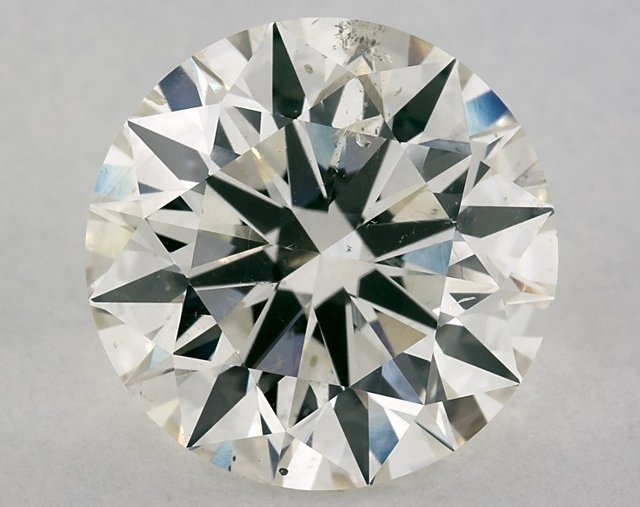
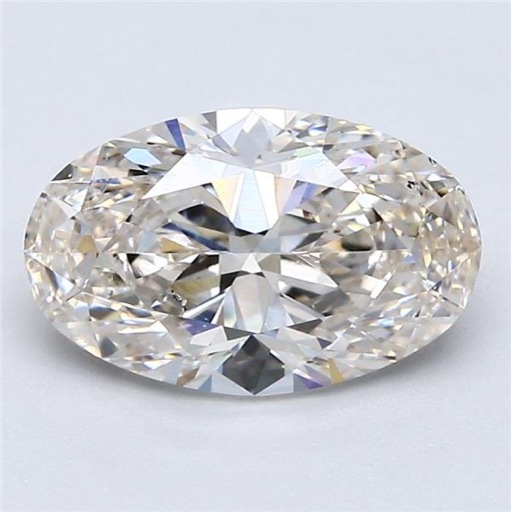
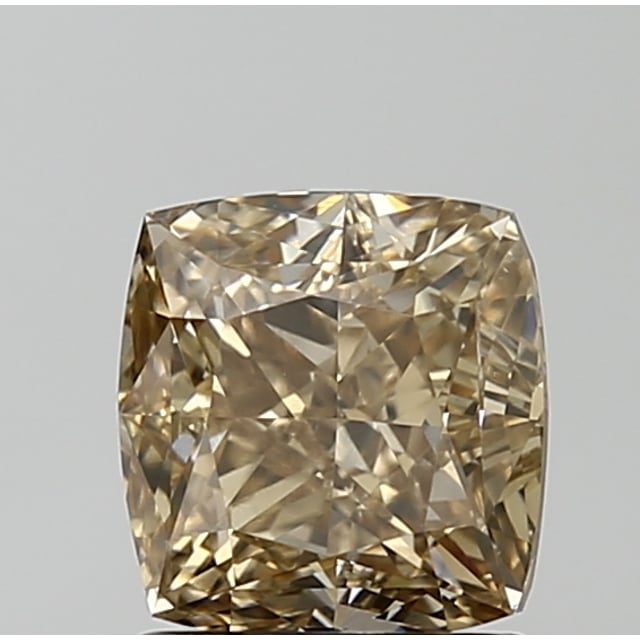
Once a diamond is set in a ring, the evidence of where it came from is under the metal. That is the practical difference between shopping for a lab-grown champagne diamond engagement ring and shopping for a loose stone: the girdle inscription is covered by prongs or a bezel, the report is a line of text rather than something in your hand, and the only thing left to read is how the jeweler has worded the listing. So the first thing to check is not the setting or the carat weight. It is where on the page the words lab-grown appear, and what the report number begins with.
champ. indexes natural champagne diamonds and the rings made with them, and does not list lab-grown stones. That is a scope decision with a documented reason rather than a comment on anyone's purchase, and the reason is set out below. What follows is where origin disclosure is supposed to sit on a ring listing, what the report can and cannot say, how a ring qualifies as natural on this site, and what the money a lab-grown champagne ring costs reaches in a natural stone.
Where the words are supposed to sit
The Federal Trade Commission's Jewelry Guides are specific about placement, not just about presence. Section 23.25(b) makes it deceptive to use a gemstone name to describe a laboratory-grown, laboratory-created, manufacturer-created, synthetic, imitation or simulated stone unless that name is, in the rule's words, "immediately preceded with equal conspicuousness" by one of the qualifying terms. The section adds that faux is not an adequate qualifier, and that cultured may be used only alongside a clear disclosure that the product is not mined. Treatment disclosure runs through the neighboring section, 23.24, which asks sellers to disclose treatments that are not permanent, that create special care requirements, or that significantly affect the stone's value — the provision that matters for brown color arranged after growth.
A ring is where that standard gets tested, because a ring has a name. Two listings checked on 17 September 2026 show the range. Elora, a jeweler working only in this category, listed 45 lab-grown champagne engagement rings priced from $1,399 to $7,799, with lab grown used throughout the collection copy and IGI named as the grading laboratory. Kristin Coffin's lab-grown ring collection held 25 rings, five of them with champagne in the title. One of those, Ophelia | Old Mine Cut Cushion Champagne Diamond Ring 5.32ct at $7,100, files under a collection titled lab-grown, describes the center as a rare lab-grown champagne diamond in its overview, and gives the report as IGI Certificate LG807673663 — while the product name itself says only champagne diamond.
That is the pattern worth carrying into any search. Disclosure is frequently there and frequently accurate; it is often one scroll below the name of the ring, and the name is what search results, social posts and screenshots carry. Read the description and the report line before you read the title.
The report number carries the answer
IGI puts the prefix LG in front of the report number on the laboratory-grown diamonds it reports on, and laser-inscribes that number on the girdle. Julia Griffith, writing for The Gem Academy in January 2024, recorded a change in what else is inscribed: stones from early February 2023 carry the IGI logo and the LG number alone, where earlier ones also spelled out the words LAB GROWN. Her point is directly relevant to rings — the LG prefix became the only disclosure of laboratory-grown origin on the stone itself, and it can be concealed behind a setting. On a finished ring, then, the paperwork is doing nearly all of the work, and checking the number against the laboratory's own database is the step that settles it.
GIA is where the other half of the answer sits. On 1 October 2025 it stopped issuing 4Cs color and clarity grades for D-to-Z laboratory-grown diamonds, replacing them with a Laboratory-Grown Diamond Quality Assessment carrying two descriptors: premium, which requires D color, and standard, which covers E to J. GIA president and chief executive Pritesh Patel said the company would no longer use nomenclature created for natural diamonds to describe a manufactured product. For this subject the consequence is exact. A natural champagne diamond is admitted here on a GIA brown notation printed beside a K-to-Z letter, as on the Faint Brown stones, or on a fancy grade with brown dominant. That notation cannot appear on a D-to-Z lab-grown report, because there is no color grade on one. What "faint brown" means covers what the notation does to a natural stone's price.
How a ring qualifies as natural here
The rings section gathers finished champagne diamond engagement rings from independent jewelers, and every record passes an origin test before it can be published. The rules are plain enough to state in full.
A ring whose title, tags, options or copy mentions a lab-grown or lab-created stone, or moissanite, is dropped outright — even where the champagne center might itself be natural, because a lab-grown stone anywhere in the piece is outside what this section is for. A ring that says natural in its title, tags or copy publishes. Where the listing says neither, the store's own stated policy decides: jewelers who state on their site that they sell only natural diamonds have their rings published, jewelers who sell lab-grown but label it have their unlabelled rings published, and jewelers who give no such assurance leave the ring unpublished, held back with a note saying why, until someone confirms it.
There is a second guard on top of that. A model reads each listing once to fill in catalogue fields the feed left empty, and origin is the one field it may not decide by itself: it can move a ring to natural or lab-grown only by quoting the jeweler's own words, with the quote found verbatim in the text it was shown and passing the same patterns above. An opinion without a quote changes nothing. How we verify every stone sets out the equivalent rules on the loose-stone side.
What a finished-ring price can be compared against
Very little, on either side of the origin question, and that is worth knowing before reading any ring price as a bargain or otherwise. Finished rings are largely one-off pieces: the setting, the metal weight, the side stones and the hours of bench work differ from jeweler to jeweler, so two rings with the same center specification are not the same product.
The loose side is where comparison becomes possible, and only for natural stones. On the 2026-09-17 data snapshot this site held 2,732 unique verified natural brown stones across 5,061 retailer listings at nine retailers, and 1,191 of those stones were listed by more than one retailer — one physical diamond, matched by GIA report number, with the spread between asking prices visible. Each also carries a comparison against a similar near-colorless G–H natural diamond matched on shape, the same clarity and the same cut tier, within a carat window that never crosses a trade threshold, taken at the lower quartile of matched listings: 2,439 of the stones were priced below that benchmark, by a median of 46 percent. These are retailer asking prices rather than records of completed sales, and a warm stone and a near-colorless one are never a perfect match, so the figure describes the size of a gap. The method is on the prices page.
What the same budget reaches in a natural stone
Set the lab-grown ring range against the natural loose index and the arithmetic is less lopsided than most buyers expect. On the 2026-09-17 snapshot the median asking price across the natural champagne diamonds here was $1,417, with a range from $70 to $224,546. Elora's $1,399 to $7,799 band therefore starts at roughly the midpoint of the whole natural loose index and runs well above it.
The comparison is not like-for-like, and should not be presented as one: a loose stone is not a ring, and a setting is priced separately by whoever builds it. Read loose against loose and finished against finished. The stones pictured above are live listings at engagement-ring sizes with their asking prices attached; how to choose a champagne diamond engagement ring covers what metal, halos and bezels do to how the tint reads once one of them is set, and lab-grown vs natural champagne diamonds takes the color, grading and second-hand questions further than a ring listing can.







