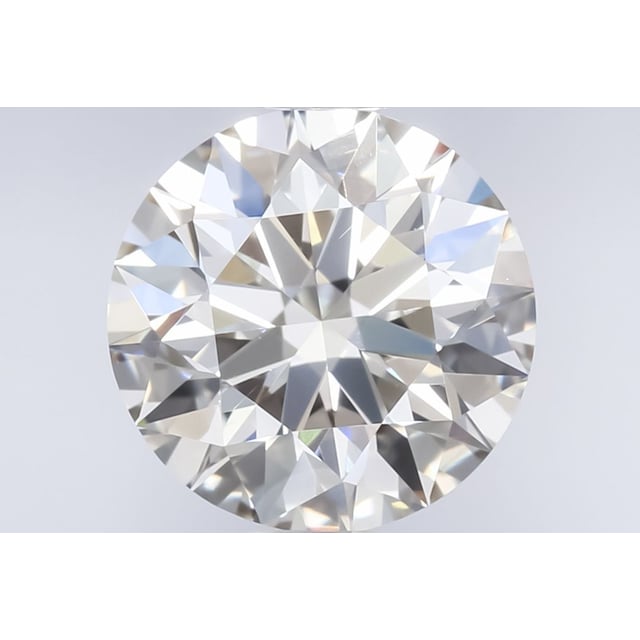
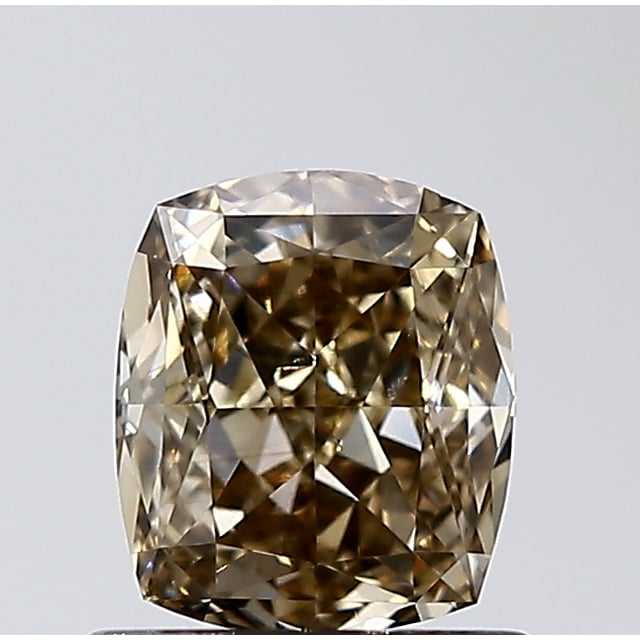
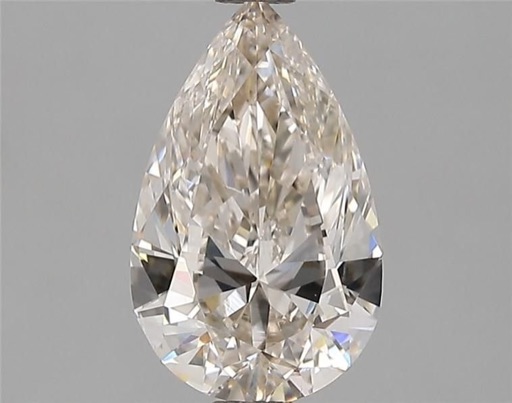
A champagne diamond that arrives with no grading report — inherited, bought at auction, picked up from a marketplace listing — is not a dead end. It is a stone with three open questions, and all three can be closed by a laboratory for roughly the cost of a small setting. What cannot close them is a photograph, a seller's description, or an appraisal, which estimates what a stone is worth rather than identifying what it is.
The useful first move is to drop the word "certificate". GIA's own explanation of the difference between its report and an appraisal is blunt about it: "a diamond report is not a certificate or guarantee and does not indicate a diamond's monetary value." Nothing obliges any diamond to carry one. So "is it certified" is the wrong question, and the better one is narrower: which report, if any, does this stone have, and what did that report record about the color?
The three things no report leaves open
Whether the brown is natural. This is the question a warm stone raises that a near-colorless stone does not, and it is the one a laboratory settles in a single line. GIA states that "All GIA reports designate a diamond's color as natural color or treated color." Brown is directly in the frame of the treatments GIA lists: of high pressure, high temperature processing it writes, "Often used to turn brownish diamonds into yellow or green, this form of diamond treatment is stable." Irradiation produces colors too. Surface coatings fall outside what either laboratory will report on: "Coatings are not permanent, therefore GIA will not issue a report for a coated diamond," and IGI takes the same position on coated natural diamonds, describing coatings as removable by wear, heat or chemical exposure. Where that line sits on a report is covered in natural or treated.
The seller's obligation is real but thinner than a report. Under the FTC Jewelry Guides a treatment must be disclosed when it is not permanent, when it creates special care requirements, or when it has a significant effect on the stone's value, at every level of the trade and before the sale. It depends on the seller knowing. An estate stone that has changed hands several times may have lost that knowledge entirely.
Whether the stone is natural at all. Laboratory-grown brown material now circulates in channels where it was not expected: a grading laboratory has reported finding undisclosed lab-grown brown diamonds inside parcels of natural brown melee, which we covered in lab-grown browns mixed with naturals. Every GIA report type, including the briefest, includes testing that separates a natural diamond from a laboratory-grown one. No report, no test.
What the color grade actually is. "Champagne" is a trade word that appears on no grading report, and the published champagne scales disagree with each other, as the color chart guide sets out. On a report the color is either a letter with a brown notation beside it, such as K Faint Brown, or a written fancy grade with brown last, such as Fancy Brown. Those are two different scales with two different price structures, and which one a stone belongs to is not something a seller's adjective tells you.
The one report that takes a stone of any weight
GIA's five D-to-Z services all start at 0.15 carats. On the colored-diamond side its comparison table lists three reports, and only one accepts, in GIA's wording, any carat weight — the Colored Diamond Identification and Origin Report. It is also the one built around origin rather than quality.
| Report | Weight accepted | Color grade and origin | Clarity, polish, symmetry, fluorescence | Listed fee |
|---|---|---|---|---|
| Colored Diamond Identification and Origin | Any carat weight | Yes | No | $98 |
| Colored Diamond Grading | 0.15 ct and up | Yes | Yes | $147 |
| Colored Diamond Origin | 0.15 ct and up | Yes | Yes | $175 |
Fees as published by GIA on 7 October 2026, quoted there against a 0.85 ct stone; fees scale with weight, so treat the column as the shape of the pricing rather than a quotation for your stone. Services for stones under 0.15 carats are offered in New York only.
For an ungraded warm stone the first row is usually the right one. It records the color grade and color origin, carat weight, measurements and the natural-versus-laboratory-grown testing, and omits the clarity grade, the plotted diagram, polish and symmetry and fluorescence. Those omissions are the report's design rather than a gap, which is why a Fancy Brown listing can honestly show no clarity grade at all — a point which GIA report a champagne diamond carries works through for all eight report types.
Weigh the fee against the stone. On the 2026-10-06 data snapshot the median asking price across the champagne diamonds indexed here was $1,383, with the range running from $70 to $242,530. A $98 identification is a modest share of a four-figure stone and most of the price of a small one.
Submitting a stone, and what a ring costs you
GIA's guidance on submissions is explicit that this is open to the public: people worldwide send diamonds to it, and "you don't have to be a jeweler or industry professional to do so." Two routes are described — walking into one of its laboratories, or asking a jeweler who handles GIA-graded stones to submit for you, which also solves the packaging, shipping and insurance GIA notes are better handled by a professional.
One condition decides the shape of the whole exercise for an heirloom: "GIA Diamond Grading Reports are only issued for unmounted stones." The stone has to come out of the setting. GIA does run jewelry services for mounted items, which return an estimated total carat weight with color and clarity ranges, metal testing and a photograph — but "Grading is performed to the extent that the mounting permits." A range is not a color grade, and a range cannot carry a brown notation. If the notation is what you want, the stone has to be loose.
If the report you hold says AGS
Older warm stones sometimes carry a report from AGS Laboratories, and that laboratory no longer exists. JCK reported in October 2022 that AGS Laboratories would close at the end of that year, with GIA taking over its intellectual property, technology and Las Vegas location, and that the AGS cut grade stayed with the society rather than moving to GIA. The society's own FAQ, quoted in the same reporting, put the consequence plainly: once the lab closed there would be "no diamond grading laboratory that grades to the AGS Diamond Grading Standards." GIA has offered AGS Ideal Reports as a digital supplement to its own reports since January 2023, at $25 on top of the report fee.
So the document remains a record of what that laboratory read at the time. What you cannot do is have the stone re-examined against the same standard: a second opinion means a new report from a laboratory still operating.
What our index shows, read 2026-10-07 on the 2026-10-06 data snapshot
2,576 unique verified natural brown diamonds, deduplicated by GIA report number, across 4,708 retailer listings at 9 retailers, with 1,120 stones listed at more than one retailer. By GIA wording: 2,038 Faint Brown, 124 Very Light Brown and 18 Light Brown on the D-to-Z scale, 344 Fancy Brown and 52 Fancy Light Brown on the colored-diamond scale. Median asking price $1,383, range $70 to $242,530; 2,276 stones are listed below their matched near-colorless G–H benchmark, at a median discount of 46%. Every one of these stones was admitted only after the text of its GIA report was read, and records are keyed by the GIA report number. Figures are retailer asking prices, not records of completed sales.
What to ask, in order
- Ask for the report number first. If there is one, resolve it in GIA's own Report Check service rather than in a PDF hosted elsewhere, and check that weight, shape and measurements match the stone in front of you.
- If what you are offered is an appraisal, treat it as a valuation and not an identification.
- If there is no report, ask the seller in writing whether the color is natural or treated, and whether the stone is natural or laboratory-grown. Note the answer before you pay.
- Ask what the return window is, and whether it survives sending the stone to a laboratory. That sequencing is the difference between a question you can still act on and one you cannot.
- If the stone is already yours and mounted, decide whether a range from a jewelry service is enough, or whether it comes out of the setting for a full report.
The alternative is simply to start with stones whose reports have already been read. Every diamond indexed here entered on the text of its own GIA report, and the two admission rules — and the check you can run yourself on any report number — are set out in how we verify every stone. How the asking prices are compared against a matched near-colorless stone is on the prices page.







