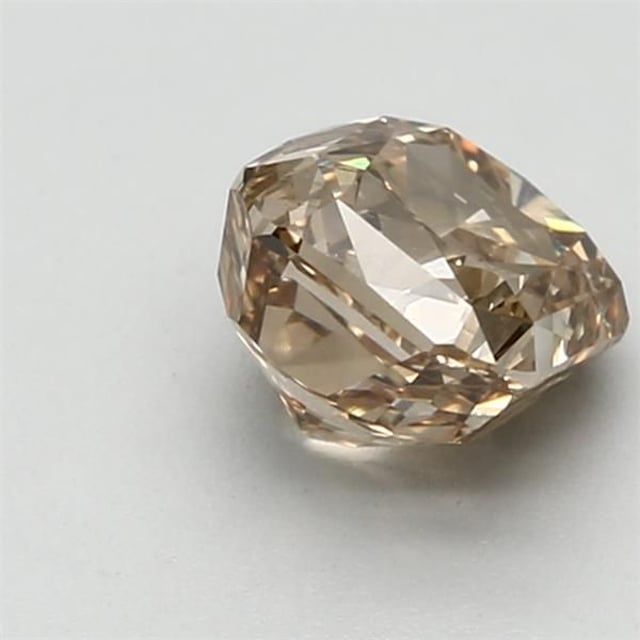
At one budget the two stones hand you different things. A lab-grown white diamond buys carat weight and a face with no visible tint; size is the cheap part of it, because a published wholesale index for that material is down 96 percent since tracking began in July 2018. A natural champagne diamond buys a mined stone, a GIA grading report recording its color in writing, a report number that can be set against other retailers' prices for the identical diamond, and a secondary market that exists. What it costs you is visible warmth, and usually some carat weight.
champ. indexes natural champagne diamonds and the rings made with them, and does not list lab-grown stones in any color — a decision about what can be compared here, set out below, rather than a comment on anyone's purchase. Lab-grown vs natural champagne diamonds handles the case where both stones are brown. This guide takes the cross-shop that comes up more often: a colorless lab-grown stone against a warm natural one, at the same money.
Why the two land in the same price bracket
They arrived there from opposite directions.
On the natural side, GIA's D-to-Z scale ranks the absence of color, and the trade prices accordingly: the further down the letters a stone sits, the less it costs per carat. A brown notation beside the letter moves it down again, which is the whole reason this corner of the natural market is inexpensive — what "faint brown" means covers how that notation is assigned and how little of it shows face-up. The brown itself is a record of pressure: GIA researcher Evan M. Smith, in the Spring 2023 Gems & Gemology, attributes the common brown color in diamond to vacancy clusters of roughly 40 to 60 missing atoms, formed when the crystal was plastically deformed in the earth.
On the lab side, price fell. Edahn Golan's Q2 2026 wholesale price list, published 7 July 2026, put lab-grown prices down an average of 13 percent year over year and 96 percent since July 2018. The decline is no longer uniform: that quarter, 2-carat stones fell 20 percent and 1.50 to 1.99-carat stones 11 percent, while 1-carat rounds rose 1 percent. JCK, reporting the same list on 8 July 2026, read it as prices showing signs of stabilizing.
So a buyer with $1,000 to $2,000 now chooses between two products that both fit, rather than trading down to reach one.
What each one costs, measured carefully
Three reference points, and they are not like-for-like:
Lab-grown white. Brilliant Earth's lab-grown diamond search, checked on 3 October 2026, listed its smallest stones from about $140, with rounds between 1 and 2.1 carats from roughly $1,000 to $3,240 — one retailer on one day, at a mix of colors, clarities and cut grades.
Natural champagne. On the 2026-10-02 data snapshot this site held 2,544 unique verified natural brown stones across 4,823 retailer listings at nine retailers, at a median asking price of $1,445 and a range from $92 to $594,710.
Natural near-colorless. The expensive one, and the comparison every card here makes: each stone is priced against a similar near-colorless G–H natural diamond of the same shape, clarity and cut tier, in a carat window that never crosses a trade threshold, at the lower quartile of matched listings. On that snapshot, 2,281 of the 2,544 stones were priced below that benchmark, by a median of 47 percent. The method is on the prices page and in how our benchmark works.
All of these are asking prices on live listings rather than records of completed sales, and a warm stone is never a perfect substitute for a near-colorless one — the benchmark measures the size of a gap, not a guaranteed saving. The observation that survives those caveats is narrow: at a four-figure budget the natural champagne stone is usually the smaller diamond, and a natural near-colorless stone of the same specification is usually out of reach.
The three-way comparison
| Lab-grown white diamond | Natural champagne diamond | Natural near-colorless G–H | |
|---|---|---|---|
| What the color is | Grown toward colorless; brown annealed out where it appears | A brown tint from plastic deformation, recorded on the report | Little enough body color to sit in the G–H band |
| Usual report | IGI, with growth method and treatment in the comments | GIA, brown notation beside a K-to-Z grade, or a fancy grade with brown dominant | GIA, D-to-Z color grade |
| Color grade available from GIA | None since 1 October 2025: a quality assessment reaching only to J | The full D-to-Z scale, with notations | The full D-to-Z scale |
| Same stone priced at several sellers | Rarely: stones are made to specification | Yes, matched by GIA report number | Yes |
| Trade-in and buyback | Often declined, or restricted to a lab-grown upgrade | Widely accepted, terms vary by jeweler | Widely accepted |
| Carat weight per dollar | Highest | Middle | Lowest |
What the report is allowed to say
GIA stopped issuing 4Cs color and clarity grades for D-to-Z laboratory-grown diamonds on 1 October 2025, replacing them with a Laboratory-Grown Diamond Quality Assessment carrying two descriptors, premium and standard. Its position was that it would no longer use the nomenclature created for natural diamonds to describe what is a manufactured product. The color component runs from D for premium and E to J for standard, so the assessment does not reach a visibly brown stone.
A natural stone enters this index on report wording instead. The verification reads the grading report twice: a laboratory-grown report is rejected outright, then the color line is searched for a brown notation, and the stone is indexed only when that notation is there — Faint Brown, Very Light Brown or Light Brown beside a letter, or a fancy grade with brown as the dominant color. How we verify every stone sets out both tests and how to check a single diamond yourself.
For a lab-grown stone the equivalent reading is the IGI report's comments line, where growth method and post-growth treatment are stated. GIA's Summer 2024 review of lab-grown material reported that approximately 80 percent of the CVD diamonds submitted to it since 2020 had been through post-growth HPHT or LPHT annealing, which is used to move color toward the colorless range. The FTC's Jewelry Guides require laboratory origin to be disclosed clearly and conspicuously wherever the word diamond is used, so a listing that will not name the laboratory or produce a report number is the one to walk away from, whichever origin you want.
Whether the price can be checked against anything
A single price is not information; a second price for the same thing is. On the 2026-10-02 snapshot, 1,148 of the 2,544 stones here were listed by more than one retailer at once — one physical diamond, identified by its GIA report number, with each asking price visible together. Why the same diamond costs different amounts works through how those spreads open. Lab-grown stones are grown to specification in quantity, so two listings with identical specifications are usually two different stones, and that kind of matching has nothing to bite on.
What the same budget reaches in a natural stone here
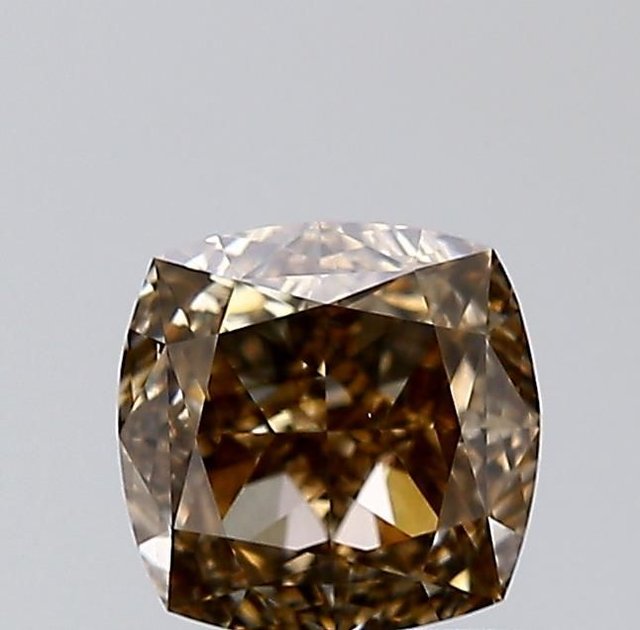
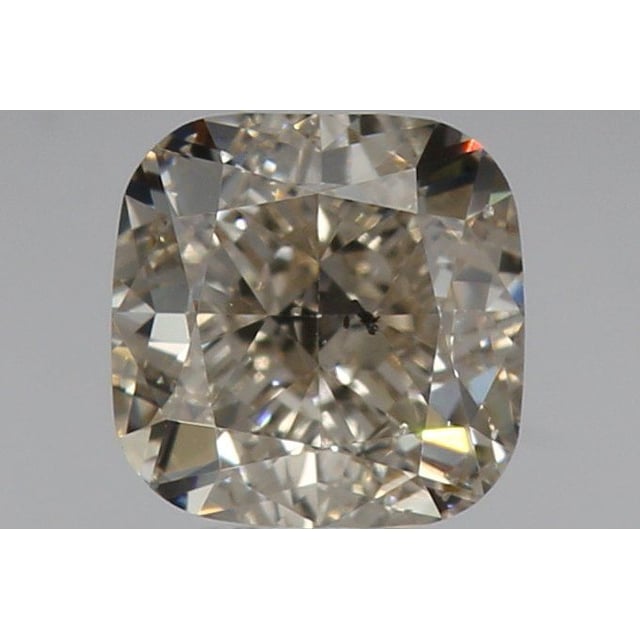
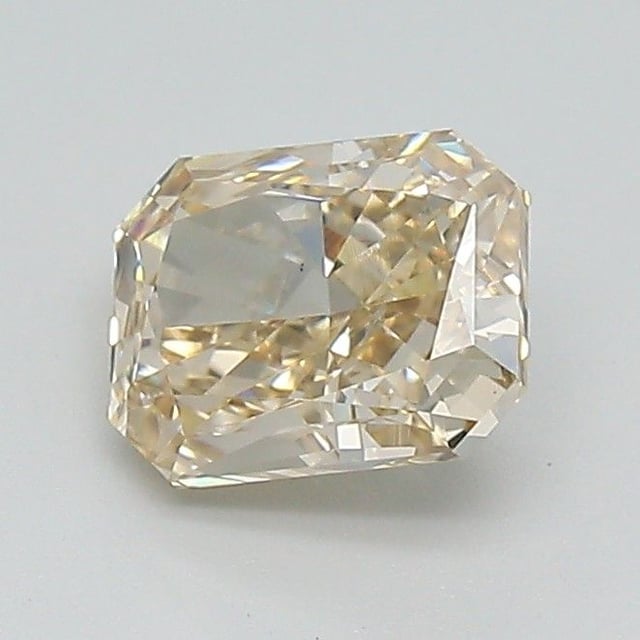
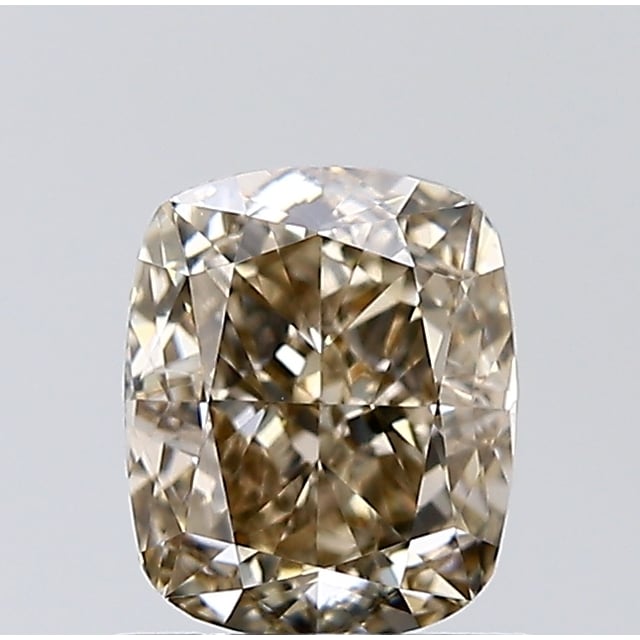
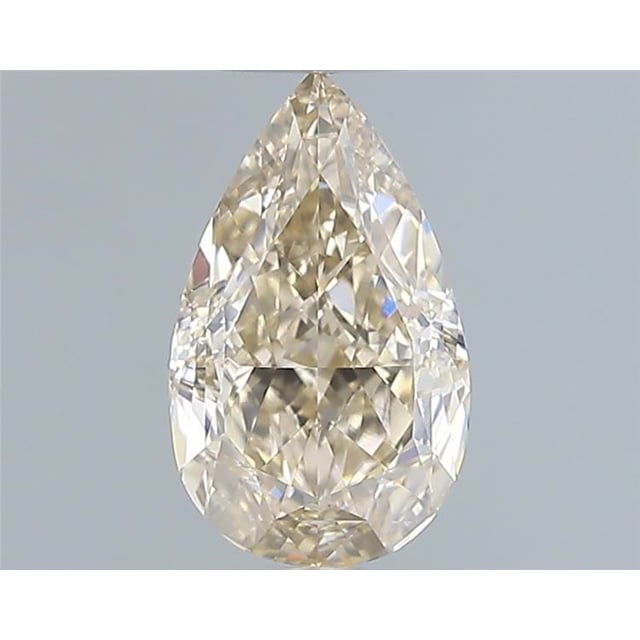
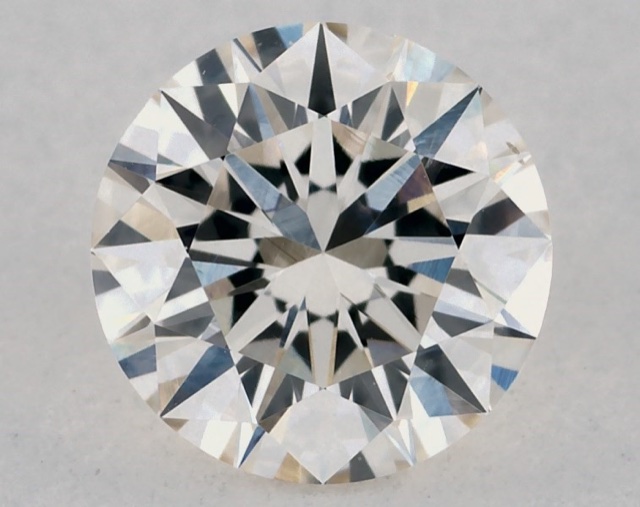
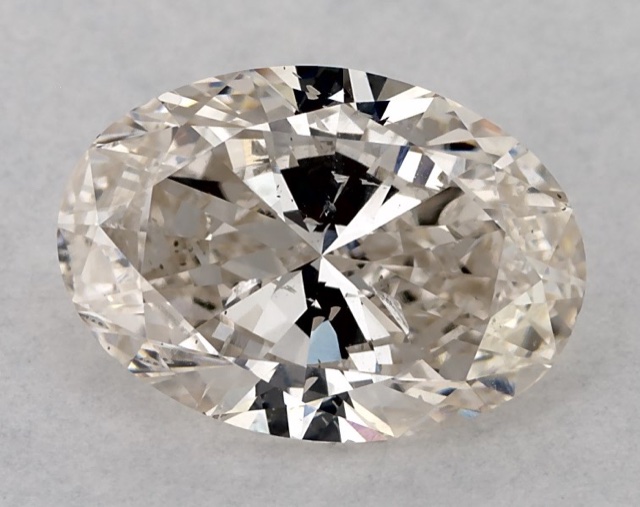
The stones pictured are live listings at three sizes with their asking prices attached — the most direct answer for your own budget. A three-figure sum buys a small natural stone here; a low four-figure sum sits above the midpoint of the whole index rather than at its edge, and one-carat stones are the band where most of this market sits.
They are loose diamonds, so compare loose against loose and finished against finished. A lab-grown stone in a jeweler's ring is a finished piece; the natural champagne rings here are finished pieces too, setting included, while anything in the figure still needs one.
What our index shows, on the 2026-10-02 data snapshot (checked 3 October 2026): 2,544 unique verified natural brown stones across 4,823 retailer listings at nine retailers, 1,148 of them listed at more than one retailer, a median asking price of $1,445 in a range from $92 to $594,710, and 2,281 stones priced below their near-colorless G–H benchmark by a median of 47 percent. Counts are deduplicated by GIA report number; the listing figure counts each store row separately. No lab-grown stone appears in any of these numbers.
Three questions that settle it
Does the tint bother you? Nothing else here matters if the answer is yes. The warmth is the reason the natural stone is affordable, and no amount of paperwork makes it invisible.
Do you want to be able to check the price? A GIA report number makes an asking price testable — against other sellers holding the same stone, and against the matched near-colorless benchmark. A lab-grown listing gives you a specification instead, which is a different kind of claim.
What should happen to it in ten years? Jewelers' trade-in terms treat the two origins differently today, as the questions below set out. That is a policy fact rather than a prediction, and neither stone should be bought as a way to store money.