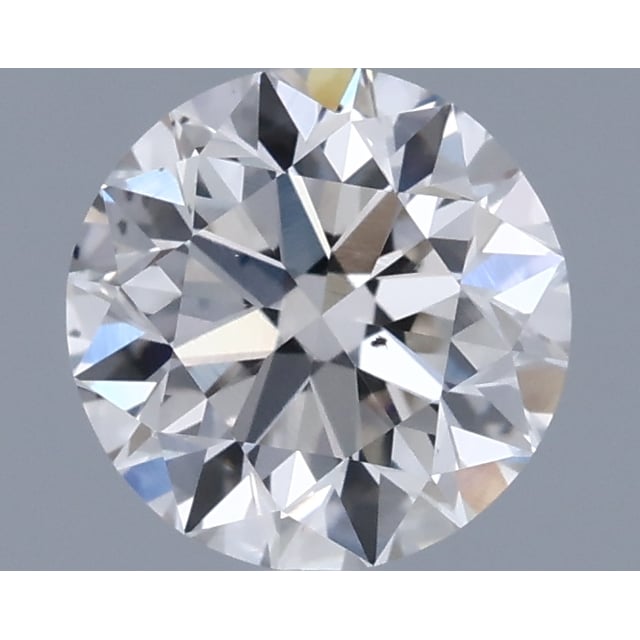
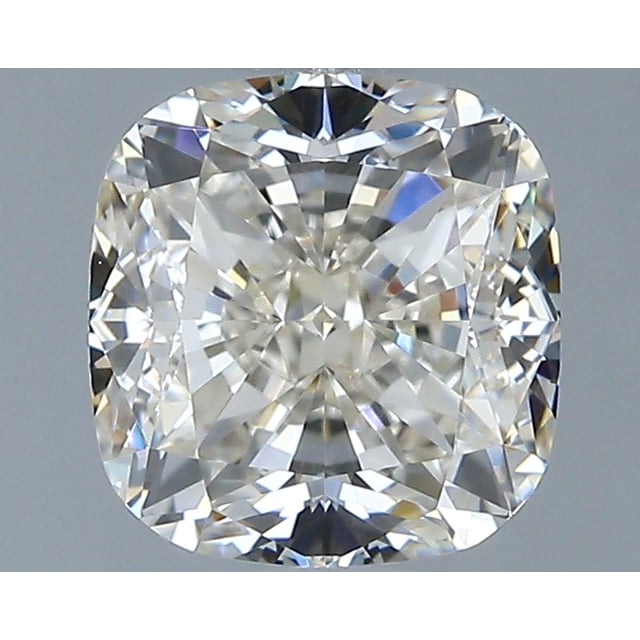
A GIA grading report for a diamond in the K-to-Z range does not always stop at the letter. When the residual tint in the stone reads brown rather than yellow or gray, GIA prints the hue after the grade: K, Faint Brown. That is the entire notation.
It is not a fancy color grade. It does not indicate treatment, damage, or a different category of stone. It says that a K-color diamond's faint tint leans brown. The letter still comes from the same D-to-Z scale GIA uses to grade colorless diamonds, and the stone is priced against that scale — usually below it.
This site indexes 2,822 verified brown diamonds across nine retailers. Of those, 2,421 are white-scale stones of the kind this guide describes: a D-to-Z letter with a brown notation printed beside it. The remaining 401 are graded on GIA's separate fancy-color scale, and are covered in their own section further down. Everything between here and that section describes the white-scale stones.
The D-to-Z scale in one paragraph
GIA's standard color scale runs from D, meaning no detectable color, through Z, meaning light color. Stones are graded face-down against master stones, and the letters fall into named bands:
| Letters | Band name |
|---|---|
| D-F | Colorless |
| G-J | Near colorless |
| K-M | Faint |
| N-R | Very Light |
| S-Z | Light |
The band name measures how much color is left, not which color. That second question is what the hue word answers.
Where the hue word comes from
GIA prints the hue word alongside the letter where a brown component is present. In the reports read for this site, the notation never appears above K — every white-scale brown stone indexed here grades K or lower. Where the tint is yellow — the common case — the report gives the letter alone. Where it is brown, GIA appends the hue: "Faint Brown", "Very Light Brown", "Light Brown", matching the band the letter falls in.
| Notation | Band of letters | Stones |
|---|---|---|
| Faint Brown | K, L, M | 2,269 |
| Very Light Brown | N through R | 134 |
| Light Brown | S through Z | 18 |
On the 17 October 2026 build. The index skews hard toward the shallowest depth. By letter — a count that excludes fancy-color stones, which carry no letter at all — it runs K 1,348, L 559, M 251 and N 129, with a handful of stones further down the scale making up the rest. A Faint Brown diamond is, in practice, a K, L or M stone, a grade or two warmer than the near-colorless range most engagement rings are cut from. Browse the whole Faint Brown group or the smaller Very Light Brown group separately.
Where the notation appears on the report
On a GIA Diamond Grading Report, the color grade sits in the grading results block, below carat weight and above clarity. Where a hue notation applies, it is printed on that same line, after the letter, with no separate field of its own — which is part of why it travels so poorly.
The same string appears in GIA's own digital report lookup, so any stone with a report number can be checked against the source; the method is set out in how we verify every stone.
Why retailers almost never surface it
Diamond search interfaces are built around the color letter. A shopper ticks a row of letter boxes and the database returns everything whose color field matches. In most retail catalogs that field holds the letter and nothing else, so the hue word is discarded somewhere between the grading report and the listing page.
The consequence is that a K Faint Brown stone and a K stone with no notation appear in the same filter results, described identically. The only way to tell them apart is to open the GIA report.
Doing exactly that, across more than 22,700 GIA reports read by the 2 September 2026 study, is how the white-scale stones here were found. They are spread very unevenly across the general inventories the site tracks. Where to buy a champagne diamond has the count for each retailer.
How the prices compare at the same letter
The retail result is measurable, and it is the notation discount: a brown-notation stone against a stone of the same color letter and carat band with no brown notation. Holding those fixed — the only comparison that isolates the notation — brown-notation stones ran a median 20% cheaper per carat across eleven matched cells on the 2 September 2026 study, with individual cells spanning -14% to 31%. The gap widens with weight: every cell at 1.50 ct and over sits between 26% and 31%, while two sub-carat cells run the other way, at -1% and -14%. These figures describe white-scale stones only: a lettered brown stone against a lettered stone of the same grade. They are not the champagne discount, the struck-through figure on each card, which measures a stone against a similar near-colorless G–H diamond at the lower quartile of current listings and runs a median 44% among stones with a saving. The cell-by-cell table is in the champagne diamond price guide.
Which letter you choose within the notation is a separate decision, covered in K, L, M and N color, and the shape pages — round with 1,452, pear with 358, oval with 334 on the 17 October 2026 build — count both scales together, splitting the index a different way.
The white scale and the fancy scale are different systems
The one distinction worth carrying is that D-to-Z grades the absence of color, so Faint Brown, Very Light Brown and Light Brown are all positions on a scale where more tint means a lower grade and a lower price. GIA's fancy-color scale is a separate system, running the other way, in which brown is the graded color rather than a defect. GIA's own fancy scale carries on past the intensities kept here into darker grades; this site stops at Fancy Brown, because beyond that a stone reads as cognac rather than champagne.
A K Faint Brown diamond is nowhere near the fancy range. It is a near-white stone with a warm cast — the tint the trade nicknames champagne. It reads most clearly against white metal and is easiest to miss in yellow or rose gold; how a setting changes that is covered in champagne diamond engagement rings.
Fancy-scale browns on this site
This site is no longer white-scale only. Alongside the 2,421 white-scale stones, it lists 401 diamonds graded on the fancy-color scale, admitted under a rule with two conditions. First, brown has to be the dominant color: GIA writes the dominant color last, so a "Fancy Pink Brown" stone is a brown diamond and qualifies, while a "Fancy Brown Pink" stone is a pink diamond and does not. Second, the stone has to cost less per carat than the median untinted D-to-Z stone in the same carat band. A depth limit sits on top of both: grades carrying "Dark" or "Deep" are excluded, because at those intensities the color reads as cognac or near-black rather than champagne. On the 3 September 2026 merge those rules rejected 1,342 stones: 628 not brown-dominant, 509 not cheaper, 133 carrying letterless colored-report grades that duplicate the white-scale wording, and 72 too dark.
The second condition is what keeps these stones in the same conversation as the rest of the site: nothing joins the fancy scale here unless it undercuts the median untinted stone of its own carat band on price per carat. Leibish, the one fancy-color specialist among the retailers indexed, supplies 17 listings on the 17 October 2026 build.
By grade, 349 of them are Fancy Brown and 52 are Fancy Light Brown; that is the whole fancy scale on this site, and they can be browsed as Fancy Brown and Fancy Light Brown. Within those two steps the most common full grades on the 3 September 2026 merge were Fancy Yellow Brown (126), Fancy Yellowish Brown (79), plain Fancy Brown (26), Fancy Light Yellowish Brown (23), Fancy Light Yellow Brown (15) and Fancy Light Brown (14). None of them carries a color letter, so nothing on this page about K, L, M or N applies to them, and neither do the per-letter discount figures above. What each scale actually measures, how a grade like "Fancy Yellowish Brown" is assembled from modifier and dominant color, and where chocolate diamonds sit against both is set out in champagne vs fancy brown — a listing that says "brown" can mean either kind of stone.
Reading a report for yourself
Three things are worth checking on any stone described as champagne, brown, or cognac:
The grading lab. The hue notation described here is GIA wording. Other labs use their own conventions, and grades do not transfer between labs.
The exact color line. "K, Faint Brown" is a D-to-Z grade. "Fancy Light Brown" is not. The two look similar in a listing and mean very different things, and this site now lists both.
The report number. Every stone indexed here carries a GIA report number that resolves in GIA's own lookup. A description of color that cannot be traced back to a report is a description, not a grade.







