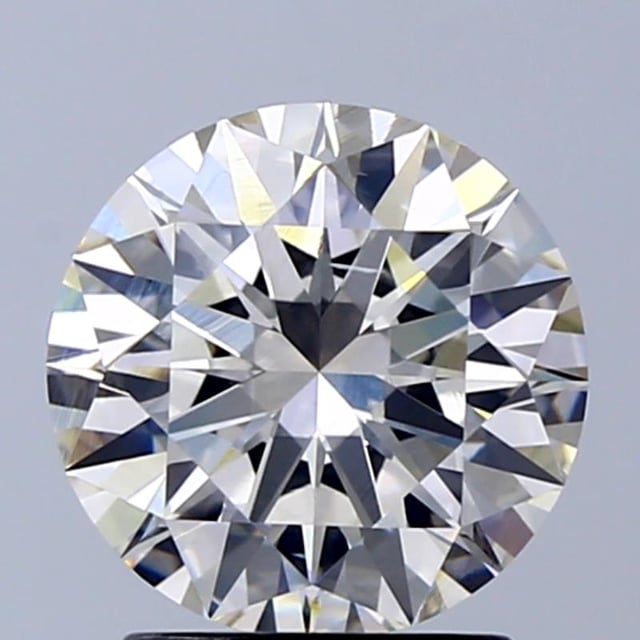
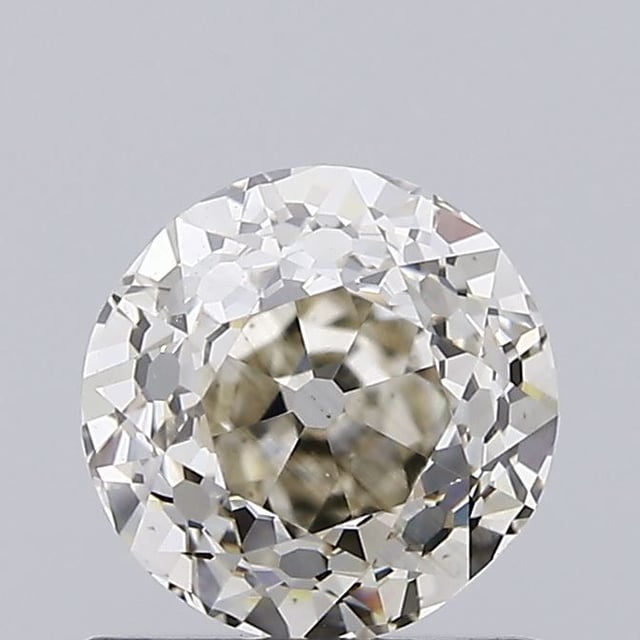
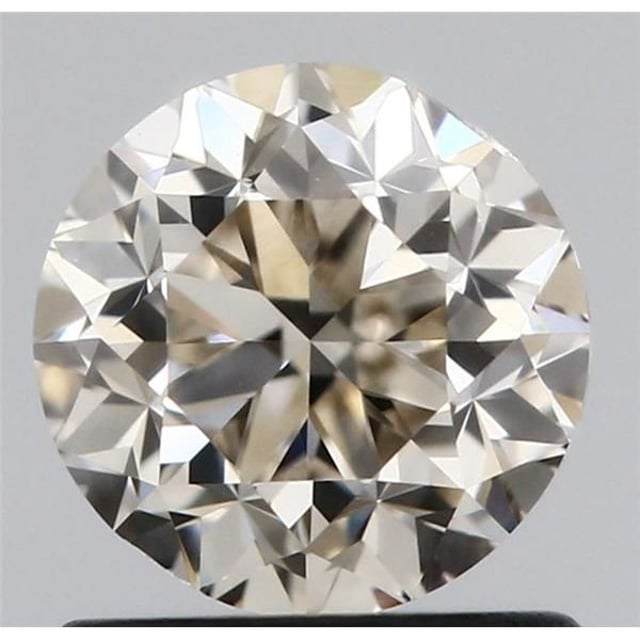
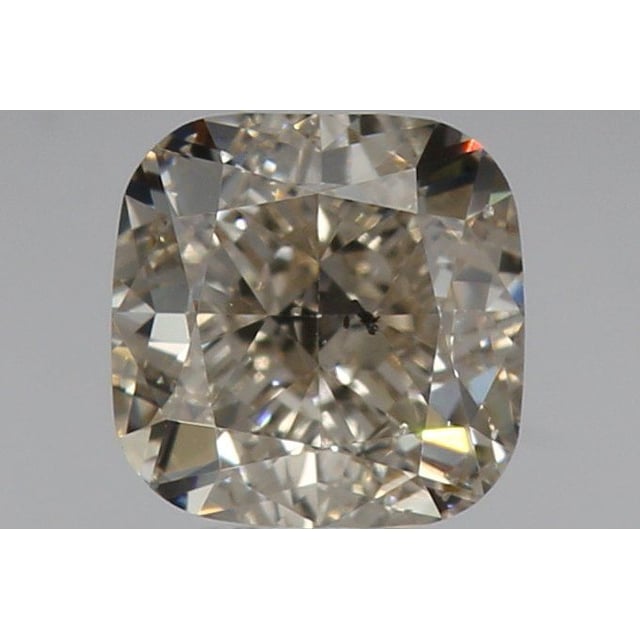
K, L, M and N sit at the warm end of GIA's D-to-Z color scale. On a white-diamond price list they are the letters where the cost per carat starts to fall away sharply, and they are also the letters where a brown notation on the report becomes common. The site lists 2,822 verified brown stones in total. Most of them, 2,421, are graded on the D-to-Z scale, where the brown notation sits beside a color letter. The remaining 401 are fancy-color stones, which have no letter at all and are covered further down.
Among the lettered stones the distribution is lopsided. K accounts for roughly two thirds of them, L for about a fifth, and M and N split most of what is left; a stray handful sit further down the scale at W and U. So the practical choice, for anyone shopping the lettered side, is really between K and L, with M and N as smaller pools worth searching if the budget is doing the deciding.
What separates these stones from an ordinary K or L is a single line on the GIA report: the color grade is followed by a brown notation, most often "Faint Brown". That notation is a description of the direction of the tint, not a separate grade — what faint brown means sets out the wording and where it sits on the report. It does, however, move the price.
What each letter looks like in practice
Color grading is done face-down against a white tray, under controlled light, against master stones. Almost nobody looks at a diamond that way again. Face-up in a setting, the differences between adjacent letters compress dramatically.
K color diamonds
K is the first letter in the "faint" color range and the point where a warm cast becomes findable if you look for it. Set in yellow or rose gold, a K with a faint brown notation typically reads as warm white — the metal supplies more color context than the stone does. Against platinum, next to a whiter stone, the warmth is easier to see, and it reads as warmth rather than as brown. K is where most of the supply is: 1,348 stones here. On the 2 September 2026 merge the white-scale price range ran from a 0.27 ct Round, K SI1, at $197 to a 20.29 ct Oval, Faint Brown VVS1, at $951,425 — the cheap end a K stone, the dear end a stone whose report records the notation without a letter.
L color diamonds
L is one step warmer. In isolation most people do not identify an L color diamond as tinted; side by side with a K in the same shape and cut, the difference is small but real. The effect is more visible in shapes with large open facets — emerald and Asscher cuts show body color more readily than a brilliant-cut round, where light return masks it. There are 559 L stones on the index.
M color diamonds
M is where warmth is generally apparent to a careful eye even face-up, and where the choice becomes deliberate rather than incidental. In a yellow gold setting an M color diamond can look intentional and consistent; in white metal it will read plainly as warm. There are 251 M stones here, and the carat mix skews larger — the 2 September 2026 study had more M brown stones at 1.00-1.49 ct (75) than at 0.50-0.99 ct (56).
N color diamonds
N is the beginning of the "very light" color range. It is still a normal grade: GIA's D-to-Z scale continues all the way to Z, and a stone only leaves that scale when its color is saturated enough to be graded as a fancy color instead. N is the smallest pool of the four, at 129 stones. For reference, Faint Brown is the notation on the overwhelming majority of the D-to-Z listings, 2,269 stones; Very Light Brown covers 134 and Light Brown just 18.
The stones with no letter
Not everything on this site has a color letter. Alongside the D-to-Z listings sit 401 fancy-color stones, graded Fancy Light Brown or Fancy Brown — wordings that name a color and its depth instead of placing the stone on a lettered scale. The scale here has those two steps and no others: 52 stones at Fancy Light Brown, 349 at Fancy Brown. GIA's fancy grading carries on into darker and deeper intensities, but this index stops at Fancy Brown, because past that point the stones read as cognac rather than champagne. There is no letter equivalent for either grade, and the per-letter comparisons below do not describe them. They are chosen a different way: a fancy stone is listed here only if brown is its dominant color, which GIA signals by writing the dominant color last, and only if it costs less per carat than the median untinted D-to-Z stone in the same carat band. Champagne versus fancy brown sets out how the two scales differ and how to read across them.
How the brown notation changes the calculation
This section covers the lettered stones only, and the figure it reports is the notation discount: brown against a stone with the same color letter and the same carat weight and no brown notation on the report. It is not the champagne discount, which sets a stone against a similar near-colorless G–H diamond at the lower quartile of current listings and is the struck-through price on each card. Run letter by letter on the 2 September 2026 study, the notation discount gives eleven usable cells, and each looks like this.
| Color | 0.50-0.99 ct | 1.00-1.49 ct | 1.50-1.99 ct | 2.00-2.99 ct |
|---|---|---|---|---|
| K | 19% | 17% | 30% | 29% |
| L | -1% | 20% | 26% | 27% |
| M | -14% | 12% | 31% | — |
Across the eleven cells the notation discount, brown-notation stones against same-letter stones with no notation, ranges from -14% to 31%, with a median of 20%. The negative figures are not typographical: at L, 0.50-0.99 ct, and at M, 0.50-0.99 ct, the brown-noted stones actually carry a higher median price per carat than their non-brown counterparts. Small stones are priced more by cut and clarity than by a notation, and the effect disappears above one carat. The L reversal is barely a reversal at all — $1,165 per carat against $1,155 — and the M cell rests on just 56 brown stones, the third smallest count of the eleven. The dollar medians and stone counts behind each cell are set out in the price guide.
The discount is bigger at bigger weights
The saving from a brown notation is not a flat percentage. Below one carat it is inconsistent, it runs between 12% and 20% at 1.00-1.49 ct with a median of 17%, and it steps up to the high twenties and low thirties above 1.50 ct.
Part of what follows is arithmetic. Price per carat rises steeply with size on any scale — on the 3 September 2026 merge the median $/ct for the lettered brown stones climbed from $1,687 at 1.00-1.49 ct to $2,136 at 1.50-1.99 ct, $3,542 at 2.00-2.99 ct and $7,294 at 3 ct and over. The same percentage discount taken against a steeper number is a larger absolute saving. Why the percentage itself widens is a question the index does not answer.
The practical read: at 0.50-0.99 ct the notation is not a reliable saving, worth 19% at K but -1% at L and -14% at M. At two carats it is worth 29% at K and 27% at L, and the widest cells of the eleven are M and K at 1.50-1.99 ct, at 31% and 30%.
Choosing a letter
Three practical considerations, in the order they usually matter.
Metal first. A warm letter in a warm metal is a coherent object; a warm letter in platinum is a comparison waiting to happen. If the setting is yellow or rose gold, the case for stepping from K to L, or L to M, is much stronger. Champagne diamond engagement rings works through metals, halos and bezels in detail.
Shape second. Step-cut shapes with wide open tables show body color more plainly than brilliant cuts. If you want the warmest letter you can get away with, a round brilliant hides more than an emerald cut does. If you want the warmth to read as a deliberate color, the reverse is true.
Carat band third. Because the discount is at its largest above 1.50 ct, the sensible way to spend a fixed budget is often to hold the letter and take the size, or hold the size and take the letter — not both at once. At one carat the K discount is 17% and the L discount 20%; those are meaningful but not transformative. At 1.50-1.99 ct they are 30% and 26%.
One thing the letter does not tell you is what any individual stone looks like. Two K stones with the same notation, the same clarity and the same cut grade can differ visibly, because the notation records a direction rather than an amount. At this point the listing photograph and video at the retailer holding the stone are worth more than the letter.







