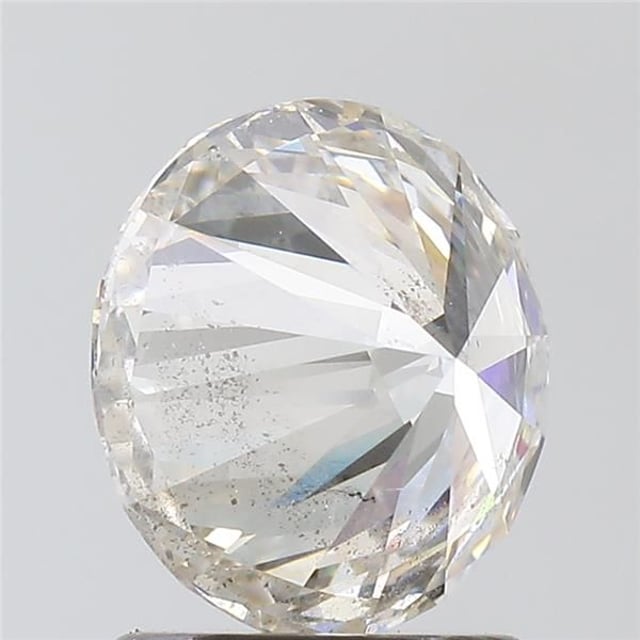
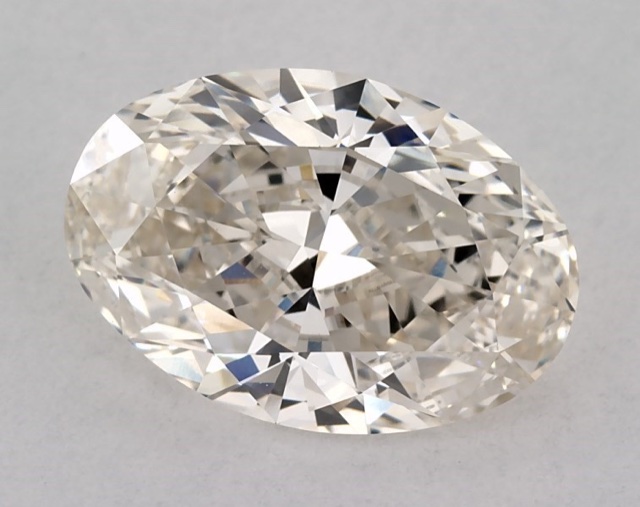
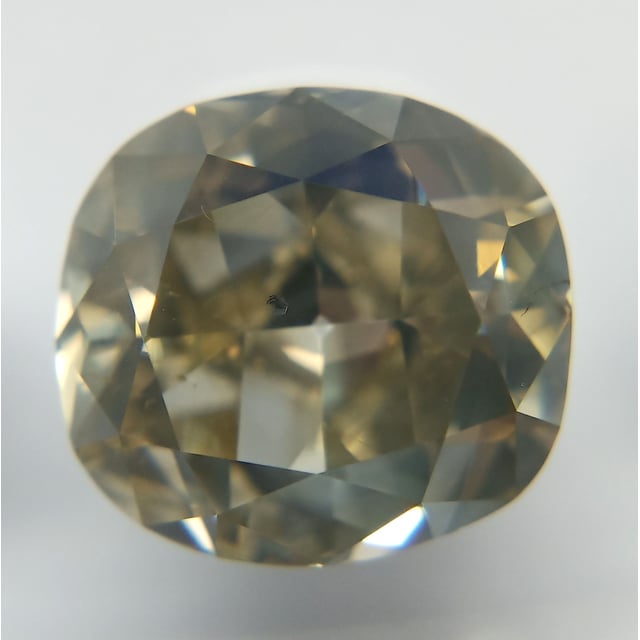
In a laboratory, brown is the color growers spend money to remove. That is the most useful thing to know before buying a lab-grown champagne diamond: the warm tint that a natural champagne diamond acquired during its formation is, in lab production, either a byproduct of growing a crystal quickly or something arranged after growth. It is the same look sold on a different basis.
champ. indexes natural champagne diamonds and the rings made with them, and does not list lab-grown stones. That is a scope decision with a documented reason rather than a judgment about anyone's purchase, and the reason is set out below. What follows draws on the grading laboratories' own published positions, and ends with what the same money reaches in a natural stone.
Where the brown in a lab-grown diamond comes from
Lab-grown diamonds are made two ways: chemical vapor deposition, which grows a crystal from a carbon-bearing gas, and high pressure, high temperature growth, which mimics the conditions deep in the earth. Brown is mostly a CVD story. GIA's 2024 review of laboratory-grown diamonds submitted to its laboratories describes brown coloration in as-grown CVD material as associated with the presence of "vacancy clusters and/or nitrogen-related defects" — the kind of atomic disorder that comes with adding nitrogen to the gas mixture or growing a crystal fast.
Growers do not generally want that. The same GIA review reports that roughly 80 percent of the CVD diamonds submitted to it since 2020 had been through post-growth processing — HPHT or LPHT annealing — which is applied precisely to reduce or shift brown color toward the colorless range the market pays most for. IGI, the laboratory whose reports accompany lab-grown stones at nearly every retailer selling them, describes the same processes as rearranging the atoms so that brown is reduced, eliminated or changed to a softer shade.
So a lab-grown stone sold as champagne is one of three things: brown that was left in because removing it costs money, brown that survived an attempt to remove it, or color arranged deliberately. Those are different products, and none of them is the geological accident that produces a natural tint. A retail listing that says only "champagne" distinguishes none of them.
What grades it, and what no longer does
This is where the practical difference is sharpest, and it changed recently.
On 1 October 2025 GIA stopped issuing 4Cs color and clarity grades for D-to-Z laboratory-grown diamonds. In their place it issues a Laboratory-Grown Diamond Quality Assessment using two descriptive terms. Premium requires D color with VVS clarity or better and excellent polish and symmetry, plus an excellent cut grade for round brilliants. Standard covers E to J color with VS clarity and very good polish and symmetry. GIA's published terms state that submissions not meeting the minimum criteria are charged an evaluation fee and receive no assessment, and the service applies to stones of 0.15 carats and up. GIA's announcement describes the change as declining to use nomenclature created for natural diamonds to describe a manufactured product.
Read that against the D-to-Z scale and the consequence for this subject is specific. A natural champagne diamond enters the index on a GIA brown notation — Faint Brown, Very Light Brown or Light Brown printed beside a K-to-Z letter — or on a fancy grade with brown as the dominant color, as in Fancy Brown. GIA's lab-grown assessment reaches only to J and prints no color grade at all, so on a D-to-Z lab-grown report that notation cannot exist. What "faint brown" means sets out what the notation says on a natural report, and how we verify every stone sets out the two admission rules and how to check any single diamond against its own report.
In practice a lab-grown champagne stone will carry an IGI report. Since January 2021 IGI lab-grown reports state the growth process and address treatment: stones it can confirm are untreated are described as as-grown with no indication of post-growth treatment, while other CVD stones carry wording noting that they may include post-growth treatment. IGI said at the time it intended to extend that commentary to fancy-color lab-grown diamonds. That comments line is the part of the report worth reading, because it is the only place the question gets answered.
The disclosure obligation sits alongside it. The FTC Jewelry Guides require the laboratory-grown origin of a stone to be disclosed clearly and conspicuously wherever the word diamond appears, and route diamond treatment disclosure through the general gemstone provision, which advises disclosing treatments that are not permanent, that create special care requirements, or that significantly affect value. A seller who cannot tell you which of the three descriptions above applies to a stone is a reason to ask again in writing.
Why there is no price comparison to make
The comparison this site is built on does not exist on the lab-grown side, for two structural reasons.
The first is matching. Stones here are matched across retailers by GIA report number, so one physical diamond listed by several stores can be lined up against itself; on the 2026-09-14 data snapshot, 1,194 of the 2,729 unique stones indexed were listed at more than one of the nine retailers covered. Lab-grown stones are produced in quantity to specification and distributed widely, so "the same stone at two retailers" is rarely a meaningful question and rarely answerable.
The second is the benchmark. Every card here carries a comparison against a similar near-colorless G–H natural diamond matched on shape, the same clarity, the same cut tier and a carat weight inside a window that never crosses a trade threshold, taken at the lower quartile of matched listings. That measures what the tint is worth in the natural market. Lab-grown diamonds are inexpensive across the color range, so the same comparison would measure very little — and the reference point keeps moving. Edahn Golan's lab-grown wholesale index, published on 7 July 2026, put prices down 13 percent year on year in the second quarter of 2026 and 96 percent since the index began in July 2018. A price for new stones that has fallen that far, and is still falling, is also what anyone reselling a lab-grown diamond later would be asking a buyer to pay above.
What the same money reaches in a natural stone
Natural champagne is not a luxury tier above the lab-grown one. It is the corner of the natural market where the trade's preference for colorlessness works in a buyer's favor. On the 2026-09-14 data snapshot the median asking price across the stones indexed here was $1,411, with a range running from $70 to $242,850, and 2,438 of the 2,729 stones were priced below their near-colorless benchmark by a median of 44 percent. These are retailer asking prices, not records of completed sales, and a warm stone and a near-colorless one are never a perfect match — the benchmark describes the size of the gap, not a guaranteed saving. The method is set out on the prices page and in how our benchmark works.
Set that against finished lab-grown rings. Elora, a jeweler specializing in the category, listed 43 lab-grown champagne engagement rings on 14 September 2026, IGI-graded, from about $1,399 to $7,799. The comparison is not like-for-like — a loose stone is not a ring — so read loose against loose and ring against ring: the natural champagne rings indexed here are complete pieces, while the stones in the figure above are loose diamonds that still need a setting. Champagne diamond prices gives the carat-band structure for the loose side.







