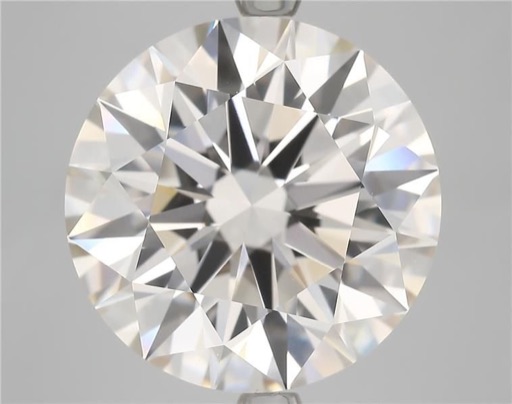
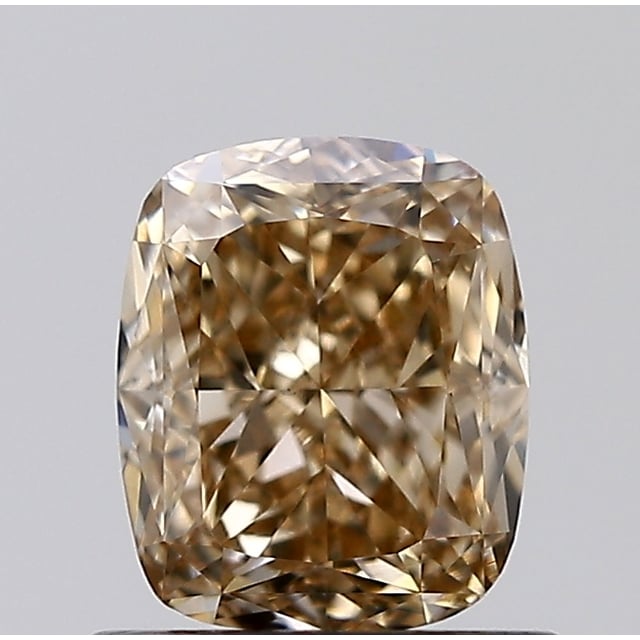
A standard GIA grading report does not say where a diamond was mined. It identifies the stone, grades it, and states whether the color is natural or treated — but it carries no country and no mine. So for a champagne diamond on sale today, the answer is usually that the paperwork does not say, and nothing in this index records one either.
GIA does issue two reports that name a country, one on each scale a champagne diamond is graded on, and the condition attached to both excludes almost every stone already cut and sitting in a retailer's inventory. That makes geographic origin the one attribute of a champagne diamond a buyer generally cannot verify — worth knowing before paying anything extra for it.
The broader answer is that brown comes out of diamond deposits in many countries rather than one. The mine the trade associates with it was Argyle, in Western Australia, which gave these stones half their vocabulary and stopped mining in 2020.
Three things a listing can mean by origin
The word does three jobs in diamond selling, and only two are settled by the report a champagne diamond normally carries.
| What origin can mean | On a standard GIA report? | Where it is settled |
|---|---|---|
| Natural or laboratory-grown | Yes — GIA grades the two on separate reports | The report type and number, resolved in GIA's Report Check |
| Natural or treated color | Yes — the report states color origin | The color-origin line; see natural or treated |
| The country or mine it came from | No | Only a GIA origin report, which requires the rough |
The first two are what this site is built on: every stone here is admitted on the wording of its GIA report and nothing else, as how we verify every stone sets out, and the difference between a natural tint and a grown one runs through lab-grown vs natural champagne diamonds. The third goes unanswered, and conflating it with the other two is how an unverifiable claim acquires the authority of a grading report.
GIA's own paperwork keeps the senses apart. Its report-comparison table for colored diamonds gives every report a row for color grade and origin, meaning natural or treated color, and only one of the three a second row for country of origin. So a fancy-graded champagne stone can hold a Colored Diamond Identification and Origin Report — origin in the title, no country anywhere on the document.
The two GIA reports that name a country
A Diamond Origin Report is the D-to-Z version, and in GIA's description it is a full assessment of the 4Cs like an ordinary grading report, except that it "includes the added identification of the country where the diamond was mined and a laser inscription of the report number on its girdle." Note what the inscription is: the report number, not a mine name. On the fancy-color side the equivalent is the Colored Diamond Origin Report, which adds country of origin to the ordinary colored-diamond grading fields. The tiers are set out in which GIA report a champagne diamond carries.
How the country gets onto the document matters more than the document itself. GIA's program page, checked on 11 October 2026, describes scientists who "document the rough diamond's unique characteristics—including dimensions, spectroscopy, growth structure and inclusions," then examine the cut stone to see whether it matches that rough. GIA's announcement of the service, dated 28 March 2019, is precise about what the match establishes: where the data agree, "GIA will confirm the country of origin provided by the mining company."
So the document closes one link scientifically — polished stone back to a specific rough — while the country itself comes from the producer that submitted it. GIA gives the participating countries as "Canada, Botswana, South Africa, Namibia, Australia, Brazil, Sierra Leone, Tanzania, and Zimbabwe."
The limitation is the part a buyer needs. GIA states that identifying country of origin this way "requires that GIA analyze the diamond in rough form first, and cannot be applied to diamonds that were mined, cut and polished before the program began." A stone already polished when the service opened in 2019 cannot be given one retrospectively.
Why an Argyle champagne diamond has no paper trail
Argyle is the reason brown diamonds have a shopping vocabulary at all. Rio Tinto's page for the operation, checked on 11 October 2026, describes it as "the largest supplier of natural coloured diamonds – including white, yellow, brown, blue, violet" and the pinks and reds the mine became known for. Brown was ordinary there, and the C1-to-C7 scale still circulating in champagne listings was its sorting system for that material; what C1 to C7 actually tells a buyer works through how far the published versions have drifted apart.
The same page records the end: "Mining ceased at Argyle in November 2020, after 37 years of operation."
Put the two facts together. GIA's origin service needs the rough before cutting and opened in 2019; Argyle's rough stopped flowing in November 2020. A champagne diamond cut from Argyle material in the decades before that — most of what the name is used to describe — had no origin program to enroll in then and cannot be enrolled in one now. No laboratory document exists that would turn an Argyle attribution into a verified statement.
That does not make the claim false. It makes it uncheckable, which is a different thing, and it means the claim should not move the price you are willing to pay.
The Kimberley Process certifies shipments, not stones
The other document buyers hear about does not fill the gap. The Kimberley Process defines its subject as rough: "Conflict diamonds mean rough diamonds used by rebel movements or their allies to finance conflict aimed at undermining legitimate governments," in the wording on its own site, checked on 11 October 2026. Participants undertake to "control the import and export of rough diamonds," and certificates accompany exports between members.
That is a controlled border crossing for parcels, not a provenance record for one finished diamond. GIA refers to the same framework when explaining why an ordinary report has no origin line, saying that industry regulations and controls "help to ensure that only diamonds mined in accordance with regulatory measures end up in jewelry sold to consumers." That is a statement about the system rather than about the stone in front of you: no Kimberley Process certificate travelled with your polished diamond, and none names a mine.
What this index records, and what it does not
This site aggregates natural champagne diamonds from retailers and matches listings by GIA report number so the same physical stone can be compared across stores; it holds no inventory and links out to whichever retailer has it. The only origin question its data answers is natural versus laboratory-grown, settled before a stone or a ring is published. There is no field for a country and none for a mine, and no stone here is admitted or excluded on where it was dug.
What our index shows — data snapshot 2026-10-10, read on 11 October 2026
2,722 unique verified natural brown diamonds, deduplicated by GIA report number, across 4,964 retailer listings at 9 retailers, with 1,176 stones listed at more than one retailer at once. By GIA wording: 2,179 Faint Brown, 132 Very Light Brown, 18 Light Brown, 343 Fancy Brown, 50 Fancy Light Brown. Median asking price $1,470, range $92 to $242,530; 2,367 stones sit below their matched near-colorless G–H benchmark, at a median discount of 45%. Every one of them was admitted on the color wording of its GIA report; none on provenance. Retailer asking prices on one snapshot, not records of completed sales.
What to do with an origin claim
- Ask which report the claim sits on. A mine name in a listing description is the seller's wording; a country on a GIA origin report comes with a report number you can resolve in GIA's own Report Check.
- Check the report type, not the inscription. An inscribed girdle carries a report number, which an ordinary grading report can also have. The report itself is where a country would appear.
- Expect no origin document on an older stone. For anything polished before 2019, and Argyle material in particular, its absence says nothing about the diamond — the service could not reach it.
- Separate the three origins. Natural rather than grown, and natural rather than treated color, are both on the report and both worth confirming; which country it came from is usually not available. A report title containing the word origin does not settle the third one.
- Price what you can verify. Carat weight, the color line, clarity, cut and the asking prices at every retailer holding that report number are all checkable. Where a stone is listed by several stores the comparison is like for like, because it is one diamond — the method is on the prices page.
The tint is what a report does describe, in five phrases that mean the same at every retailer: Faint Brown at the warm-near-white end, Fancy Brown where brown is the graded color. That wording, and not a mine, is what a champagne diamond can be bought on.







