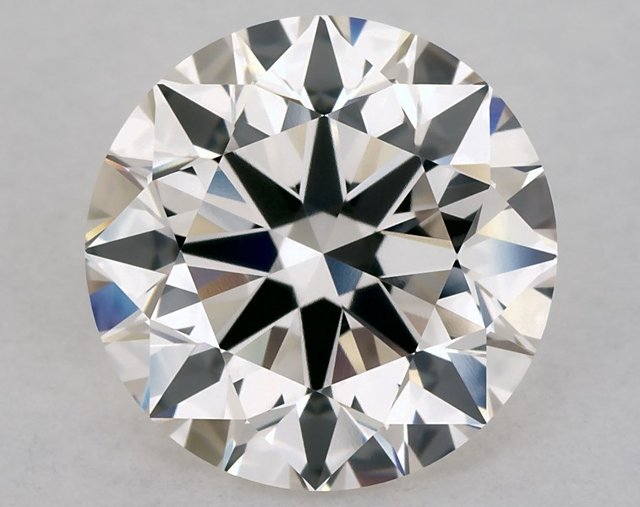
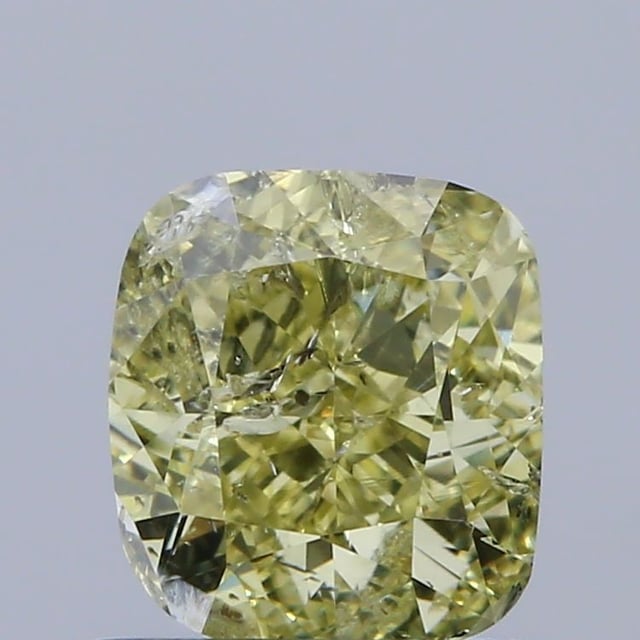
Put the coverage of the last forty years in order and a pattern shows up that no single article mentions, because each one only sees its own moment.
The South China Morning Post's February 2026 explainer notes, almost in passing, that these stones were "formerly known as Cape diamonds", after South Africa. Then Argyle arrived. In JCK's 2021 interview about the mine's legacy, the author Stuart Kells describes what happened next as the deliberate "rebranding and the reconceiving of the brown diamonds as champagne and cognac stones" — a mine whose output was dominated by brown material that would otherwise have gone industrial, turning it into fashion jewellery and, in his account, a whole new price point.
In 2000, Le Vian trademarked Chocolate Diamonds. In June 2025, National Jeweler reported De Beers naming them desert diamonds.
Cape, champagne, cognac, chocolate, desert. Four renames, each from a different part of the trade: a mining region, a mine, a manufacturer, a producer.
Naming a category is ordinary commerce, and the trade has never hidden that the names describe one thing. Writing in JCK in 2014, Victoria Gomelsky noted that the stones had long been sold as champagne and cognac before Le Vian's trademark — the same category under a different word.
A rarity claim worth reading carefully
Le Vian's own 25th-anniversary press release — a company release, not journalism, and every figure in it unaudited — states that "only a fraction of one percent" of the world's polished natural diamonds qualify as Chocolate Diamonds. It lists the criteria: natural untreated colour, SI clarity or better, a flawless surface, and no green or grey undertones.
That claim is probably true, and it is also easy to misread. It is a statement about how many of all polished diamonds meet a branded selection standard — and most polished diamonds are not brown at all, so the vast majority fail at the first hurdle. It is not a statement that brown diamonds of good clarity are scarce.
We can test the clarity half of it directly.
What the clarity bar actually excludes, 4 September 2026
Of the stones in our index carrying a clarity grade, 95% are SI2 or better — 2,223 of 2,338. The single most common grades are VS2, SI1 and SI2, in that order.
So an SI-or-better requirement removes about one brown diamond in twenty. It is a real quality floor, but it is not what makes a stone rare, and it is not close to a fraction of one percent.
The GIA colour letters underneath are equally unexotic: K on 1,080 stones, L on 444, M on 202, N on 93. These are ordinary white-scale diamonds whose reports happen to carry a brown notation.
The name that does not change
There is one label on these stones that no marketing department controls, and it is the only one we index on: what GIA printed on the report. Faint Brown. Very Light Brown. Fancy Brown. Those words do not move when the campaign changes.
It matters commercially, not just pedantically. Of the 2,822 stones we hold, 1,194 are listed by more than one retailer — the same GIA report, in more than one shop, sometimes under different marketing language and at different prices. The stone does not change. The name on the tag does.
Why we index on the grade
When a stone appears at several retailers, we match it by GIA report number and show every price on one card, so the comparison is between prices rather than between adjectives. That is also why the site exists: the brown notation is the thing that discounts the stone, and it is the thing retail search filters throw away.
If you want the grading rather than the branding, start with what "Faint Brown" on a GIA report means, or read how champagne, fancy brown and chocolate end up as three prices for one colour.