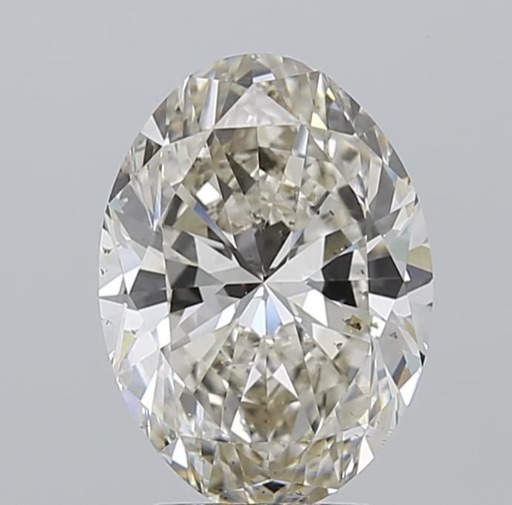
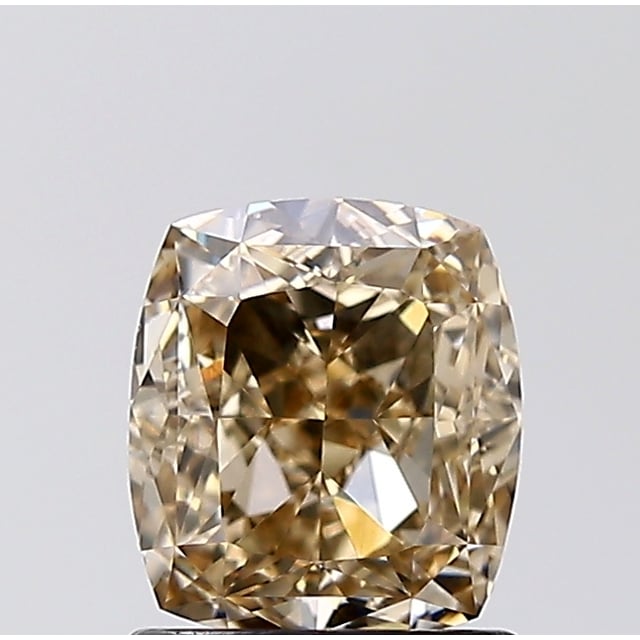
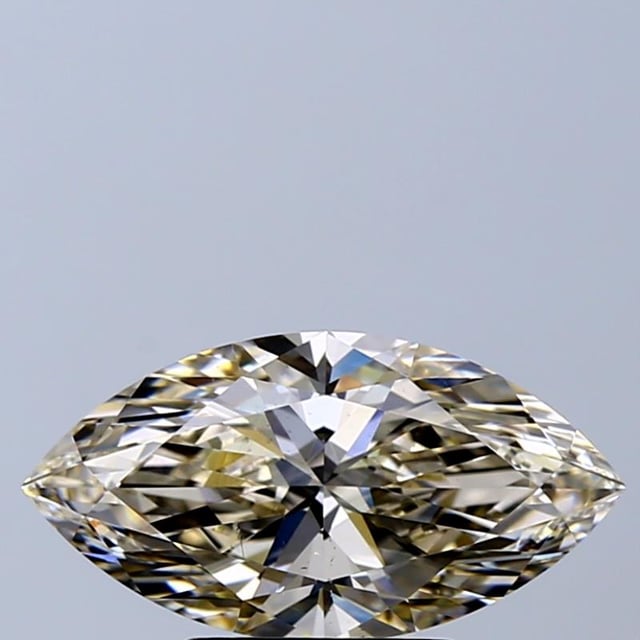
Rapaport's weekly market comment, published on 24 September 2026, describes a polished-diamond trade that has started sorting fancy shapes by their proportions. Cutters have moved output toward those shapes, and the comment reports "Very well-cut fancy shapes difficult to find and commanding premiums" alongside "Fancies with bad proportions illiquid." Long cushions are "easy to sell and trading at 20% to 25% premium over square ones," and marquise is named the most expensive fancy shape.
None of that judgment arrives on a grading report. GIA assigns a cut grade to standard round brilliant diamonds and to nothing else. On the 1,355 fancy-shape stones in this index — every pear, oval, cushion, heart, marquise, emerald, radiant, asscher and princess among them — the proportions the trade is pricing are yours to assess from the measurements, the finish grades and the video, with no cut grade on the report to lean on.
So the practical instruction for anyone shopping a non-round champagne diamond this month is narrow and unglamorous: work out the length-to-width ratio from the measurements yourself, read polish and symmetry, and treat the word in a listing's cut field as the retailer's assessment rather than a laboratory grade.
What the 24 September comment says
Three dates need keeping apart. The comment was published on 24 September 2026, covers that week's trading, and reports the September Hong Kong show as concluded. Our own figures below are from the 26 September 2026 data snapshot. And the Rapaport price list is a separate document from the commentary — the monthly index move we wrote about in Rapaport's 1-carat index rose, and it does not cover champagne diamonds tracks the near-colorless round market, not warm-toned stones and not fancy shapes.
The supply picture in the comment runs two ways at once. From India: "Limited availability of rounds" and "Manufacturers' shift to fancy shapes is supporting round prices" — but also "Excess inventory squeezing prices for dossiers in fancy shapes," dossier being the report GIA issues for stones of 0.15 to 1.99 carats, per its own report comparison checked on 27 September 2026. In New York, rounds were outperforming fancies, retailers were buying actively, and low supply in some categories was making stock hard to replace, with dealers paying firm prices. At the Hong Kong show, natural diamonds "performed better above 2 ct., especially well-cut stones and fancy shapes."
Read together, that is a market paying up for large, well-proportioned fancy shapes while small fancy-shape goods sit in oversupply. It describes wholesale trading between dealers. It is not a statement about what any retailer is asking for a stone, and nothing in it moves a price on this site.
Why the premium the trade pays has no grade behind it
GIA's own explanation of the limit is short. Its 4Cs pages, checked on 27 September 2026, state that "Diamond cut grades are only given to round brilliant cut diamonds because they are the only cut that have standardized facets," and that "All other shapes are referred to as fancy shapes, which includes marquise, emerald, pear, oval, hearts and even triangles." GIA's buying guide for those shapes puts the consequence plainly: "While GIA does not grade the overall proportions of fancy cut diamonds, a GIA Diamond Grading Report does contain an assessment of the diamond's Finish, which includes Polish and Symmetry."
Finish is not proportion. Polish and symmetry describe how well the stone was finished and how evenly its facets were placed; neither ranks the depth, the table or the outline that decide whether a pear looks bright or dull.
There is a second gap on the fancy-color side. GIA offers three colored-diamond reports, and its comparison table, checked on 27 September 2026, shows a cut grade on none of them. The Colored Diamond Grading Report and the Colored Diamond Origin Report, both for stones of 0.15 carats and over, list measurements and polish and symmetry among their contents; the Colored Diamond Identification and Origin Report, which takes any weight, lists neither finish grade. A round brilliant graded on the fancy-color scale therefore carries no cut grade either, for the ordinary reason that it was not sent through the D-to-Z service.
What our index shows — data snapshot 26 September 2026, read on 27 September 2026
2,775 unique verified natural brown diamonds, deduplicated by GIA report number, across 5,080 retailer listings at 9 retailers, with 1,215 of those stones listed at more than one retailer. By shape: 1,420 round, then 342 pear, 329 oval, 206 cushion, 120 heart, 109 marquise, 100 emerald, 82 radiant, 35 asscher, 22 princess and a handful of others — 1,355 stones in fancy shapes, none of which carries a GIA cut grade. By GIA wording, 349 are Fancy Brown and 52 Fancy Light Brown, the 401 stones graded on the fancy-color scale, whose reports carry no cut grade whatever their shape. Those two counts overlap by an unknown amount and cannot be added. Median asking price $1,435, range $70 to $594,710; 2,447 stones are listed below their matched near-colorless benchmark, at a median discount of 46%. Retailer asking prices on one snapshot, not records of completed sales.
The word in the cut field is the retailer's
Every listing we index arrives with whatever cut wording its retailer uses, and the merge normalizes that vocabulary so the same stone reads consistently across stores: RC Ideal, 8X and EIGHTX all map to Super Ideal, EX to Excellent, VG to Very Good, GD to Good. Where a stone is round, that label usually traces back to a GIA cut grade or to a retailer's own tighter band inside Excellent. Where the stone is a pear or a cushion, there is no GIA grade underneath it at all, because GIA issued none. The label is then the seller's assessment, and it is a fair thing to ask them about directly.
That also touches the struck-through figure on every card, which is built from near-colorless G–H natural GIA stones matched to the champagne stone on shape, on the same clarity grade with no widening, on a carat window that never crosses a trade price threshold, and on the same cut tier, using the one scale every source shares: GIA's Excellent, Very Good and Good. Comparator stones whose cut wording does not map onto those three tiers are left out of the pool. A stone whose own listing carries no cut wording is compared at a looser step of the fallback chain instead, and every looser step admits only cheaper comparators, so a loose match can lower the struck-through price and never raise it. Both sides are asking prices, and a warm stone is not an exact substitute for a near-colorless one. The method is on the prices page and in how our near-colourless price benchmark works.
What to check on a fancy shape, in place of a grade
GIA's own guidance for these shapes gives most of the list.
- Compute the ratio from the measurements on the report rather than trusting a listing's word for the outline. GIA's guide puts the usual ranges at 1.33 to 1.66:1 for an oval and 1.75 to 2.25:1 for a marquise — a range, not a rule, and the shapes at either end are a matter of taste.
- Read polish and symmetry, where GIA's guide suggests looking for Excellent or Very Good as indicators of cutting quality.
- Weigh the depth. GIA's guide notes that a shallow stone carries a greater risk of chipping, and that a stone cut too deep may appear less bright.
- Look for the bow-tie on video, the dark area GIA describes as two triangular pieces joined at the center. It shows in brilliant-cut fancy shapes, and a still photograph will not settle it.
- Ask which report the stone holds before treating a missing grade as an oversight. On the fancy-color side one of the three reports carries no finish grades at all.
- If the same report number is listed at more than one retailer — 1,215 stones were, on the 26 September snapshot — compare those listings against each other before anything else.
Our shape guides work through the same checks one outline at a time: oval for ratio and bow-tie, cushion for crushed-ice against chunky faceting, marquise for the two points. How the tint itself reads across shapes is in best shapes for champagne diamonds, and the two rules that admit a stone to this index are in how we verify every stone.
What this does not tell you
It does not tell you that retail asking prices for well-cut fancy shapes are rising. Dealer premiums reported in a trade comment and the asking price on a retailer's listing are different numbers, set by different people, and we have no data showing the first has reached the second. It does not tell you a badly proportioned stone is cheap; illiquid in the trade means hard to sell on, which is a dealer's problem before it is a buyer's. And it says nothing about the tint, which is graded, printed on the report, and the reason these stones sit below the near-colorless comparison in the first place.
The stones themselves are one click away by outline: oval, cushion, marquise, or round, which remains the only shape on the index whose cut GIA has graded.