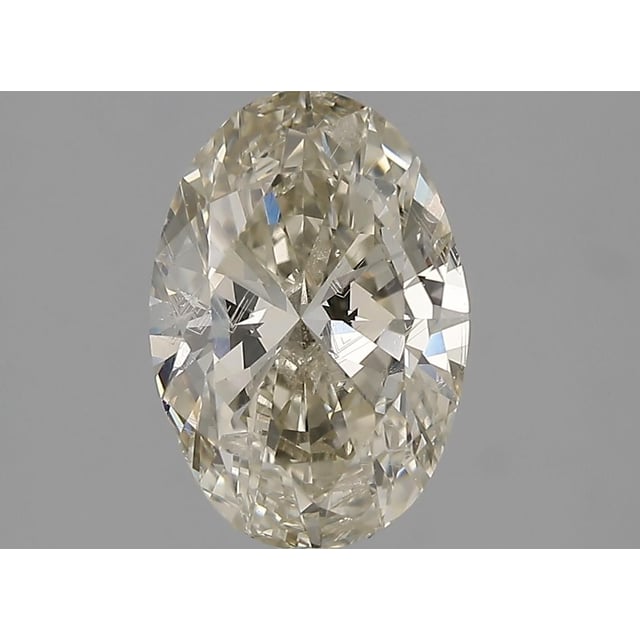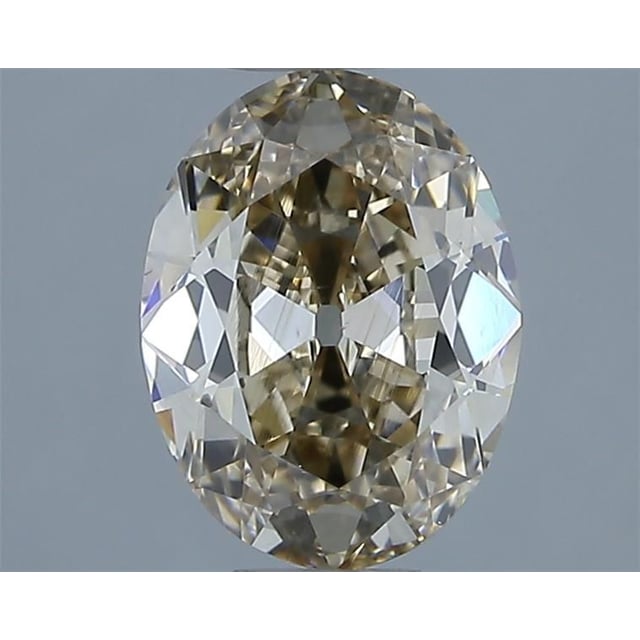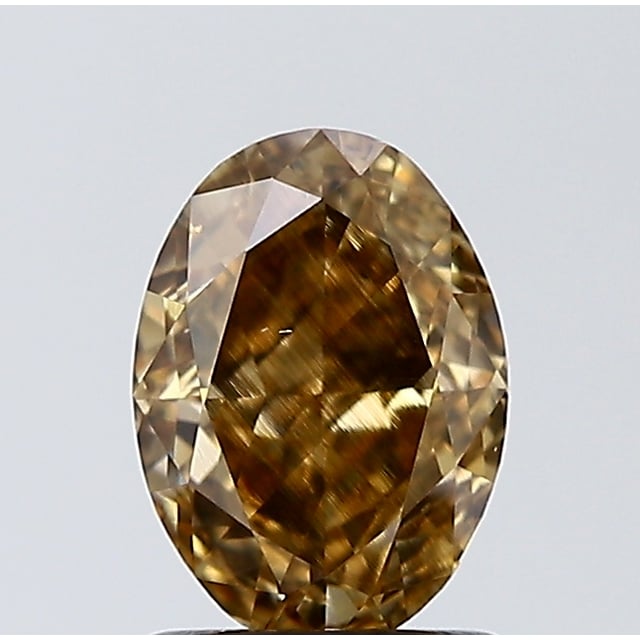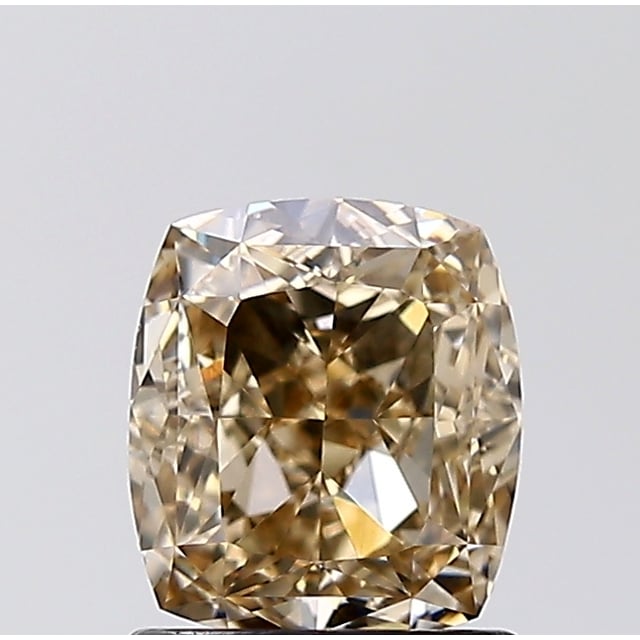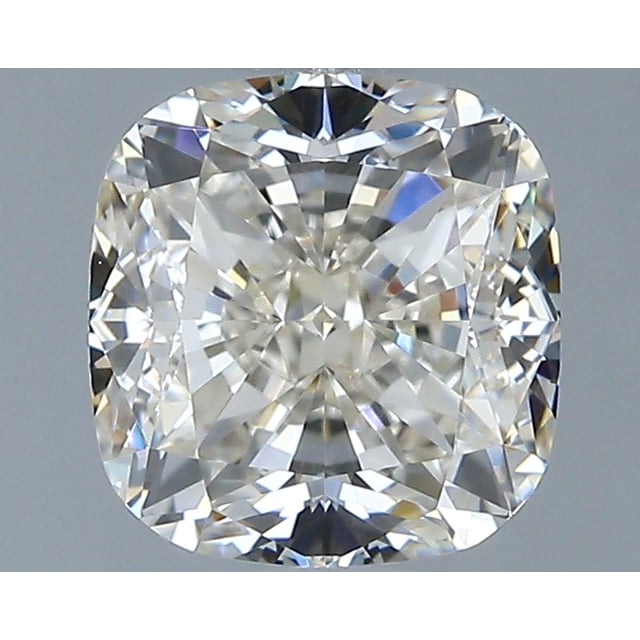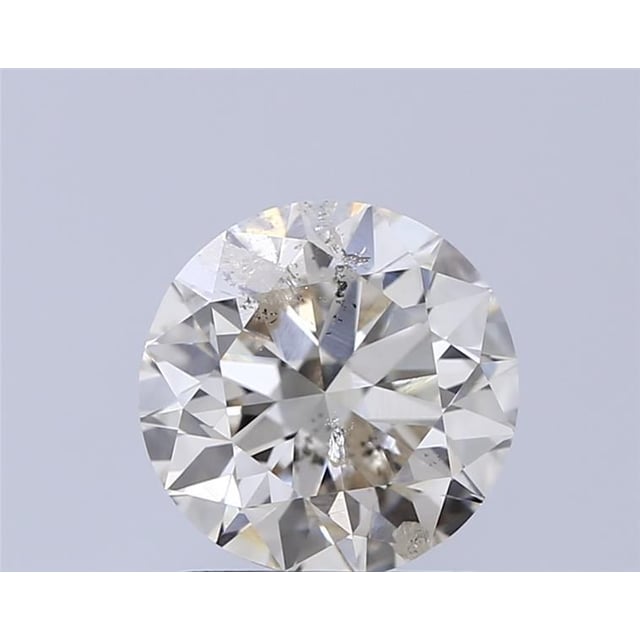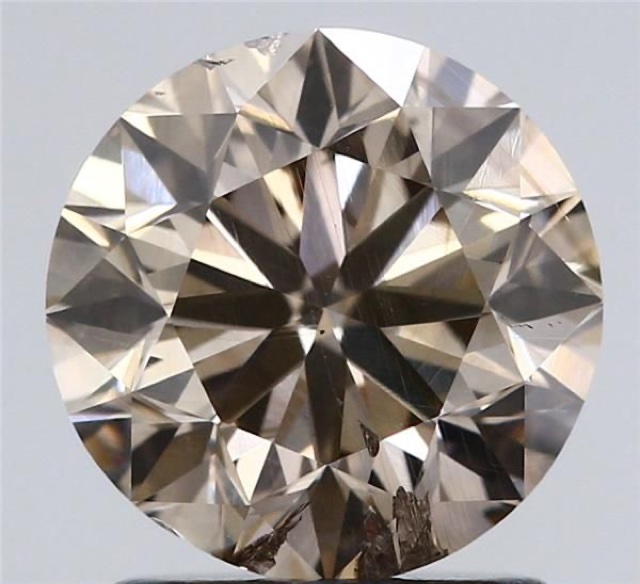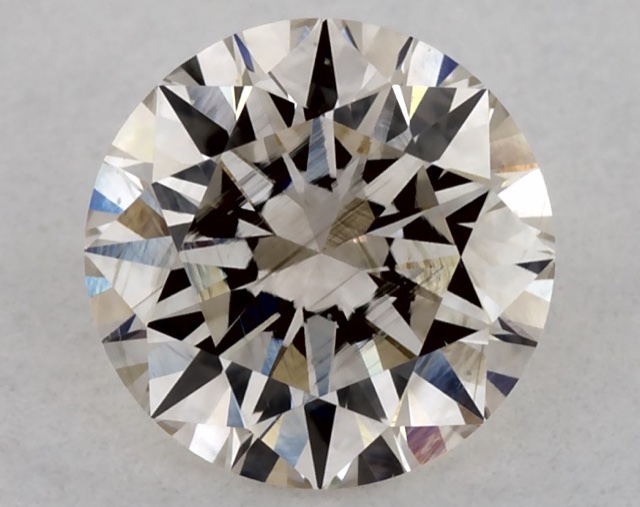
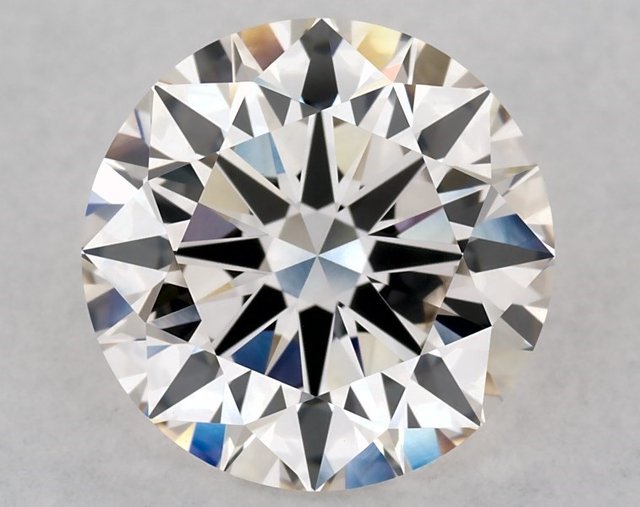
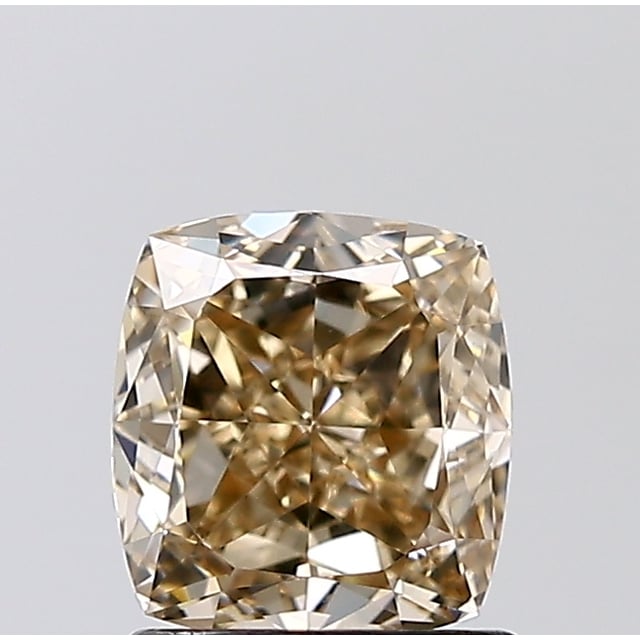
Carat weight is the largest single influence on what a champagne diamond costs, and it also decides how much of the brown tint anyone will notice. Those two facts point the same way, which is the useful part: the brown notation on a GIA report takes the most money off the price at exactly the sizes where the tint is easiest to see, and takes almost nothing off below a carat.
That makes size the place where the real trade is settled. A buyer choosing between a smaller near-colorless stone and a larger champagne one for the same money is not weighing a color preference against a price — they are deciding at which size they want to spend the budget, because the tint only earns its discount once the stone is big enough to show it.
This index holds 2,822 verified natural brown diamonds listed across nine retailers. Every stone is matched to its GIA report number, so the carat weight, the color line and the price on each card describe the same document.
What a carat actually measures
A carat is a unit of weight, one fifth of a gram, and not a measure of how large a stone looks face-up. GIA puts it in four words: "Carat measures weight, not size." Two stones of equal weight can present differently sized outlines depending on how much of that weight sits below the girdle, which is why the measurements line on a GIA report deserves as much attention as the carat figure above it.
GIA also names the weights the trade prices around: "Certain carat weights are considered to be magic sizes for their desirability – 1.00 carat, 1.50 carats, and 2.00 carats. Although it is difficult to visually distinguish a 0.99 carat diamond from a 1.00 carat, the price difference can be significant."
Those steps are where this site divides its listings: under 1 carat, then 1.00 to 1.49 ct, 1.50 to 1.99 ct, 2.00 to 2.99 ct and 3 carats and over. Each page carries live asking prices for the stones in that band and the number of retailers holding each one.
The tint discount is a function of size
Two savings figures appear on this site and they measure different things. The one that isolates the brown notation is the notation discount: a stone whose GIA report carries a brown notation set against stones of the same color letter and the same carat band whose reports carry none. Holding the letter and the weight fixed is what makes it a comparison rather than an observation.
On the 2 September 2026 study that comparison produced eleven matched cells, with a median of 20% and a spread from 14% dearer to 31% cheaper. Read down each letter, the pattern is size:
| Color letter | 0.50–0.99 ct | 1.00–1.49 ct | 1.50–1.99 ct | 2.00–2.99 ct |
|---|---|---|---|---|
| K | 19% | 17% | 30% | 29% |
| L | -1% | 20% | 26% | 27% |
| M | -14% | 12% | 31% | — |
Notation discount by cell; a negative number means the brown stones in that cell were the dearer group, and the empty cell was too thin on one side to report. Every cell at 1.50 ct and over falls between 26% and 31%. Both cells that run the other way are the smallest matched band. The cell-by-cell figures with stone counts and medians are in the champagne diamond price guide.
Matched by weight rather than by letter, the same ordering shows up in price per carat. On the 3 September 2026 merge, white-scale brown stones ran a median $1,687 per carat at 1.00 to 1.49 ct against $2,059 for stones with no brown notation in that band, and $7,294 against $8,271 at 3 carats and over. The gap in dollars grows with size even where the percentage does not.
The second figure, the struck-through price on every card, is the champagne discount, which compares a stone against a similar near-colorless G–H diamond at the lower quartile of current listings. It runs a median 44% among stones with a saving, and it prices the whole distance between a warm stone and a near-colorless one rather than the notation alone. What it does and does not control for is set out on the prices page and in how our price benchmark works.
What our index shows — figures from the 27 September 2026 data snapshot, read on 28 September 2026: 2,794 unique stones deduplicated by GIA report number, carried across 5,125 retailer listings at nine retailers. Median asking price $1,426, from $70 to $594,710. Of those stones, 2,465 are priced below our similar near-colorless benchmark, at a median discount of 46%.
Why the tint shows more as the stone grows
GIA's description of its own color bands changes with size at the point where color stops being a specialist matter. Of the faint band, K to M, where most of the lettered stones here sit, GIA writes that "Color is still difficult to see by the untrained eye". Of the very light band, N to R, it writes that "Subtle color can be seen in larger stones by an untrained eye".
That wording is band-specific rather than a general law about weight, and GIA publishes no table of visibility by carat weight. Note where it places the threshold: at N to R, a band that holds a small minority of the lettered stones here, and not at the K to M range most of them sit in. The mechanism behind the direction is straightforward enough — a heavier stone of the same shape is deeper as well as wider, light travels further through the material before it leaves, and more of the body color accumulates on the way out. What none of that supports is a carat figure at which a given letter becomes obvious, so treat size as raising the odds that the tint reads, not as a threshold to be crossed.
Two qualifications matter before that is treated as a verdict. D-to-Z grading is done face-down against master stones under controlled lighting, which is not how anyone looks at a ring, so the grade describes the stone rather than predicting what a wearer sees. And the setting moves the outcome at least as far as a grade does — warm gold absorbs a tint, white metal and near-colorless melee advertise it, which is the subject of champagne diamond engagement rings.
Buying a shy weight
The oldest saving on a diamond is still available on a champagne diamond, and it stacks with the tint. Buying at 0.90 ct rather than 1.00 ct, or 1.40 rather than 1.50, steps below a magic size that GIA itself describes as hard to distinguish by eye, and the two discounts are independent of one another: one comes from the weight on the report, the other from the hue word beside the letter.
The check that keeps it honest is the measurements line. A shy stone cut with a deep pavilion can face up smaller than its weight suggests, which spends the saving on weight nobody sees. Compare millimeter measurements between candidates, not just carat figures, and compare them within a shape — an emerald cut and a round of equal weight cover different amounts of a finger.
What size costs you elsewhere on the report
Size raises the stakes on the other three grades rather than leaving them alone.
Clarity. A given inclusion is easier to see in a larger stone simply because it is larger too, and brown stones bring their own consideration in graining. Champagne diamond clarity covers where an inclusion sits and which report type records it.
Cut. GIA issues a cut grade for standard round brilliants only. Above a carat, in any other outline, judging proportions from video and measurements is the work that a cut grade would otherwise do.
The letter. Which grade you choose within the notation — K, L, M or N — changes both the price and how much the size amplifies the tint. That decision is set out in K, L, M and N color, and how each outline handles a tint in best shapes for champagne diamonds.
What these figures are, and are not
Everything quoted from this index is an asking price, not a completed sale, taken from live retailer listings on the snapshot date given. The counts describe one build: sold stones drop off, new listings are read, and prices move between builds.
The two dated studies above compare against stones that are not in the index, so neither can be recomputed from today's listings, and both are labeled with the day they were run. 1,194 of the stones here are listed by more than one retailer, which is the one comparison that is fully like for like, because it is the same GIA report on both sides — why the same diamond costs different amounts explains what moves those prices apart. The admission rules behind every stone are in how we verify every stone.