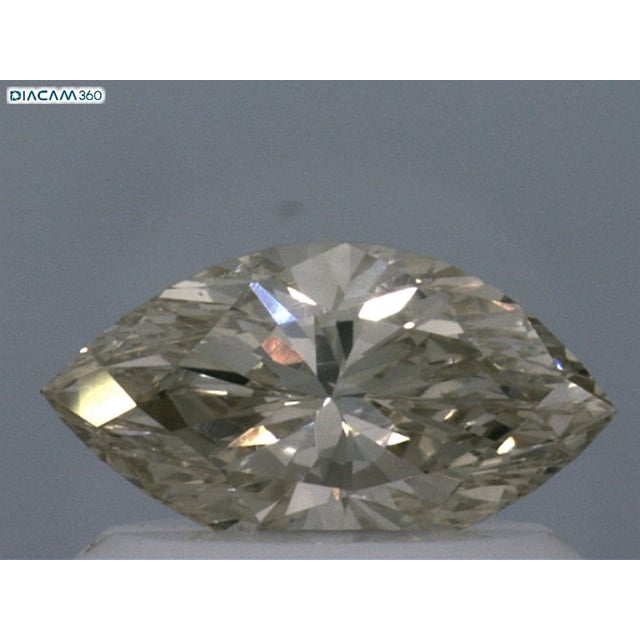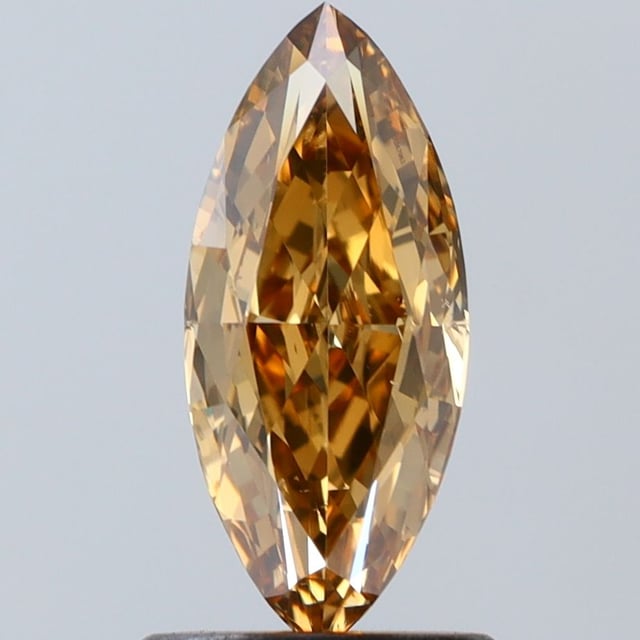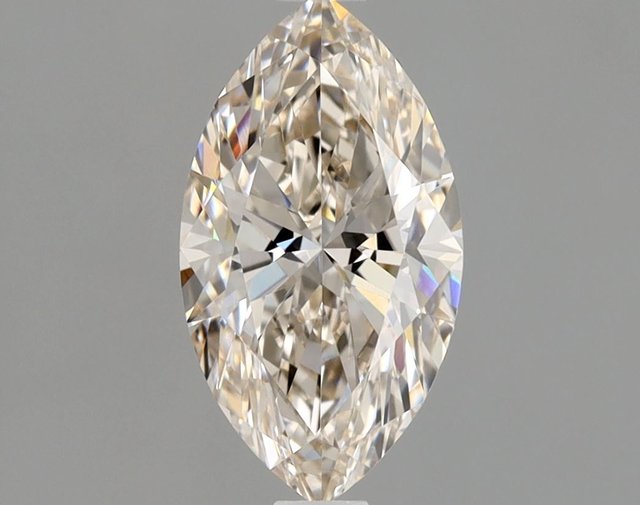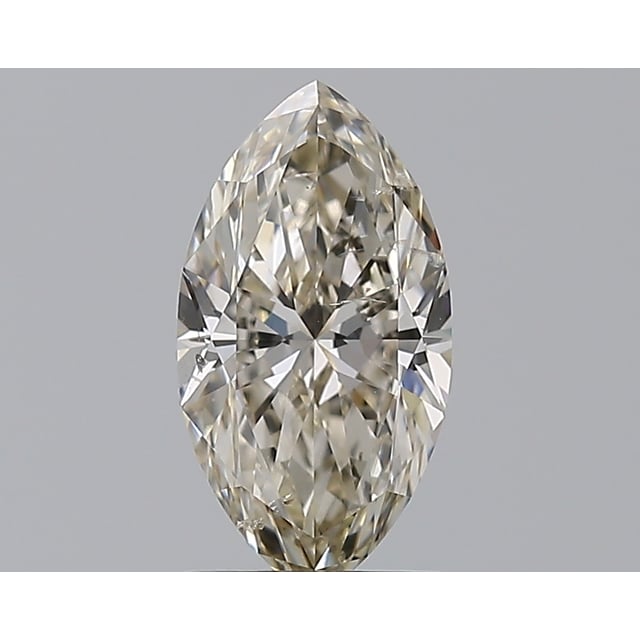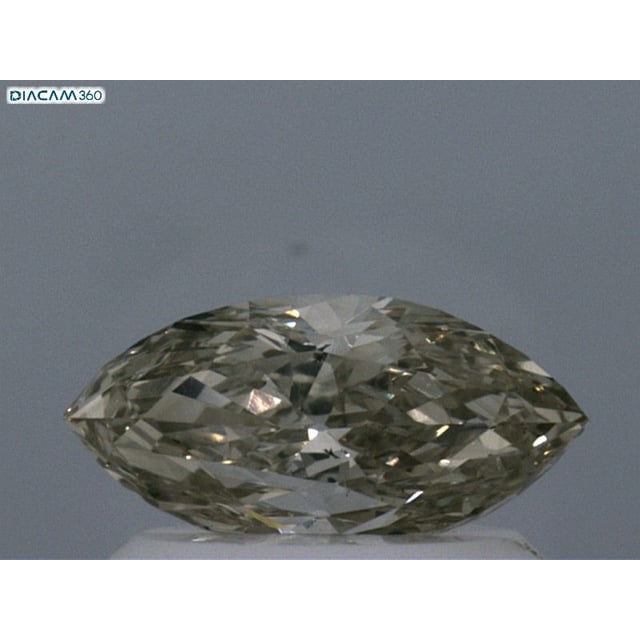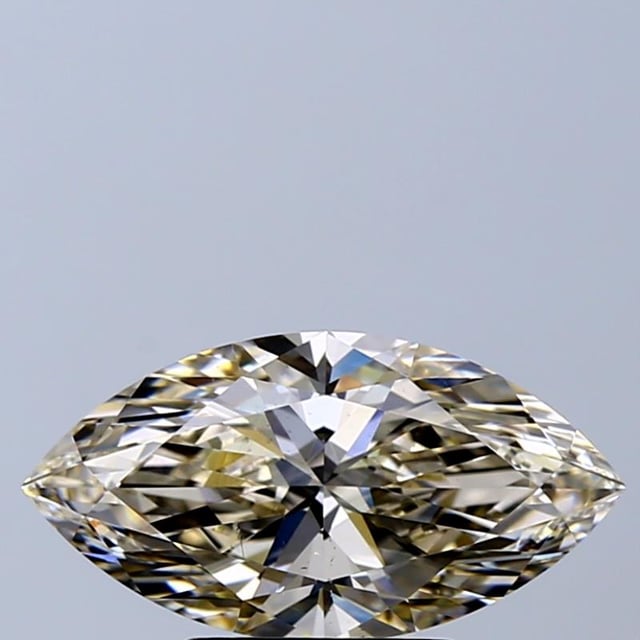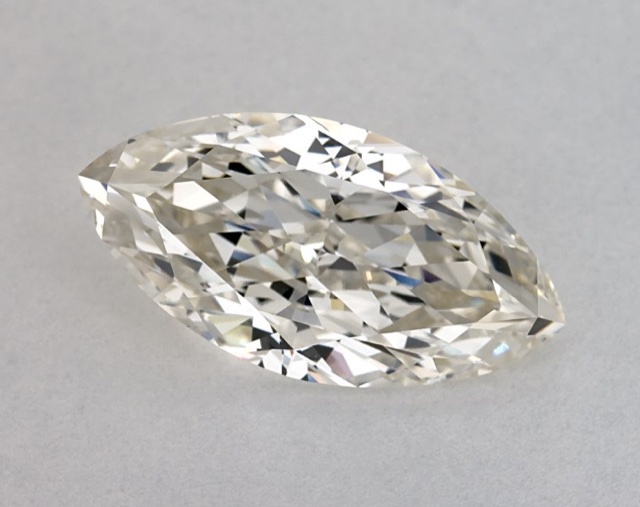
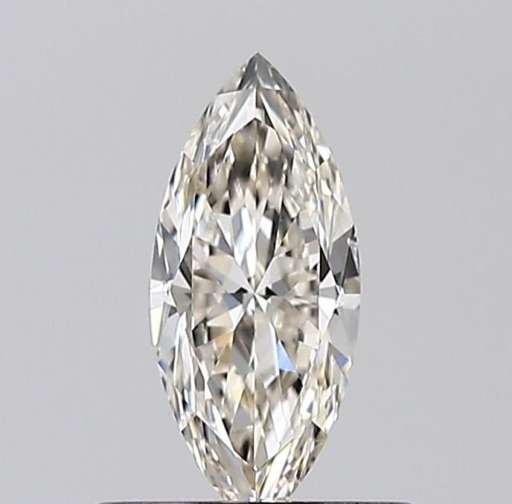
A marquise is the shape that makes a champagne tint most obviously part of the design. It is the longest of the common outlines and it comes to a point at each end, so body color gathers at both tips while the wide middle of the stone stays brightest. If you want warmth that reads as a deliberate gradient rather than an even wash, that is the case for the shape. If you want the tint played down, a round brilliant does more of that work. Either way you can browse every marquise champagne diamond in one filtered list while you decide.
It is a thin pool: 109 marquise stones on the 2026-09-11 data snapshot against 1,434 rounds, so this is a shape where you choose among a limited number rather than specifying a letter, clarity and carat and expecting to find it. The smaller stones sit in marquise champagne diamonds under one carat.
Champagne is a trade description rather than a laboratory term. A stone is admitted here only when GIA wrote a brown notation into the color grade line — Faint Brown, Very Light Brown or Light Brown beside a K-to-Z letter — or graded it on the fancy scale with brown as the dominant color, as in Fancy Brown. How we verify every stone sets out the two rules and how to check any one diamond against its own report.
Where the tint sits in this outline
A marquise uses brilliant faceting, the same family of triangular and kite-shaped facets as a round, arranged inside an elongated boat-shaped outline. Brilliant faceting breaks returned light into many small flashes, and that scattering dilutes body color, so a marquise does not state warmth the way an emerald cut does.
What it does instead is redistribute it. Toward each tip the facets get smaller and the outline narrows, and that end of the stone returns light less evenly than the broad middle. Whatever tint the diamond carries reads strongest in those two regions and weakest across the belly. A pear does the same thing at one end; the marquise does it at both, which is why the color pattern is more legible here than in any other brilliant cut on the index.
For a champagne buyer that pattern is usually an argument in favor. The warmth appears as a gradient with a bright band through the center, which is a more interesting effect than a flat wash and reads as intentional. It also means two marquise stones with the same GIA grade can look quite different face-up: a long, sharply drawn tip holds more visible color than a fuller one, and the report will not tell you which you are looking at. Video will. How the other outlines handle the same tint is compared on the same data in best shapes for champagne diamonds, and what "faint brown" means covers how little of the notation shows face-up in the first place.
The bow-tie lands where the brightness is
Every elongated brilliant carries a bow-tie: a dark band across the width of the stone where the pavilion facets are angled to return the viewer's own shadow instead of light. Pears and ovals have one. The marquise, being the most elongated of the three, tends to show the most pronounced version.
In this shape the bow-tie matters more than arithmetic about ratios, and the reason is specific to a tinted stone. The bow-tie forms in the belly — the same wide middle that is supposed to stay bright and balance the warmth gathered at the two tips. A severe bow-tie removes exactly the region the shape depends on. What is left is color at both ends and a dark bar between them, which is not the stone the shape promises.
So judge the belly, not the tips. A mild bow-tie is gray, soft-edged, and lifts and breaks up as the diamond tilts; it gives the stone contrast and most people read it as character. A severe one is black, hard-edged and static, staying put at every angle. GIA does not grade bow-tie, so this is decided by eye. Watch the 360-degree video full screen and watch the middle third of the stone. If the dark band never moves, move on to the next listing.
Ratio, wings and the outline checks
Length-to-width ratio in a marquise generally runs between about 1.75 and 2.15. Nearer the low end the stone reads fuller and softer; nearer the high end it looks more slender, lengthens the finger, and the tips get longer and more delicate. Neither is graded and neither is wrong, so treat ratio as taste. Because it changes face-up size as much as appearance, read the millimeter measurements on the listing rather than trusting carat weight to describe the size you will see.
A marquise also spreads a given weight across a long, comparatively shallow outline, which is why it covers more of the finger than a round of the same carat weight. The trade-off is that a marquise cut too shallow can window: a flat, glassy area through the center where light passes through the stone rather than returning to your eye. A window is visible in a good top-down image, and it dims the same region the bow-tie does.
Outline symmetry is read before anything else in an elongated shape, and four things are worth checking:
- The two points line up. Draw a line through both tips. Each should sit on that axis, not slightly off to one side.
- The widest point is centered. It should fall halfway along the length, so the two halves mirror each other.
- The wings match. The curved sides running from each tip out to the widest part should be identical left and right. Flat wings make a stone look narrow-waisted; bulging wings make it look heavy through the middle.
- Both tips are drawn the same. One sharper tip and one blunter one is the asymmetry people notice most.
GIA issues a cut grade for round brilliants only. A marquise report carries polish and symmetry grades, which describe finish and outline rather than light return, so any cut label shown on a fancy-shape listing is the retailer's own judgment and not a laboratory grade.
Two points to protect
The marquise is the only common outline with two vulnerable tips, and each is the thinnest, least supported part of the stone. That is the main practical difference between buying this shape and buying a round.
The standard answer is a V-prong at each end, shaped to wrap the tip on both sides rather than pinch it from one, and it is worth asking a setter about rather than assuming it is fitted. A bezel or half-bezel does the same job with more metal and less sparkle at the tips, and it also covers the regions where color reads strongest, which some buyers want and others do not. Check the girdle thickness at the points on the GIA report as well: an extremely thin girdle running out to a tip is more fragile than a medium one, and that is worth knowing before you choose a setting. Some marquise cuts are finished with French tips, where the large facet at each point is replaced with smaller star facets — a cutting style rather than a grade, which changes how the very end of the stone looks.
What a marquise champagne diamond costs
Price is set first by carat weight and then by the tint, and there is no marquise-only median in today's snapshot to quote. The honest way to price the shape is to read the marquise collection against the carat band you are shopping in, with champagne diamond prices for the band structure across all shapes.
Two comparisons frame what the tint is worth. The first is against a different stone: every card here is priced against a similar near-colorless G–H diamond matched on shape, clarity, cut grade and carat weight, taken at the lower quartile of current listings, and stones with a saving run a median 44 percent below that benchmark. It compares asking prices rather than completed sales, and a warm marquise and a near-colorless one are never a perfect match, so it describes the size of the gap rather than a guaranteed discount. The method is set out on the prices page and in how our benchmark works.
The second is about the same stone. Because the marquise stones here are drawn from nine retailers and matched by GIA report number, one diamond is often listed by more than one store at different asking prices. Why the same champagne diamond costs different amounts explains how that happens and how to use it.