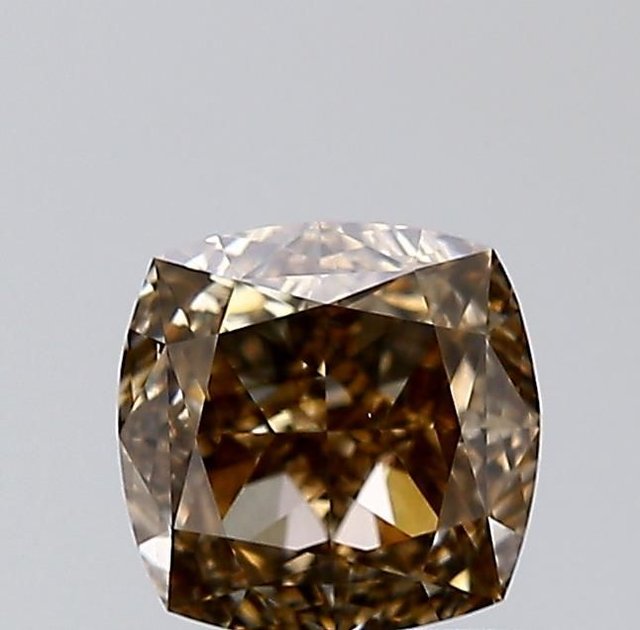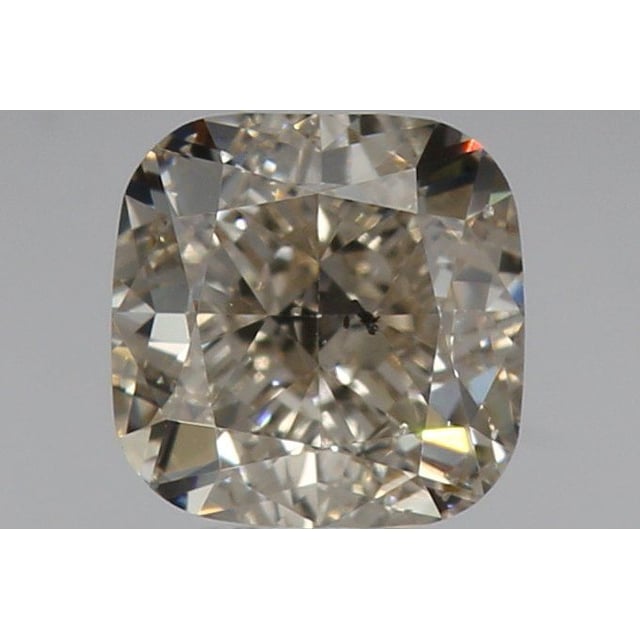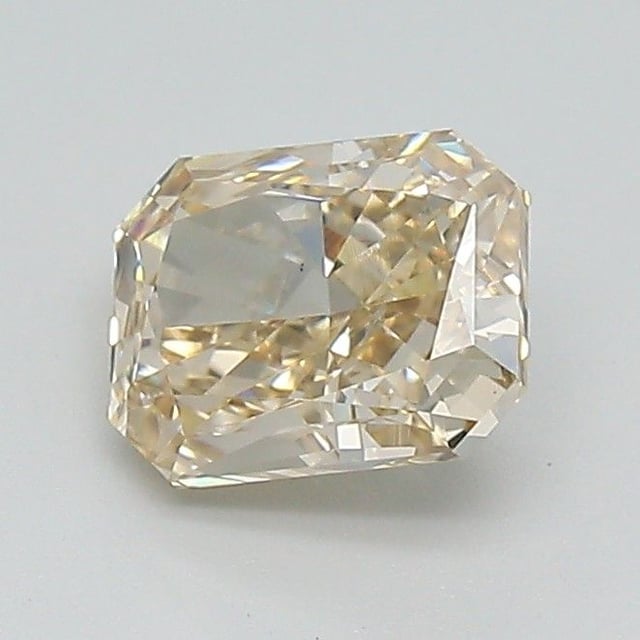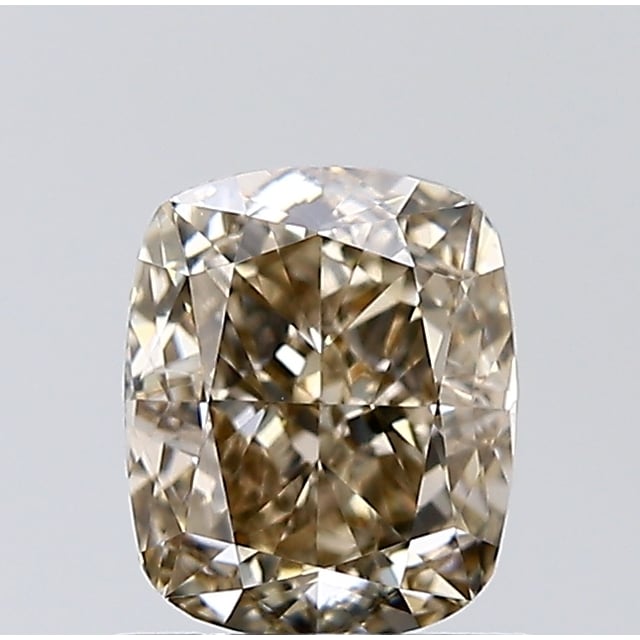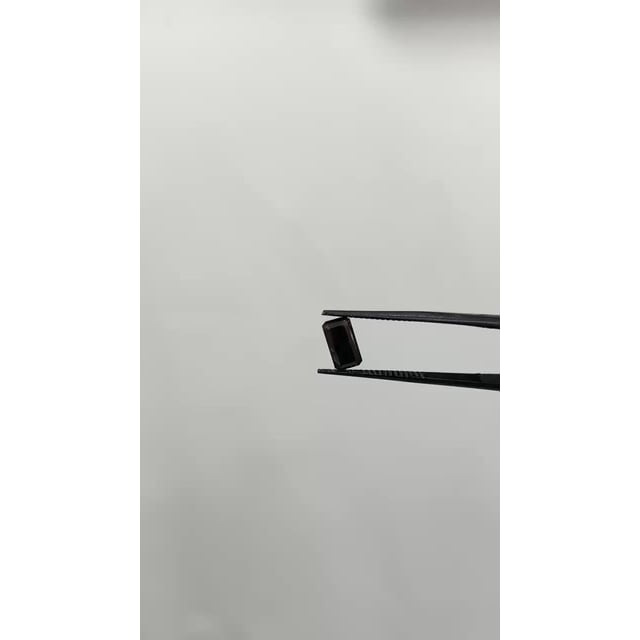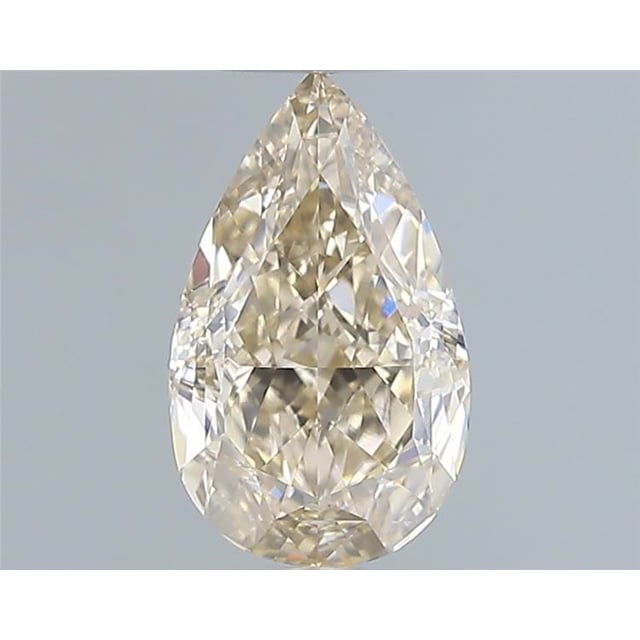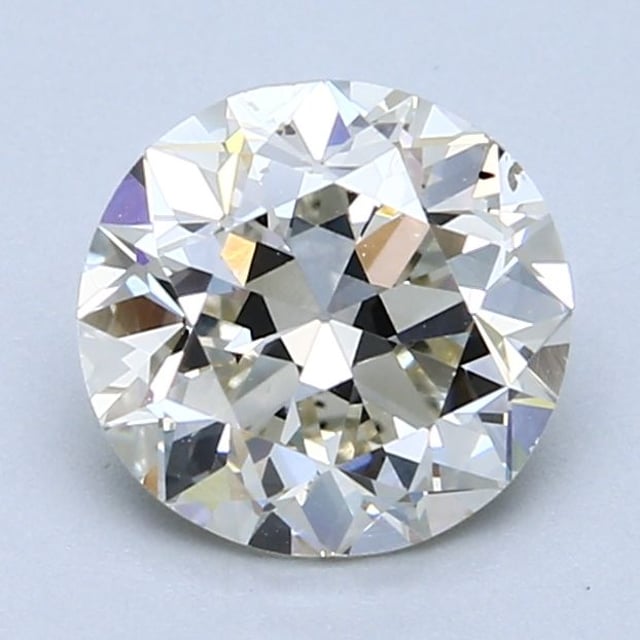
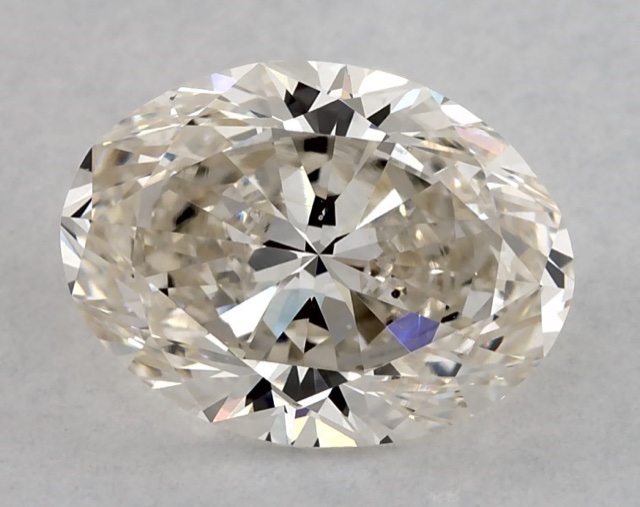
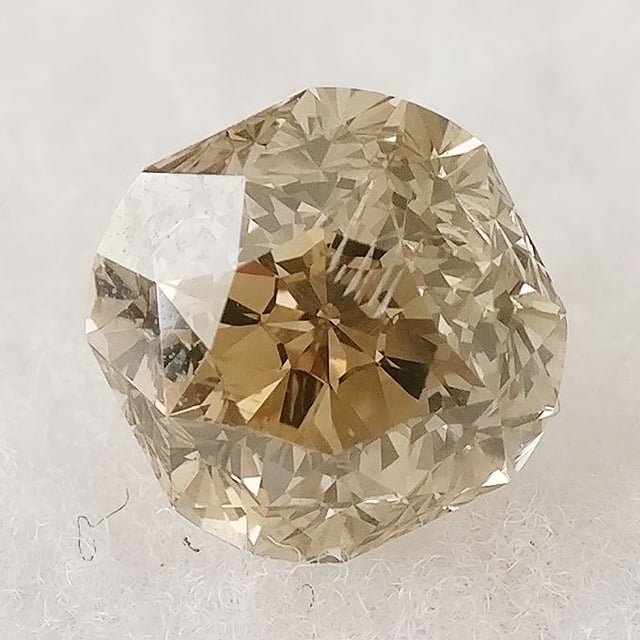
There are two ways to end up wearing a champagne diamond, and they differ most in what you can check before you pay. Buying a loose champagne diamond means buying a stone with a GIA report number attached: you can read its color wording, see the same diamond priced by more than one retailer, and have it set afterwards. Buying a finished ring means buying a designed object, where the center stone is usually described in the jeweler's own words and the price covers the stone and the making together, with no way to separate them.
Neither is the better purchase in general. If the stone itself is the thing you care about — its color grade, its weight, what you paid for it against comparable stones — buy loose and have it set. If the ring as an object is the thing you care about, a particular jeweler's silhouette or an antique cut you cannot find certified, buy the ring and run a different set of checks. This guide covers both, and what champ. can and cannot tell you in each case.
What a report number buys you
Every stone in the loose index is keyed to its GIA report number. That is the whole mechanism: the color line of the report — Faint Brown, Very Light Brown or Light Brown beside a letter grade, or a colored-diamond grade with brown named as the dominant color — is read from the report itself rather than taken from a retailer's description, and how we verify every stone sets out both rules.
The report number does something else as well. Because listings are matched on it, the same physical diamond carried by two sellers collapses into one entry instead of appearing twice. On the 2026-09-22 data snapshot, 2,719 unique verified natural brown stones sat across 4,949 retailer listings at nine retailers, and 1,161 of those stones were listed at more than one of them. Those are asking prices rather than records of completed sales, and they frequently differ for a single stone — which is the subject of why the same champagne diamond costs different amounts.
A finished ring has no equivalent. It is made by one jeweler, sold by that jeweler, and priced once. There is no second listing of the same ring to compare it against, and no report number to match it on.
The benchmark only exists on the loose side
Every loose card carries a struck-through price. That figure comes from matching the stone against near-colorless G–H natural GIA-graded diamonds of the same shape, the same clarity and the same cut tier on GIA's Excellent, Very Good and Good scale, within a carat window drawn so that it never crosses a trade threshold where price per carat steps up. The comparison figure is the lower quartile of those matched prices per carat rather than the median, because a buyer compares against the similar stone they could actually buy. On the 2026-09-22 snapshot, 2,397 of the 2,719 stones were priced below that benchmark, at a median discount of 46 percent. The method is on the prices page and in how our benchmark works.
A warm stone and a near-colorless one are never a perfect match, so that number describes the size of a gap rather than a saving banked. Still, it is a gap nobody can calculate for a finished ring, because the ring price has a setting inside it and the center stone has no matched comparator.
What a ring listing actually tells you
The rings section is a different kind of catalogue, and it is worth knowing how it is built. Nothing in it is scraped. Each record is written from the jeweler's own product page, keeps that page's URL and the date it was checked, and is filterable by shape, jeweler, side stones, setting, band style and metal.
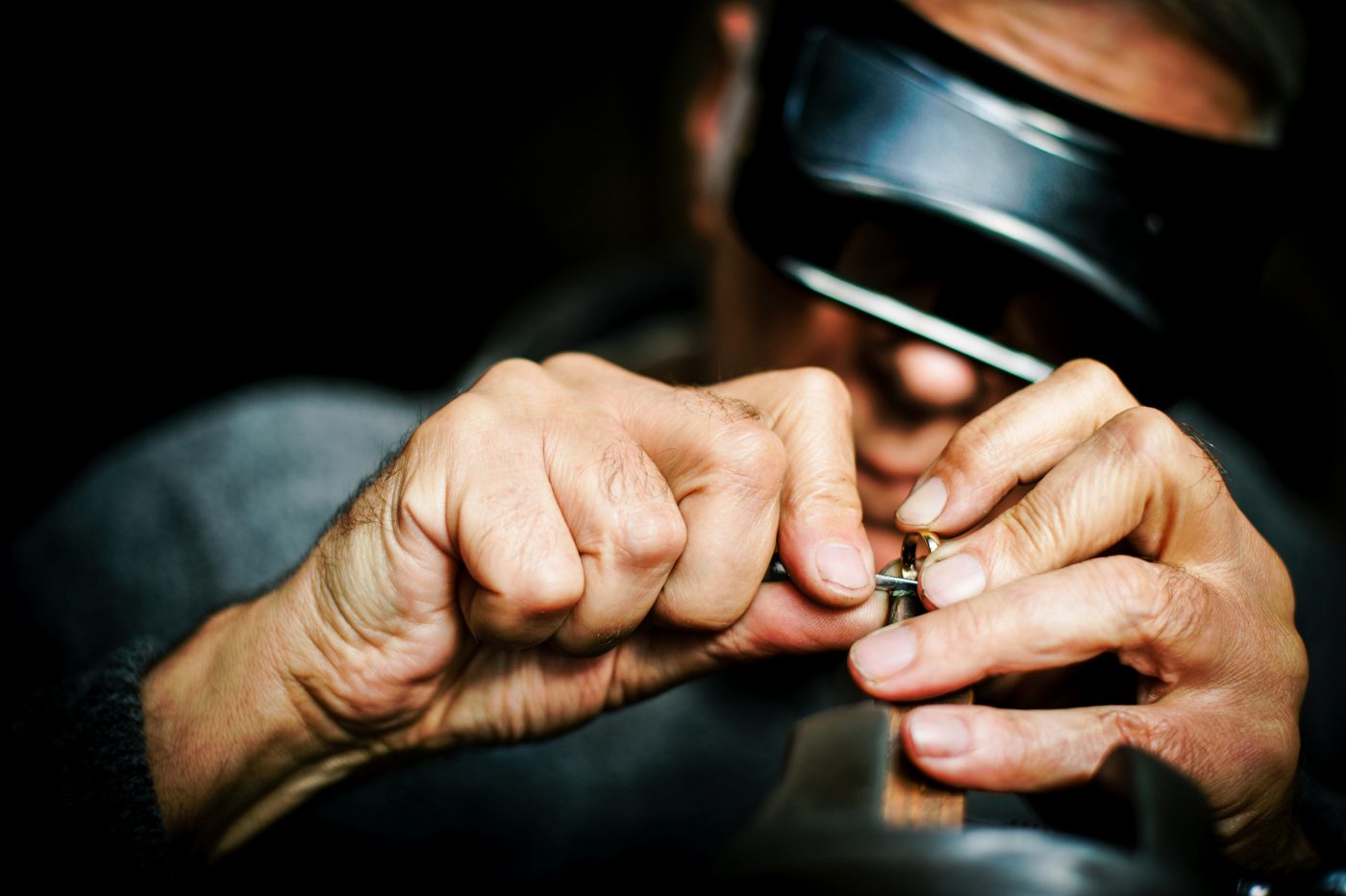
A finished ring is priced as one object: stone, metal and the work of making it.
What those listings carry is not what a loose listing carries. Checked on 22 September 2026, most of them name no grading laboratory for the center stone. Center-stone weight is sometimes given as approximate rather than exact. Clarity is sometimes a range, such as SI1 to VS, rather than a single grade. Color is described in the jeweler's own vocabulary — "light champagne", "light yellow brown" — and champagne is a trade description rather than a laboratory term, so those phrases carry no defined grade behind them. What "champagne" means on a specific listing is a question for the jeweler, and the same question decides origin: lab-grown champagne diamond engagement rings covers how to read origin wording, since champ. indexes natural stones and rings only.
None of that makes a ring a worse purchase. It makes it a purchase in which the design, the maker and the photographs are the evidence, rather than a grading report.
The outlines you can only get finished
This is the clearest argument for the ring route, and the loose index makes it visible. Of the 2,719 stones live on the 2026-09-22 snapshot, 1,422 are round, followed by 338 pear and 310 oval. The catalogue of certified loose material is, overwhelmingly, the modern brilliant shapes: exactly one octagonal, one hexagonal and one old-miner stone appear in the whole index.
The rings catalogue is full of the outlines that are missing there — old mine and old European cuts, rose cuts, kites, shields, lozenges, hexagons and trillions — because those stones are generally bought, cut or reclaimed by the jeweler and set into a design rather than listed loose with a report. If an antique cut is what you want, the finished-ring route is usually the only one available, and the trade-off is that you are judging the stone from the jeweler's photography and description instead of from a report.
Do not compare the two prices directly
On the 2026-09-22 snapshot the median loose asking price was $1,415, with a range from $96 to $242,850. That is a stone-only figure. Setting costs are quoted separately, vary widely with metal and complexity, and are set by whoever builds the ring. A finished ring listed at several times a loose median is not therefore expensive; it is a different product with labor and design inside the number.
The comparison that does work is within a route. Loose against loose, using the carat bands in champagne diamond prices and the one carat and over listings. Ring against ring, using the filters in the rings section to hold shape, setting and metal roughly constant and read the prices across jewelers.
What to ask, by route
Buying loose: get the GIA report number and read the color line yourself, since a brown notation sits in the report and not in the letter grade a retailer lists. Check whether the stone appears at more than one retailer. Watch the stone on full-screen video rather than in a still. Settle the setting question — who will set it, what it costs, what happens if the stone is damaged at the bench — before you buy, not after.
Buying a finished ring: ask whether a grading report exists and for its number if so. Ask whether the quoted carat weight is exact or approximate. Ask what the jeweler means by champagne on that listing, and whether the stone is natural. Ask for video in neutral light. Confirm resizing, returns and any warranty in writing, because those terms are the jeweler's own and change without notice.
champ. holds no inventory and sets no prices. It reads the reports, matches the listings and links out to whoever is holding the stone or making the ring; how metal, halos and bezels change the way a warm stone reads is covered in how to choose a champagne diamond engagement ring.