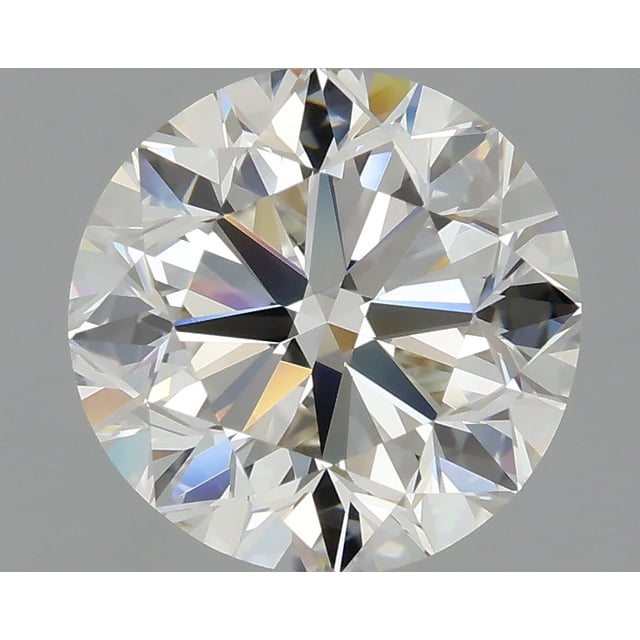
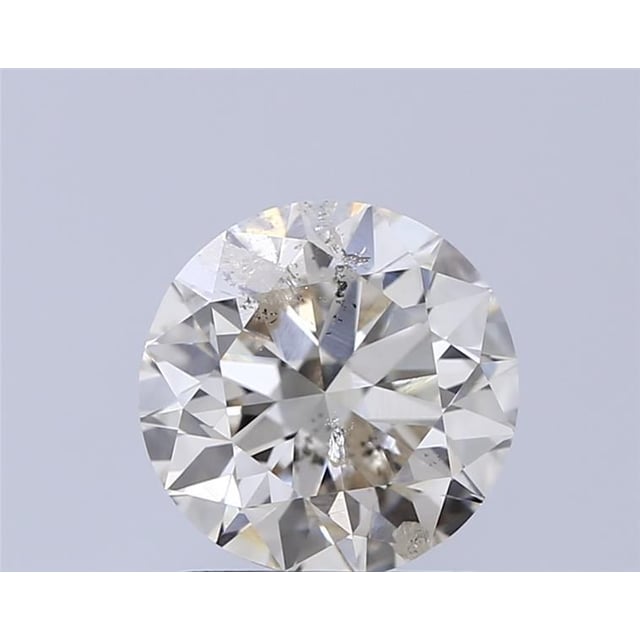
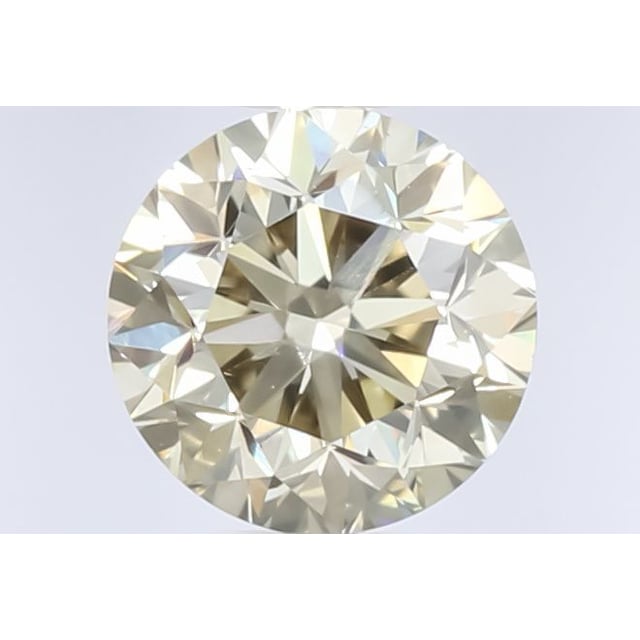
Most champagne diamonds look like a slightly warm white diamond. On the 2026-10-09 data snapshot this index held 2,746 unique natural brown diamonds, deduplicated by GIA report number, and 2,200 of them carry the shallowest wording GIA uses: Faint Brown, printed beside a K, L or M color grade. That is near-colorless material with one extra word on the report, and face-up it reads as a warm cast rather than as a brown stone.
The other answer belongs to a much smaller group. 345 stones are graded Fancy Brown and 52 Fancy Light Brown on GIA's colored-diamond scale, where brown is the graded color rather than a residual tint. Those do look brown, and together they are about one stone in seven here. Between the two sit 131 Very Light Brown and 18 Light Brown stones.
So the word champagne covers two different appearances, and the color line of the grading report is the only thing that tells you which one a listing is showing you.
The two scales describe different things
| GIA wording | What the scale measures | How it reads face-up | Stones, 9 October |
|---|---|---|---|
| Faint Brown (K–M) | absence of color | warm near-white | 2,200 |
| Very Light Brown (N–R) | absence of color | visible warmth | 131 |
| Light Brown (S–Z) | absence of color | clearly tinted | 18 |
| Fancy Brown | presence of color | brown | 345 |
| Fancy Light Brown | presence of color | light brown | 52 |
Counts from the 2026-10-09 snapshot. The first three are positions on the D-to-Z scale, where more tint means a lower grade; the last two belong to a separate system that names a hue instead of ranking its absence. What Faint Brown means works through the notation itself, and which GIA report a champagne diamond carries covers where each piece of wording sits on the document.
The color grade is not a picture of what you will see
A D-to-Z color grade is not an assessment of how a diamond looks on a hand. GIA's 4Cs blog, checked on 10 October 2026, describes the method: a grade "is determined by comparing the diamond to masterstones – a set of color-comparison diamonds of known position on the GIA D-to-Z color grading scale – when all are placed table down in a grading tray." The same page says of that position that "This viewing position reduces the complex appearance of a faceted colorless to near-colorless diamond when viewed face up."
The grade is therefore built to set aside the brightness and contrast a diamond is bought for, so that one stone's body color can be compared with another's. GIA's color page, checked the same day, puts the requirement plainly: "The correct way to evaluate diamond color is in precise conditions, under controlled lighting, where stones are compared to masterstones with established color grades." And the differences being measured are fine ones — the blog notes that "The distinctions between diamond color grades can be so subtle that they are undetectable to the untrained eye."
Fancy-color grading runs the other way. GIA's quality-factors page for colored diamonds, checked on 10 October 2026, sets its threshold face-up: "Even in light tones and weak saturation, as long as they show color in the face-up position, they qualify as fancy colors." A Fancy Brown grade is a statement about the view you get. A K Faint Brown grade is not.
What changes the appearance, and is not on the report
Four things move how much tint you see, none of them recorded by the color grade.
The metal. GIA's blog is direct about it: "A white metal like platinum or white gold can emphasize the absence of color in a diamond that is colorless or near-colorless, while a gold band might make a diamond lower on the D-to-Z scale appear more yellow." A warm stone in yellow or rose gold has less working against it.
The surroundings. "Diamonds are highly reflective – their facets are essentially an arrangement of tiny mirrors reflecting light and the surroundings," the same page says. A photographic set is part of what the stone is reflecting.
Size and depth. GIA's colored-diamond page notes that "The larger a diamond is, or the deeper its pavilion, the farther light can travel in it. This can often lead to a richer, more intense color." The same notation shows more at two carats than at half a carat.
The cutting style. GIA records that "The style of the cut can also influence color. Cutters discovered that certain styles—typically mixed cuts like the radiant—can intensify yellow color in diamonds." That is why a radiant and a brilliant carrying the same wording on the report can look like different stones, and why which shapes flatter a tint is a separate question from which grade to buy.
Why two photographs of one diamond disagree
A listing photograph is made under the retailer's own lighting, background and processing. Measured against GIA's description of what a color comparison requires, a product image is not one, and nothing about it is standardized across stores.
This index makes that checkable in one narrow way. On the 2026-10-09 snapshot, 1,162 of the 2,746 stones were listed at more than one retailer at once, matched on GIA report number, so the images on those listings show one physical diamond as presented by several sellers. Whatever differs between them is not the stone. Why the prices on those same listings differ is taken up in why the same champagne diamond costs different amounts.
Two things are worth saying about the pictures on this site. They are not photography of our own: a stone's still and its 360° spin are fetched against its GIA report number from the supplier's own media, so a card here shows the trade's image of that diamond. And where a retailer publishes a spin but no still, the picture on the card is a frame lifted out of that spin, because the stone is already turning in the viewer. On the 6 September 2026 build — the last day those counts were computed, and older than every snapshot figure above — 2,146 of the 2,806 stones then listed had a 360° spin and 2,309 had a still.
What is missing is any measurement of how far images of one stone diverge. That would take the same diamond captured under a single controlled setup and each retailer's image compared against it, which is not something this index holds.
What our index shows — data snapshot 2026-10-09, read on 10 October 2026
2,746 unique verified natural brown diamonds, deduplicated by GIA report number, across 4,905 retailer listings at 9 retailers, with 1,162 stones listed at more than one retailer. By GIA wording: 2,200 Faint Brown, 131 Very Light Brown, 18 Light Brown, 345 Fancy Brown, 52 Fancy Light Brown. By shape, 1,401 of them are round. Median asking price $1,488, range $92 to $242,530; 2,388 stones sit below their matched near-colorless G–H benchmark, at a median discount of 45%. Retailer asking prices on one snapshot, not records of completed sales.
What to do instead of trusting the image
- Read the color line first. It is the one stable statement about the stone, it resolves in GIA's own report lookup, and it is what every stone here was admitted on — the method is in how we verify every stone.
- Use the spin rather than the still. A single frame fixes one angle and one lighting condition; a rotation shows the stone losing and regaining its warmth as it turns.
- Open the same report number at each retailer holding it. For the 1,162 multi-listed stones that is a second view of the appearance, and a direct price comparison as well.
- Decide the metal before the letter. If the setting is yellow or rose gold, a warmer grade has less working against it, by GIA's own account of how metals read.
- Watch for the bow-tie on brilliant fancy shapes. GIA describes it as "a dark area which looks like two triangular pieces joined in the center of the stone," and advises that when the diamond is viewed face-up you want it minimized as much as possible. A still photograph will not settle it.
The tint is a graded color, printed on the report, and the reason these stones sit below the near-colorless comparison the prices page sets out. What one looks like is a separate question from what it is called, and the two ends of the range are a click apart: Faint Brown for the warm near-whites, Fancy Brown for the stones that read brown.







