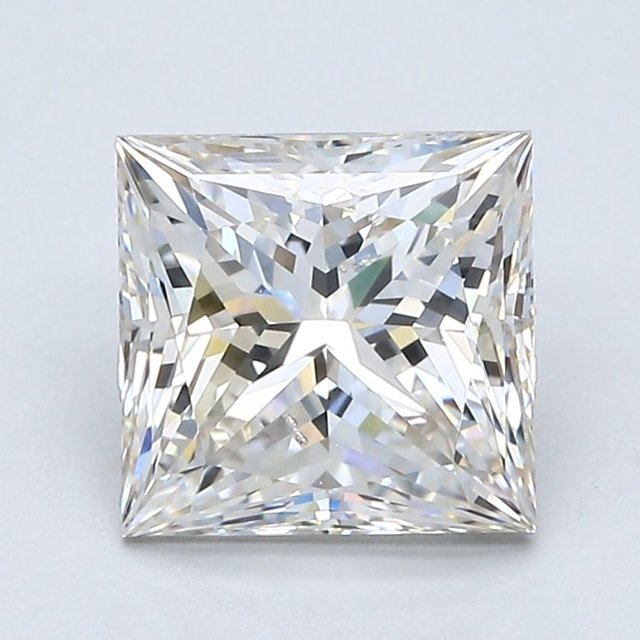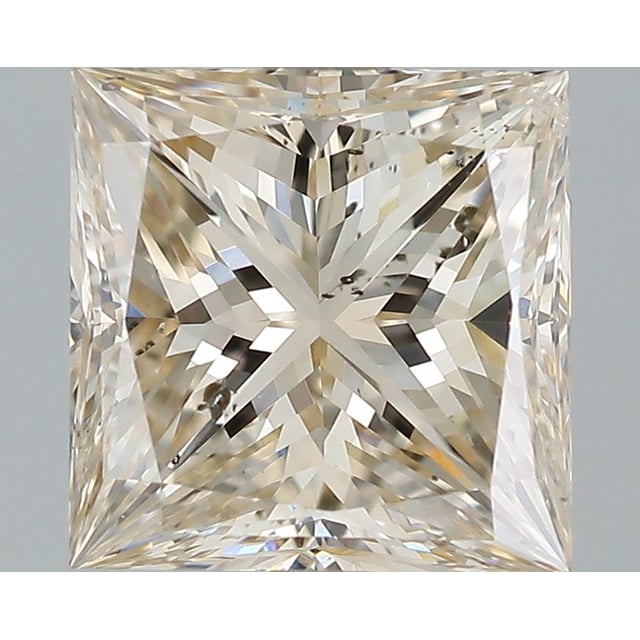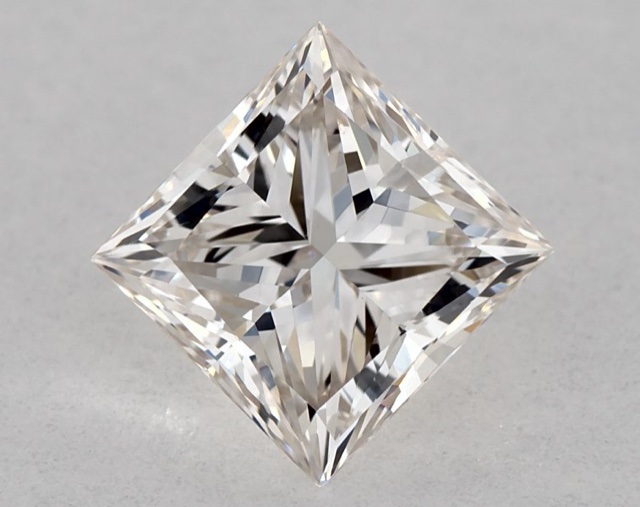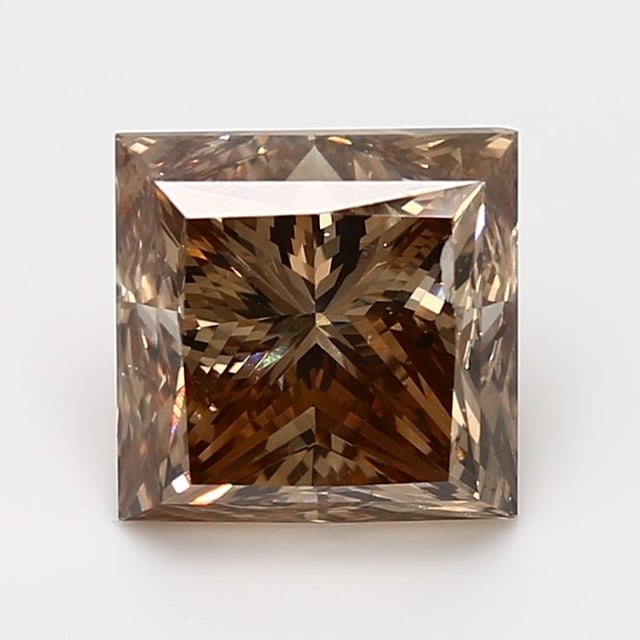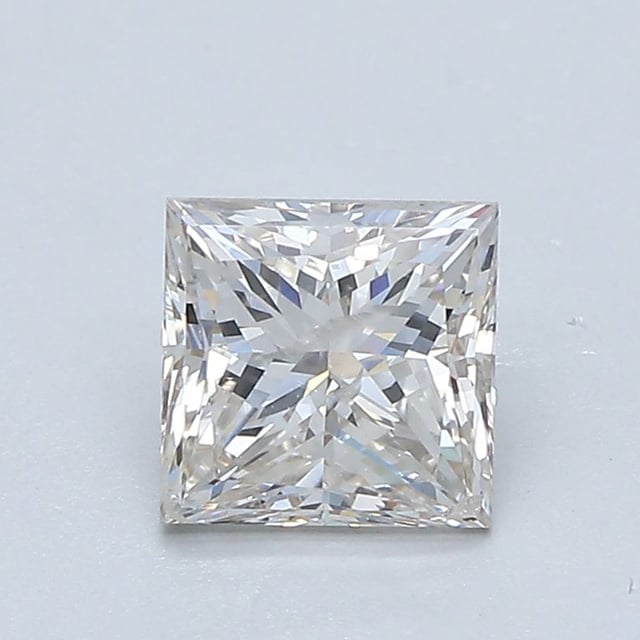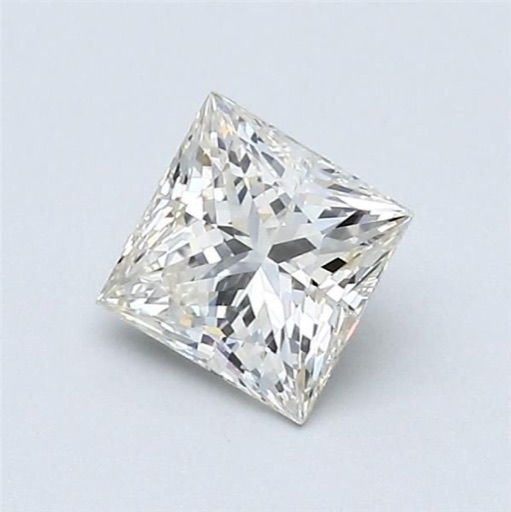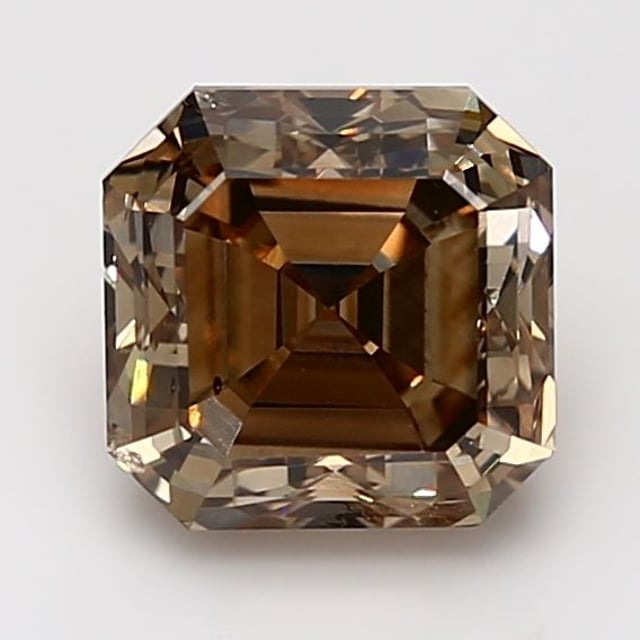
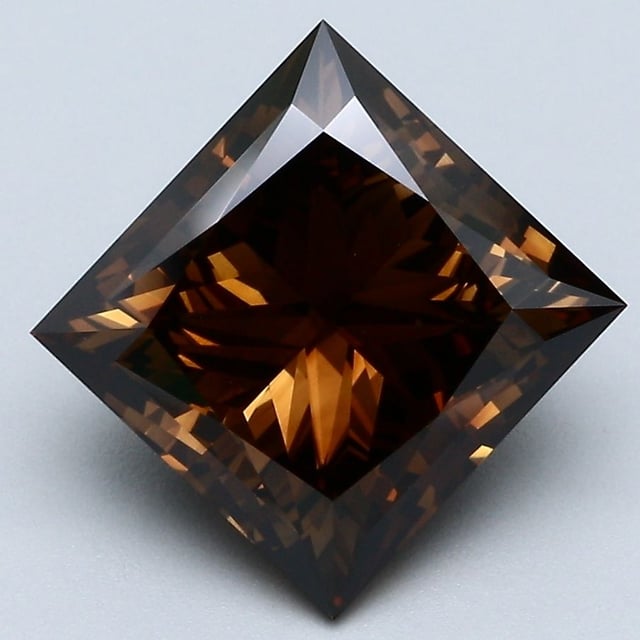
Two of the shapes indexed here are square, and they do opposite things to a warm tint. An asscher cut champagne diamond is a step cut, so the color sits across the stone in broad even planes and is meant to be seen. A princess cut champagne diamond is a square modified brilliant, so the same color is chopped into small scattered flashes and reads lighter. Pick the asscher if you want the warmth to be the point of the stone, and the princess if you want the square outline without the color announcing itself.
The real constraint on both is supply. These are the two thinnest shape pools on the index: 34 asschers and 20 princess cuts among the 2,722 unique verified natural brown diamonds live on the 2026-09-19 data snapshot. You can read them as two short lists, every asscher cut champagne diamond and every princess cut, and be through each in a few minutes.
Champagne is a trade description rather than a laboratory term. A stone is admitted here only when GIA wrote a brown notation into the color grade line — Faint Brown, Very Light Brown or Light Brown beside a K-to-Z letter — or graded it on the colored-diamond scale with brown as the dominant color, as in Fancy Brown. How we verify every stone sets out both rules and how to check a single diamond against its own report.
One outline, two machines underneath
GIA calls the asscher the square emerald cut. Its 58 facets are larger and wide-set, in three rows on the top and three on the bottom, and the outline is nearly octagonal rather than truly square, with step-cut facets, a high crown and a small table. Those concentric trapezoidal facets produce what GIA describes as a hall of mirrors effect: light travels further through the stone and returns in wide planes rather than points. Joseph Asscher developed the cut in 1902 and it became popular during the Art Deco movement and after the First World War. There is also the Royal Asscher, which adds two further rows of eight facets to the pavilion for 74 in total and is patented, so only one company may cut it.
The princess is the other kind of machine entirely. GIA calls it the square modified brilliant, and its facet arrangement varies widely from cutter to cutter, which changes the scintillation pattern from one stone to the next. Brilliant faceting is engineered to return light in many small flashes, and that scattering is what dilutes body color.
So the two shapes share a silhouette and nothing else. The asscher belongs with the emerald cut, the other step cut with a collection page here; the princess belongs with the round and the oval. Best shapes for champagne diamonds sets every outline against the same data.
What GIA says about color, and how it reads here
GIA is direct about the step cut: step cuts such as the emerald or Asscher cuts show color more, so anyone wanting a relatively white or colorless step cut will need to go higher in color grade. For asschers specifically the laboratory recommends VS2 clarity or higher and G color or better.
That advice is written for a buyer chasing colorlessness. Reverse the goal and the physics work in your favor rather than against you: the property GIA warns a white-diamond buyer about is the property that makes an asscher worth choosing for a tinted stone. What does not reverse is the clarity half. GIA notes that brilliant cuts can conceal small inclusions through their many facets, while step cuts, with their larger open facets, may reveal them more easily. A warm body color does not hide an inclusion, so the stricter clarity standard still applies to an asscher, and a princess is the more forgiving of the two on that count.
What this index shows about the two squares
The composition of each pool matches what the faceting does, which is worth reading as an indication rather than a measurement.
Of the 34 asschers live on the 2026-09-19 snapshot, 23 carried a photograph on the index: 22 Fancy Brown and one Fancy Light Brown. All 23 are graded on the colored-diamond scale, and none is a D-to-Z stone with a brown notation. Of the 20 princess cuts, six carried a photograph: three Faint Brown, one Very Light Brown and two Fancy Brown, so four of the six sit on the D-to-Z side.
Site-wide the balance runs the other way. Among the 2,722 unique stones on that snapshot, 373 are fancy-scale — 322 Fancy Brown and 51 Fancy Light Brown — which is fewer than one stone in seven. An all-fancy asscher pool against a mostly-lettered princess pool is the opposite ordering from the index as a whole.
Both figures are small, both cover only the photographed subset of a shape, and what a retailer photographs is its own decision, so this is not evidence about the wider market. The direction is still what you would expect: the cut that shows color attracts the material sold for its color, and the cut that hides it attracts stones whose color is a footnote to a letter. Champagne vs fancy brown explains what separates the two scales.
Reading a specific stone
GIA does not grade the overall proportions of fancy cut diamonds, so any cut grade on an asscher or princess listing is the retailer's own judgment. What the report does carry is Finish — polish and symmetry — and GIA treats Excellent or Very Good on both as an indication of cut quality. The rest is your eyes, on full-screen video, in daylight where you can.
For an asscher, GIA's checks are short. All sides should be parallel. Symmetry should hold: facets matching on either side of an imaginary line down the middle of the stone, with a balanced contrast of light and dark patterns in the table and the other facets. Fine asscher cuts carry no culet facet, which matters when the stone is mounted, because the culet is a safety facet that protects the pavilion point from chipping. Renditions vary, since the cutter decides the details, so two asschers of the same grade can look quite different.
For a princess, a square one has a length-to-width ratio not exceeding 1.05:1, and symmetry should be even on both the vertical and horizontal axes. Watch the pavilion: steep slopes make a stone look dark, and a gentler slope from girdle to culet is preferable. The princess also lacks a culet, which leaves the pavilion point susceptible to chipping, so four prongs or a bezel covering the corners is the practical setting answer.
What the two squares cost
Carat weight sets the price first and the outline second, and pools of 34 and 20 stones support no shape-only median worth quoting today. Read the asscher collection and the princess collection against your own carat band, with champagne diamond prices for the band structure across every shape and one carat and over for the band most buyers land in.
Two comparisons frame what the tint is worth, and they measure different things. Every card is priced against a similar near-colorless G–H natural diamond, matched on the same shape, the same clarity and the same cut tier on GIA's Excellent, Very Good and Good scale, within a carat window drawn so that it never crosses a trade threshold where price per carat steps up; the comparison figure is the lower quartile of those matched prices per carat rather than the median, because a buyer compares against the similar stone they could actually buy. On the 2026-09-19 snapshot, 2,422 of the 2,722 stones were priced below that benchmark, at a median discount of 46 percent. That sets asking prices against asking prices, and a warm square and a near-colorless one are never a perfect match, so the number describes the size of a gap. The method is on the prices page and in how our benchmark works.
The second comparison is about one diamond rather than two. Because these listings are matched by GIA report number, 1,203 of those stones appear at more than one of the nine retailers indexed, and the asking prices for a single stone often differ — which why the same champagne diamond costs different amounts explains.