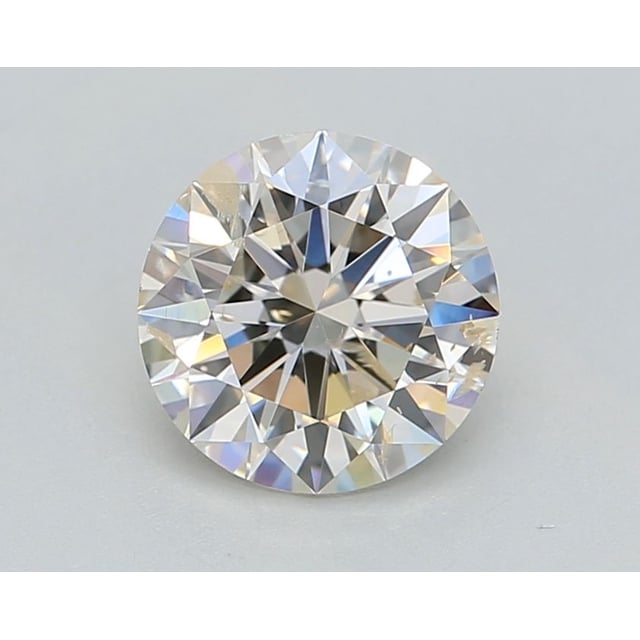
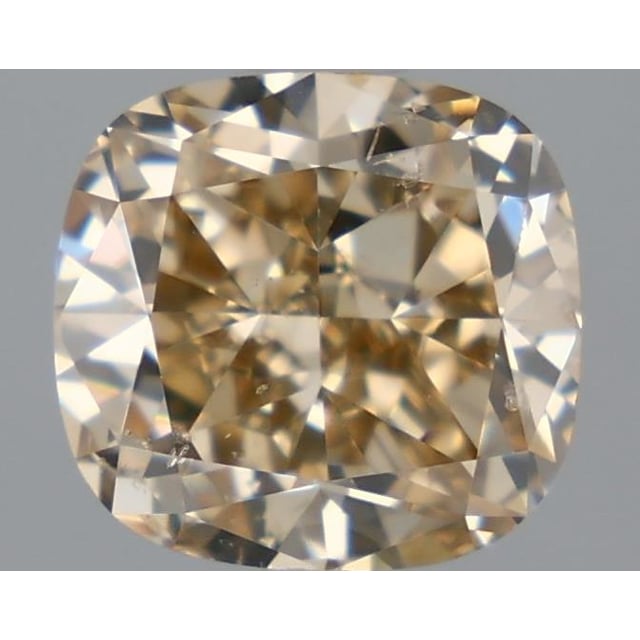
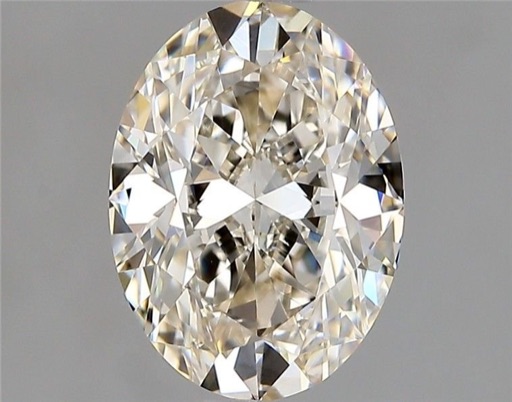
Every champagne diamond indexed on this site carries a GIA grading report. That is a matching requirement rather than a verdict on other laboratories, and it is worth being precise about what the requirement buys, because a great many warm-toned stones for sale online were graded somewhere else.
If the stone you are looking at has a report from another laboratory, three things change. The brown wording may not be written in the vocabulary this market prices off. The report number will not resolve in GIA's own lookup, so verification moves to the issuing laboratory's site. And the stone cannot be matched against the same diamond listed by a different retailer, which is the single comparison this index is built to make. None of that makes the stone worse, and none of it makes the report wrong. It changes what you can check before you pay.
What a grading report settles about a brown stone
Color is the characteristic a photograph is worst at. GIA grades D-to-Z color by comparing a stone against masterstones of established grade under controlled lighting, and describes its own scale as running from D for colorless to Z for light yellow, light brown or light gray. Warm stones live at the far end of that range, and the brown is recorded as a notation on the color line beside the letter: K Faint Brown, N Very Light Brown. What faint brown means covers how that line behaves once a stone is set.
Above that range GIA switches scales. A fancy-color grade carries no letter and is written out in words, with modifiers first and the dominant color last — which is why Fancy Brown and Fancy Yellow Brown are brown diamonds and Fancy Brown Pink is not. Word order is the whole test, and it is a GIA convention rather than an industry standard every laboratory follows.
The second thing a report settles is origin of color. All five of GIA's D-to-Z report types are tested for natural versus laboratory-grown and for treatments, and on the colored-diamond side the Colored Diamond Grading Report identifies natural versus treated color, while the Colored Diamond Identification and Origin Report describes the color origin and takes loose or mounted stones of any size. For a brown diamond that line carries more weight than it does for a colorless one, because brown is a color that can be produced as well as found; natural or treated sets out what each process does to a stone.
A report from another laboratory may answer both questions perfectly well. What it is not obliged to do is answer them in the wording the trade, the price lists and this index are keyed to.
Why the report number, not just the grade, carries the price
Here the laboratory question stops being academic. A grading report describes a stone; a report number identifies it. Listings here are merged into one record per diamond by GIA report number, the report text is read before a stone is admitted, and the struck-through comparison on each card is built by matching the stone against near-colorless G–H diamonds of the same shape, the same clarity and the same cut grade inside a carat window — a match that exists only because every stone on both sides of it is described in the same terms.
What our index shows — data snapshot 2026-10-15, read 16 October 2026
2,860 unique verified natural brown diamonds, deduplicated by GIA report number, across 5,101 retailer listings at nine retailers, with 1,202 of those stones listed at more than one retailer at once. By GIA wording: 2,307 Faint Brown, 135 Very Light Brown, 18 Light Brown, 349 Fancy Brown, 51 Fancy Light Brown. Median asking price $1,421, range $70 to $590,060. 2,468 stones are listed below their matched near-colorless G–H benchmark, at a median discount of 45%. These are retailer asking prices on one snapshot, not records of completed sales.
Those 1,202 multi-retailer stones are the whole argument for the report number. Two listings can agree on carat, shape, color and clarity and still be two different diamonds; only the report number proves they are one. Where a stone carries a report this index cannot key on, there is no way to show that the cheaper listing is the same stone rather than a similar one, so the comparison is simply unavailable. The prices page sets out what the benchmark does and does not measure in the cases where it is available.
The laboratory landscape has changed inside one buying lifetime
Two episodes are worth knowing, because they explain why a report is a record of what one laboratory found on one date rather than a running guarantee.
AGS Laboratories, long one of the better-regarded labs in the trade, announced in October 2022 that it would close at the end of that year and merge into GIA, which took its intellectual property, technology and Las Vegas facility. From January 2023 GIA began offering an AGS Ideal Report as a digital-only supplement to its own reports, at an extra charge. A stone bought today can still travel with an AGS report issued before the closure.
Earlier, in September 2014, RapNet announced that from 1 October it would stop listing diamonds with European Gemological Laboratories reports, covering both EGL USA and EGL International, citing misrepresentation of diamond quality and what it called confusion and inconsistency among the various EGL reports. That was a trading network's decision about its own listings rather than a legal finding, but it is the clearest public marker that the trade does not treat every report as the same document.
IGI, founded in Antwerp in 1975, grades natural diamonds alongside laboratory-grown ones and is the laboratory most buyers now meet by name. Its 2024 IPO prospectus put its share at roughly 33% of grading reports worldwide and roughly 65% of laboratory-grown diamond certifications — company estimates from a listing document rather than an independent audit of the laboratory sector, and read here as such.
If the stone you want has a non-GIA report
| What to do | Why |
|---|---|
| Verify the number on the issuing laboratory's own site | A PDF hosted by the seller is not verification; a resolving number is |
| Check carat, shape and measurements against the listing | A report describing a different stone is a reason to stop |
| Read the color line for the exact wording used | Another laboratory's brown vocabulary may not map onto GIA's notations |
| Look for a statement on origin of color | Natural versus treated is the question a photograph cannot answer |
| Ask the seller what the return window is | Terms vary by retailer, stone and destination; the retailer's page is the only accurate source |
If the answers leave the color origin or the depth of brown open, GIA grading can be bought for a stone you already own, and the practical route and its limits are covered in a champagne diamond with no grading report. Which of GIA's reports a warm stone is eligible for, and what each of them omits by design, is set out in which GIA report a champagne diamond carries.
What this site concludes, and what it does not
Champ. is an independent index. It holds no diamonds and ships nothing; each card links out to the retailer holding that stone, and the ordering comes from the price data rather than from the retailer. The admission rule is narrow on purpose: a stone enters only when its GIA report has been read and the color line carries brown, which is set out in full in how we verify every stone.
That rule says nothing about the quality of the work other laboratories do, and it should not be read as saying anything. It says that cross-retailer price matching needs one shared identifier, and that for natural brown diamonds the identifier this market already shares is the GIA report number. If you would rather start from stones that already satisfy it, Faint Brown is the deepest pool here, and finished champagne diamond rings are indexed separately.







