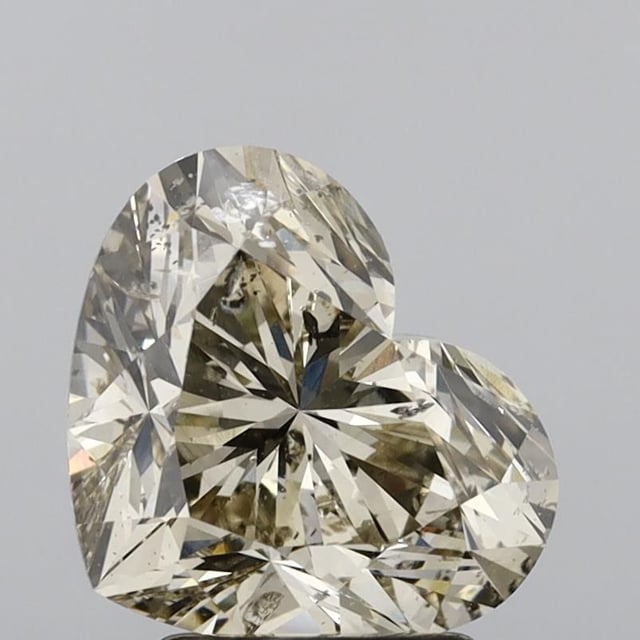
The only reliable way to know whether a diamond carries brown is to read its GIA grading report. Everything else — the photograph, the listing title, the way a stone looks on screen — is inference.
GIA records brown on two scales, and this site now lists stones from both. On the D-to-Z scale, the color grade is a letter, and where the hue falls in the brown range GIA adds a notation on the same line: K Faint Brown, N Very Light Brown. On the fancy-color scale there is no letter; the grade is written out in words, as in Fancy Brown or Fancy Yellow Brown.
The two paths have different admission rules.
What we actually do
We enumerate inventory at nine retailers: Aurélinne, Blue Nile, Brilliance, Brilliant Earth, Leibish, Luvansh, Rare Carat, Ritani and With Clarity. Every white-scale stone comes from the general inventories among them. Leibish is a fancy-color specialist and contributes only fancy-scale stones — 17 listings on the 17 October 2026 build; the rest of the fancy side comes from the general inventories too.
For every candidate we open the GIA report and read the color grade line. What follows depends on the scale.
Path one: the white scale
On the D-to-Z scale we enumerate the natural K-Z range, the tail where the brown notations sit. We do not enumerate D-J.
The test is mechanical. If the color grade line carries a brown notation, the stone enters the index. If it shows a bare letter, the stone is discarded, however warm it may look in the retailer's photograph.
That filter is severe. On the 2 September 2026 study we had read over 22,700 GIA reports across all sources, and alongside the stones that came through it we saw 12,501 K-M stones whose reports carry no brown wording at all: the same letters, no notation. Those are not in the index, because the index is defined by the grading report and not by the letter. The index holds 2,421 white-scale stones today.
That group is also the honest comparison set for price, and it is where the notation discount comes from. Matching brown against non-brown by color letter and carat band gives eleven cells, and across them the brown stones sat at a median of 20 percent less per carat, the spread running from 14 percent dearer to 31 percent cheaper. That study covers white-scale stones only, and it is a separate measurement from the champagne discount against a near-colorless G–H stone shown on each card; the cell-by-cell figures are in the price guide.
Path two: the fancy scale
A fancy-color diamond has no color letter, so the notation test cannot apply. Two conditions replace it, and a stone is listed only when both hold.
Brown has to be the dominant color. GIA writes a fancy grade with modifiers first and the dominant color last. Fancy Pink Brown is a brown diamond with a pink modifier, and it qualifies. Fancy Brown Pink is a pink diamond with a brown modifier, and it does not. Word order is the whole test.
The stone has to be cheaper per carat than an untinted diamond of the same size. We take the median price per carat of the D-to-Z stones with no brown notation in the same carat band, and admit the fancy stone only if it sits below that figure. A brown-dominant stone priced at a collector premium belongs to a different market.
We also exclude letterless colored-report grades that reuse the white-scale wording, because on a colored-diamond report that wording means something else.
Grades containing Dark or Deep are excluded too. GIA's fancy scale continues past Fancy Brown into darker, more saturated grades, but this site stops at Fancy Brown: the darker grades read as cognac, or close to black, rather than champagne. The fancy scale here therefore has exactly two steps, Fancy Light Brown and Fancy Brown.
What the rule rejects
On the 3 September 2026 merge the fancy rule kept 299 stones and rejected 1,342:
| Reason for rejection | Stones |
|---|---|
| Brown was not the dominant color | 628 |
| Not cheaper per carat than an untinted stone its size | 509 |
| Letterless colored-report grade duplicating white-scale wording | 133 |
| Grade too dark: Dark or Deep in the wording | 72 |
More than four fancy stones are turned away for every one kept, and the largest reason is word order on the report.
What the reports say
The site holds 2,822 stones as currently listed: 2,421 white-scale and 401 fancy-scale. These are counts of what is listed now, not of what passed on any one merge day.
On the white scale, GIA distinguishes depths of brown, and the distribution is lopsided: 2,269 Faint Brown, 134 Very Light Brown and 18 Light Brown, with letters running K 1,348, L 559, M 251 and N 129, plus a handful of stones further down the scale. K, L, M and N color covers what each letter means on its own.
The fancy grades divide differently, across the two intensity steps the site stocks:
| Fancy grade | Stones |
|---|---|
| Fancy Brown | 349 |
| Fancy Light Brown | 52 |
On the 17 October 2026 build. Written out in full, the most common grades on the 3 September 2026 merge were Fancy Yellow Brown at 126 and Fancy Yellowish Brown at 79, then Fancy Brown alone at 26: most brown-dominant stones carry a modifier. The distinction between the two scales is set out in champagne vs fancy brown.
One stone, several prices
Stones are deduplicated by GIA report number, which identifies one physical diamond, so a stone listed by two retailers appears once with both prices on one card. 1,194 verified stones are listed at more than one retailer.
We do not hold, sell, or ship anything; each card links to the retailer holding that stone. Where a stone appears at more than one, the comparison is like for like, because it is the same GIA grading report. Where to buy gives the count for each retailer and what their listing pages do and do not show.
Why the photograph cannot decide it
Buyers ask whether they can just look. Not from a listing image, and often not from a video.
Lighting. On the D-to-Z scale, diamonds are graded face-down against white under controlled daylight-equivalent light. Retailer imagery is face-up under studio lighting chosen to make stones sparkle, where brilliance and fire mask body color.
White balance. Every camera decides what counts as white, and every processing step can shift it again. A warm setting makes a colorless stone look tinted; a cool one makes a Faint Brown stone look neutral.
Background. Color is judged relationally: the same stone reads warmer on a gray card than an ivory one, and warmer beside yellow gold than a white metal head.
Photographs tell you about cut, outline, visible inclusions, and whether you like the stone. They do not tell you the grade; the report does.
Check a GIA report yourself
- Find the GIA report number on the retailer's listing, usually near the report link or in the specifications table.
- Open GIA's own Report Check service and enter it. Use GIA's site, not a PDF hosted elsewhere.
- Read the Grading Results block, and specifically the line labeled Color Grade.
- If the line shows a letter, look at what follows: a white-scale stone here reads like K Faint Brown or N Very Light Brown, and a bare letter means no notation was recorded.
- If the line shows no letter, read the last word of the grade. Brown last means a brown-dominant stone; brown earlier means another color with a brown modifier.
- Check that the carat weight, shape, and measurements match the listing. A report describing a different stone is a reason to walk away.
What faint brown means explains how that notation behaves in a finished ring.
What we do not claim
We report the grade GIA printed. We do not grade stones ourselves, reinterpret a grade, or call a stone brown because it photographs warm. We do not apply the white-scale discount figures to fancy stones, and do not give a fancy stone a color letter, because it does not have one.
We also do not state retailer terms: shipping, returns, and warranties vary by stone and destination, so the retailer's own page is the only accurate source.
The counts describe one build
The counts on this page are taken from the 17 October 2026 build. Two sets of figures are older and are dated where they appear: the per-letter price study from 2 September 2026, and the fancy-scale rejection tally from 3 September 2026. Neither can be recomputed from the current index, because both compare against stones that are not in it.
The index is rebuilt against live retailer inventory: sold stones drop off, new listings are read, and prices move. So the counts describe a build, not a permanent catalog. The two admission rules do not change.







