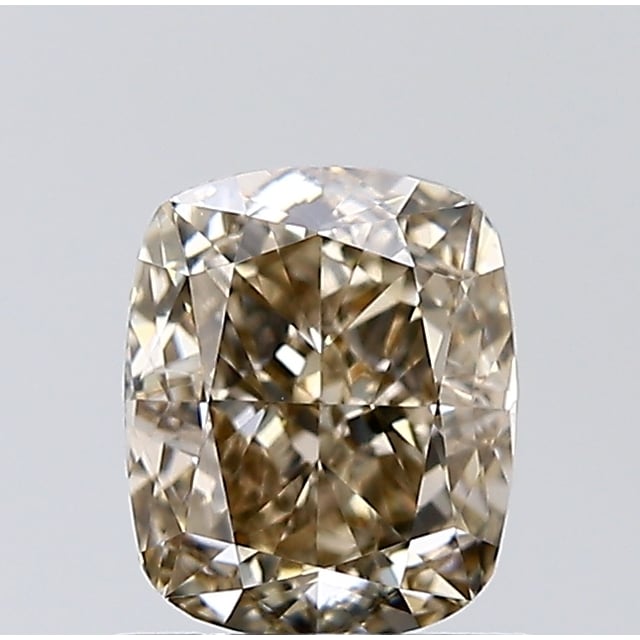
This is the champagne diamond story that has had the least attention and deserves the most.
In November 2025, the grading laboratory Gemological Science International said it was finding undisclosed lab-grown brown diamonds mixed into parcels of natural brown melee — the small stones used in pavé and accent settings. Rapaport reported the lab had confirmed synthetics spanning near-colourless with faint brown modifiers through to fancy dark brown, identified using infrared spectroscopy, DiamondView imaging and Raman spectroscopy.
JCK reported GSI chief executive Mark Gershburg's account of why: the marketing push behind warm-toned diamonds has pulled in manufacturers who had never handled brown goods before and who assume that brown melee must be natural. His description of the frequency was "We now see it every day, in all our labs".
Two caveats we think matter, and which both outlets are careful about. Brown synthetics are not new. And neither piece gives a number — no stone count, no percentage, no volume. "A spike" is GSI's characterisation, not a measurement. Anyone telling you a specific share of brown melee is now synthetic is going beyond what has actually been reported.
Why it is hard to catch
The practical problem JCK raises is the one to understand before you buy. In an invisible setting holding many tiny stones, separating lab-grown from natural would mean destroying the piece. There is no non-destructive way to check a finished pavé band stone by stone.
GSI's president Debbie Azar framed the stakes in Rapaport's report as a matter of safeguarding the integrity of natural brown diamonds — the trade protecting a category it has just spent a year promoting.
What this changes for a buyer
The exposure here is specific, and it is worth being precise rather than alarmed.
The risk is concentrated in melee — the small accent stones. It is far lower for a centre stone of any size, because a centre stone is normally sold with its own grading report, and a report from GIA, IGI or another lab states whether the stone is natural or laboratory-grown.
How this applies to what we index
Every stone in our index is matched to a published GIA report number, and we read the report itself rather than trusting a retailer's description. That is the whole basis of the site: 2,822 stones today, each one carrying a report we could open.
That protects you at the centre stone. It does not extend to accent stones, and we want to be straight about that — a report on a 1.20 ct centre says nothing about the forty melee stones around it.
So the practical advice is unglamorous. For the centre stone, ask for the report number and check it. For pavé and halo stones, ask the retailer in writing whether the accent diamonds are natural or lab-grown, and get the answer before you pay, not after.
That is not a reason to avoid champagne diamonds. It is a reason to buy them the same way you would buy any natural diamond: on the GIA grading report, not on the description.
You can read how we check every stone in how we verify every stone.