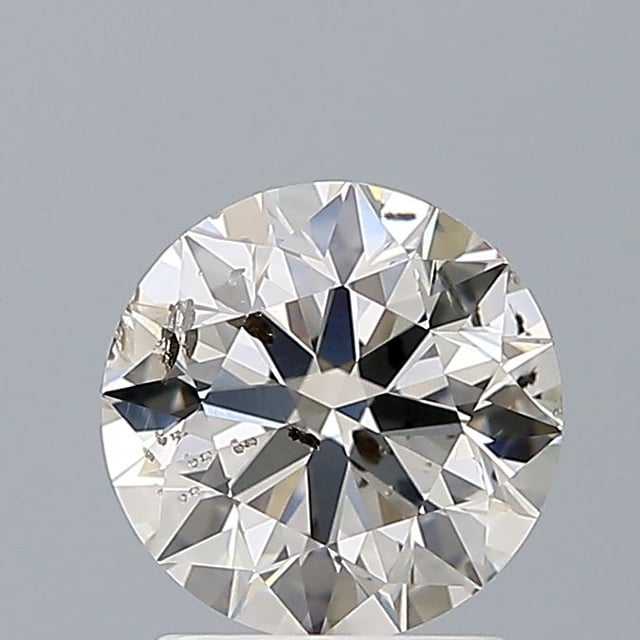
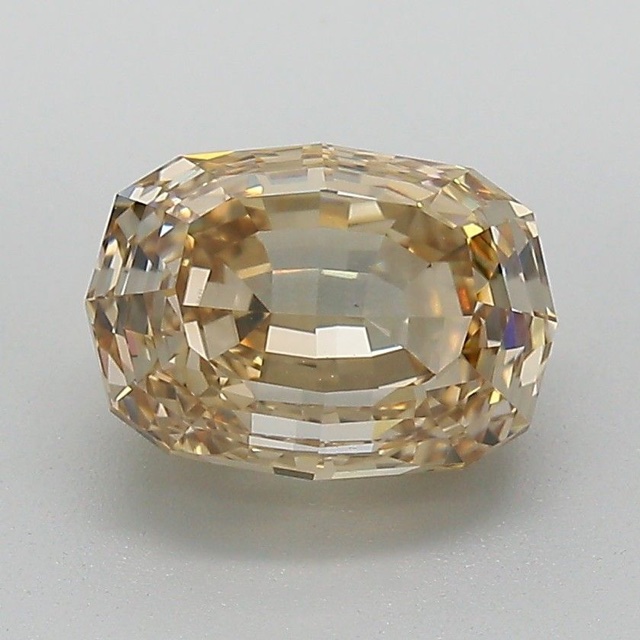
De Beers Group Science & Technology showed a new desktop diamond screener, SynthDetect 2, at the Hong Kong Gem & Jewellery Show. Mining Weekly reported the launch on 15 September, National Jeweler covered it on 18 September and JCK on 21 September, and all three carried the same headline number: a full tray of stones screened in under five minutes, against about thirty for the machines it replaces.
It is a trade instrument. De Beers lists it as available from the first quarter of 2027 with pricing on request, and National Jeweler describes the buyers as diamond and jewellery manufacturers, large retailers, wholesalers and gem laboratories. No asking price on this site moves because of it.
One line in the specification is worth a champagne buyer's attention, and none of the coverage drew it out. champ. indexes natural champagne diamonds and rings only and does not list lab-grown stones, so the question that matters here is how a warm-toned stone gets shown to be natural. SynthDetect 2's published colour range is D to J. Champagne diamonds on the white scale are graded K and below with a brown notation beside the letter, and the fancy-scale ones carry no letter at all.
What the instrument does
From De Beers' own instrument page, checked on 23 September 2026: SynthDetect 2 screens diamonds from 0.001 to 10 carats, loose or set in jewellery; it returns one of three results, natural, synthetic or refer; it refers about 1 percent of natural diamonds for further testing; and it scans a full tray in five minutes, a ring in six seconds and a bangle in ten. De Beers puts the screening speed at ten times that of the first SynthDetect, released in 2017 and followed by SynthDetect XL in 2018. Mining Weekly reported that it reads stones in set jewellery without a probe.
Screening is not grading, and a screener issues no report. It sorts stones into natural, synthetic, and needs-further-testing, which is why both De Beers and GIA describe the third outcome as a referral rather than a finding.
The colour range, read carefully
De Beers gives the range for both instruments as colourless to near-colourless, D to J, and its page for the original SynthDetect explains what happens outside that band: "This will result in an increased referral rate (i.e. more natural diamonds will show 'refer')." The same page adds that the instrument "is failsafe and will not pass a laboratory-grown diamond even if it is outside of the colour range specifications (D-J)". National Jeweler's report carried the same caveat in shorter form, that lower colours may trigger a refer result.
Those two statements have to be read together, because apart they invite the wrong conclusion. The stated risk for a warm stone is not that a lab-grown diamond slips through as natural. It is that more natural diamonds come back as refer and have to go on to a laboratory. For a manufacturer that is time and cost. For someone buying a champagne diamond it means a screening pass on this class of material tells you less than the same pass on a G, and that the grading report remains the document that settles origin.
Which letters are involved is covered in K, L, M and N: choosing a color letter, and the notation itself in what "faint brown" on a GIA report means.
A second J boundary sits nearby, and the two should not be confused. Since 1 October 2025 GIA has issued no D-to-Z colour and clarity grades for laboratory-grown diamonds, replacing them with a quality assessment that reaches only to J colour. One J is the specification of a screening box; the other is the limit of a grading service. They arise for different reasons and neither describes the other.
The problem this speaks to
Screening matters most where reports run out. In November 2025 the grading laboratory GSI said it was finding undisclosed lab-grown brown diamonds mixed into parcels of natural brown melee, the small stones used in pavé and accent settings, and JCK reported the practical difficulty: in a finished setting holding many tiny stones there is no way to check them one by one without destroying the piece. We covered that finding in lab-grown browns are turning up in natural melee.
A machine that reads a mounted ring in six seconds is a direct answer to that difficulty — for the colourless and near-colourless accents it is specified for, in trade hands, from 2027. Brown melee is the material GSI described, and it sits below the band the specification names.
What else reaches brown
Warm-toned diamonds are not beyond screening; the tools that cover them are simply different ones. GIA describes its iD100 desktop device as screening "colorless to near-colorless, blue-to-green and brown diamonds", loose or mounted, down to 0.9mm, returning a pass for natural diamonds and a refer for stones needing more testing. GIA's Melee Analysis Service takes parcels of 0.9 to 4.0mm melee, roughly 0.005 to 0.25 carats, across D-to-Z diamonds, and returns them sorted into sealed packages — laboratory-grown, round natural, fancy-shaped natural, simulant, or outside of service criteria. Both pages were checked on 23 September 2026.
Neither is a consumer product, and neither produces a per-stone document for the accent diamonds in a ring. What they establish is that a jeweller who wants warm melee screened has somewhere to send it.
What our index shows, on the 2026-09-22 data snapshot (checked 23 September 2026)
2,796 unique natural brown diamonds, deduplicated by GIA report number, across 5,222 retailer listings at 9 retailers. Median asking price $1,425, range $70 to $594,710. 2,475 stones are listed below their matched near-colorless benchmark, at a median discount of 46%. 1,263 stones are listed by more than one retailer. Asking prices on one snapshot, not records of completed sales.
Every one of those stones is admitted on a published GIA report number, with the brown wording read off the report rather than taken from a retailer's description. That is a statement about the centre stone only. It says nothing about accent stones, which arrive with the setting and not with a report.
What a buyer can do with this today
Three things, none of which need waiting for 2027.
For the centre stone, ask for the GIA report number and read the report. Which laboratory graded it and on what kind of report is how origin is settled for a single stone, and the same document carries the colour wording that makes the diamond champagne in the first place; how we verify every stone sets out the two rules that admit a diamond here and how to check one yourself. For a finished piece, ask the retailer in writing whether the accent diamonds are natural or lab-grown, and whether they were screened — and get that before paying rather than after. Champagne diamond rings is where the finished pieces we index sit.
And treat a refer as what it is. It is a request for further testing, not a verdict, and on a K or an M it is a likelier outcome than on a near-colourless stone by the instrument makers' own account.
The difference between the two origins, on price, colour and what the grading laboratories do with each, is set out in lab-grown vs natural champagne diamonds. How the struck-through comparison on every card is built is on the prices page, and Faint Brown holds the largest group of stones in the index.