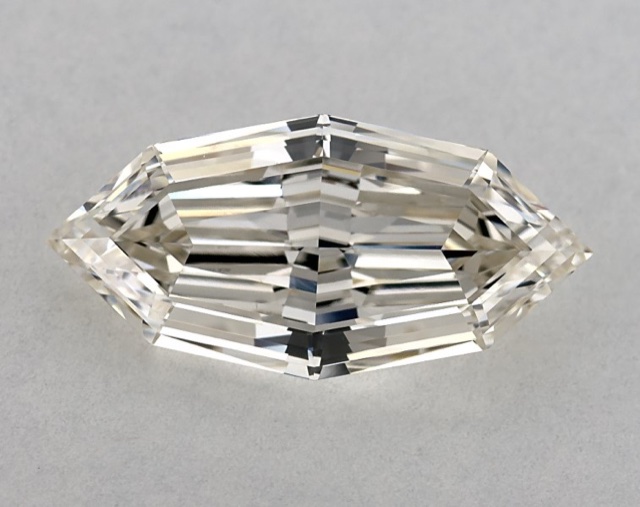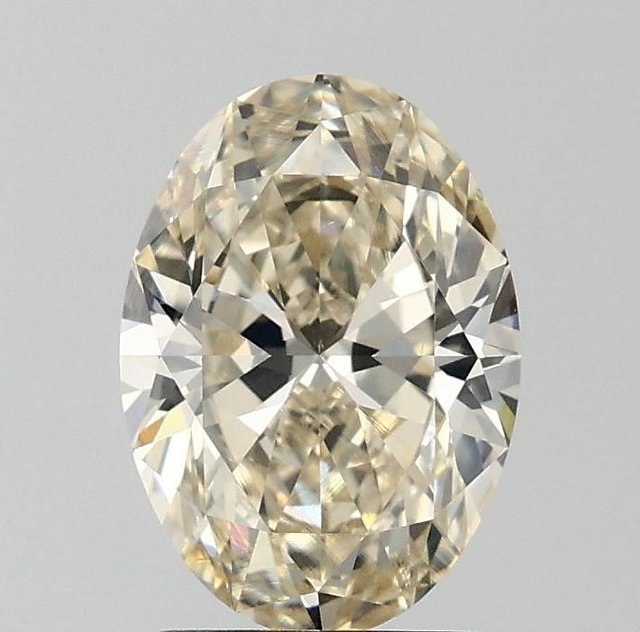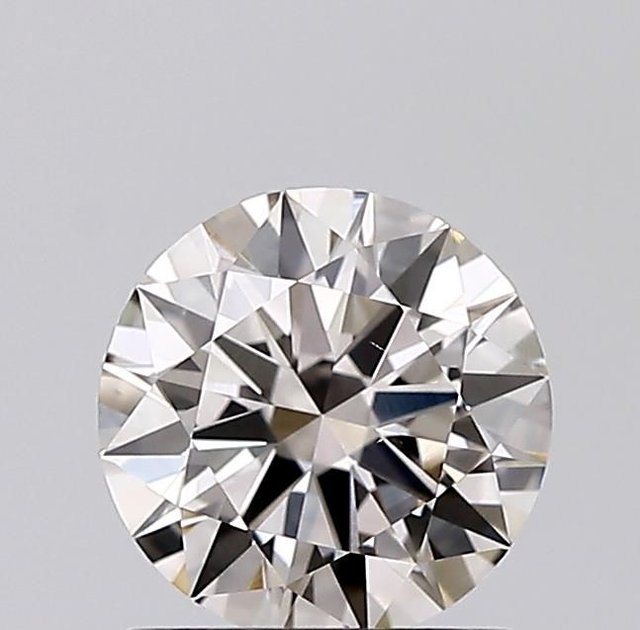
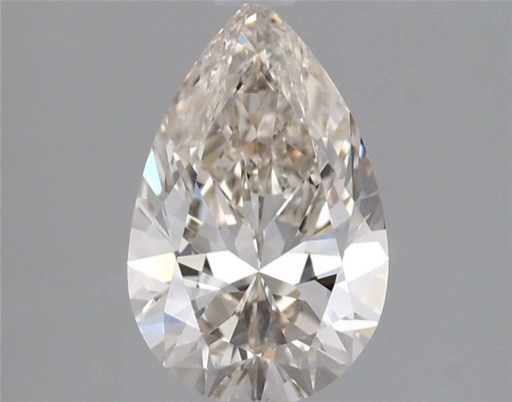
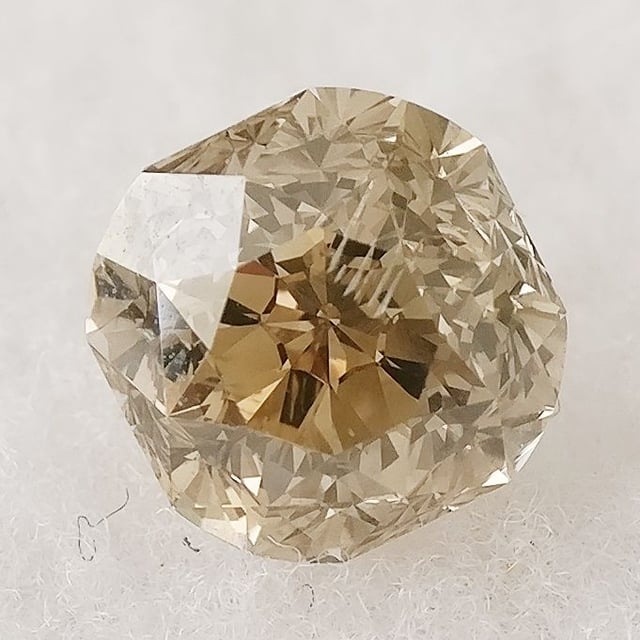
A loose champagne diamond shipped inside the United States carries no shipping charge at any of the nine retailers whose listings are indexed here, on the terms each published on 29 October 2026, and every one states the parcel is insured in transit. For a domestic buyer the listed asking price is therefore close to the delivered cost, and shipping is not where a choice between two listings gets decided.
What carries money or risk sits further down those pages: the service level a given order value buys, whether somebody has to sign at the door, what "fully insured" is actually covering, and sales tax — a percentage of the purchase rather than a flat fee, set by your delivery address and the seller's obligations rather than by the diamond, and the largest number in this subject by a wide margin. Ship outside the United States and import duty and VAT land on the buyer at seven of the nine.
champ. holds no inventory and sells nothing. It reads the GIA report behind each listing, collapses the same physical stone into one card when several retailers hold it, and links out to the retailer — where the price, the shipping and the tax all sit. It does not set or guarantee any retailer's delivery terms.
Each term below was read from the retailer's own pages on 29 October 2026, six of them directly. Brilliance, Ritani and With Clarity block automated retrieval, so their clauses were read through a search engine's copy of the same pages and are worth confirming before you rely on them. All are published consumer policies, not an account of how any order was handled, and all can change without notice.
What the nine publish
| Retailer | US shipping as published | Signature at delivery | Insurance wording |
|---|---|---|---|
| Aurélinne | Free insured express; a loose stone in roughly 7–10 business days | Signature on delivery | Insured for the total order value in transit |
| Blue Nile | Free, no minimum; over $500 overnight, under $500 two-day | Required on all shipments | US and international orders fully insured |
| Brilliance | Free: ground under $250, two-day under $2,000, overnight above that | Adult signature, whatever waiver you hold with the courier | Insured to delivery; at an apartment, only to the building |
| Brilliant Earth | Free FedEx on every order | Not specified | Insured and registered for full value |
| LEIBISH | Free, fully insured; US overnight if ordered by 1:00 PM EST | Not stated on the page read | Insured before shipping |
| Luvansh | Free insured two-day; US and Canada only | Required per the FAQ; terms exempt items of $1,000 or less | Insured until signed for; risk passes on delivery |
| Rare Carat | Free, fully insured to any US state or Canada | Required, from someone 21 or older | Insured until delivered to the door |
| Ritani | Free; services page gives overnight at $1,000 and over | Required | Fully insured from its door to yours |
| With Clarity | Free insured to the US, Canada and the UK; overnight $40 | Required on FedEx shipments | Transit loss, damage or theft, at the item's cost not retail value |
The only domestic charges these pages publish are upgrades — faster or Saturday service, from $24.95 to $45 depending on the retailer and the order value.
Two of the nine describe their own terms in more than one way. Ritani's shipping page offers complimentary FedEx Priority Overnight without naming a threshold, while its services page sets that at $1,000 and over. Luvansh's FAQ states that all shipments require a signature; its terms state that products valued at $1,000 or less before discount are delivered without a recipient signature. Assume the less favorable reading until a retailer confirms otherwise in writing — the same pattern returning a champagne diamond found in the return windows.
Somebody has to be at the door

Seven of the nine retailers here publish a signature on delivery. Photo: Kampus Production, Pexels.
The signature rule is the term most likely to cost a buyer something. Blue Nile requires a signature on all shipments and asks buyers to arrange for someone to be at the destination; Rare Carat requires one from a person 21 or older; Brilliance requires an adult signature whatever delivery waiver the buyer holds with the courier. Blue Nile also publishes the consequence of missing it: after three failed attempts the parcel returns, and reshipping costs $30.
Luvansh's threshold runs the other way, and it falls on the stones most people buy here. The median asking price across the index on the 2026-10-29 data snapshot was $1,349, with listings from $91 to $224,546, so much of this inventory sits near or below the $1,000 line in those terms — below which its pages say no signature is required. That is the band where a parcel can be left at a door.
What "fully insured" is covering
All nine use the phrase; it resolves differently. With Clarity's policy covers an item lost, damaged or stolen in transit, with coverage applying to the cost of the item rather than its retail value, and a replacement of equal or similar quality offered if the original cannot be recovered. Brilliance publishes that insurance runs to delivery at the shipping address, and that for an apartment it ends on arrival at the building rather than at the door. Luvansh's terms place title and risk of loss with the buyer from delivery onward.
None of that is unusual for a parcel of this value, and none of it recommends one seller over another. It is a reason to read the sentence rather than the banner: the gap between insured to the door and insured to the building is the whole price of the stone.
Sales tax is the big number
Shipping is a flat figure or nothing; tax is proportional, so it scales with the stone rather than with the parcel. It is also the item these pages address least. Rare Carat publishes the fullest account: it collects and remits state sales tax for orders destined to states with marketplace facilitator legislation, lists all fifty states and the District of Columbia, and notes that in certain states local taxes sit outside that legislation and are not its responsibility. Brilliance publishes that tax is calculated on the delivery zip code and that it does not charge sales tax outside the State of Florida. Luvansh's terms state that posted prices do not include taxes. The other six do not address it on the pages read, so plan around the figure your own state sets rather than the one a retailer's page implies.
Outside the United States the buyer clears customs
Seven of the nine put import duty and VAT on the buyer: LEIBISH will not be responsible for charges levied by the customer's country, Luvansh makes clearance the recipient's exclusive responsibility, Brilliance and Ritani pass on the importing country's duties and taxes, Aurélinne has an international buyer pay them separately on delivery, and Blue Nile points the buyer to the carrier as customs broker. Two publish exceptions: Brilliant Earth collects UK duties and says Canada and Australia add only GST, PST or HST; Rare Carat says jewelry into Canada carries no duty, though provincial sales tax applies.
What our index shows — data snapshot 2026-10-29, counted 29 October 2026
2,770 unique verified natural brown diamonds, deduplicated by GIA report number, across 4,939 retailer listings at nine retailers, with 1,131 of those stones listed at more than one retailer. Median asking price $1,349, range $91 to $224,546. 2,381 stones sit below their matched near-colorless G–H benchmark, at a median discount of 45%. Loose-stone asking prices on one snapshot, not records of completed sales, and separate from shipping, tax and finished-ring prices.
Where delivered cost changes a comparison
On the 2026-10-29 snapshot, 1,131 of the 2,770 stones indexed here were listed by more than one retailer at once. For those the diamond is held fixed by its GIA report number and the seller is the only variable — in asking price, which why the same champagne diamond costs different amounts takes up, and in everything around it.
Domestically the delivered cost rarely reverses such a comparison, because the shipping column is zero on both sides and tax follows your address in most states. It can still separate two listings on risk: overnight against two-day, signature against none, insurance to the door against to the building. Internationally it can reverse the comparison outright, since duty and VAT are charged on the stone's value — a lower asking price from a seller that leaves you to clear customs can finish above a higher one from a seller that collects the duty itself. The method behind the price comparison is on the prices page.
Before you check out
Confirm the service level and signature rule for your own order value rather than the banner figure; both change at stated thresholds. Confirm what the insurance follows the parcel to: the door, the building, or the signature. And get the tax and duty figure before you commit rather than at the final screen.
The listings themselves are in where to buy champagne diamonds and the round collection, the largest pool here. Finished rings from independent jewelers carry their makers' own terms rather than any of the nine above, in the rings section.