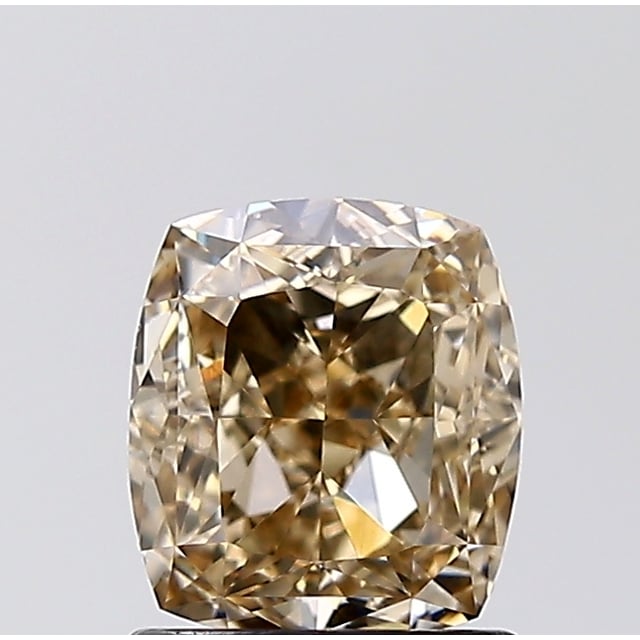
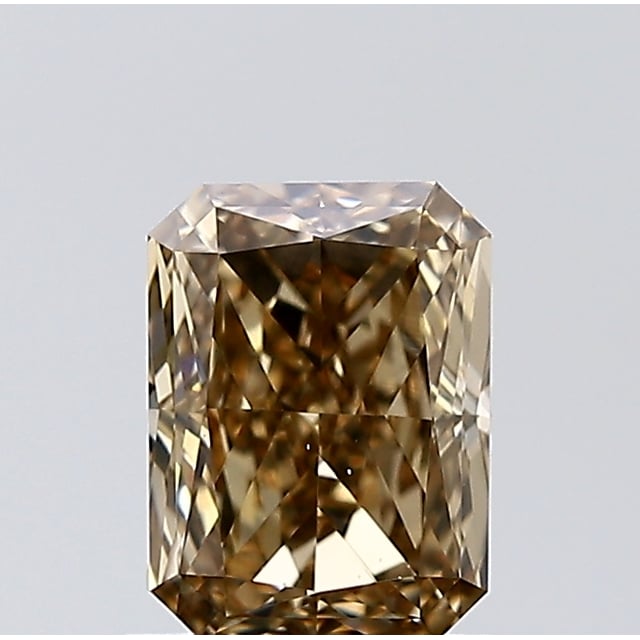
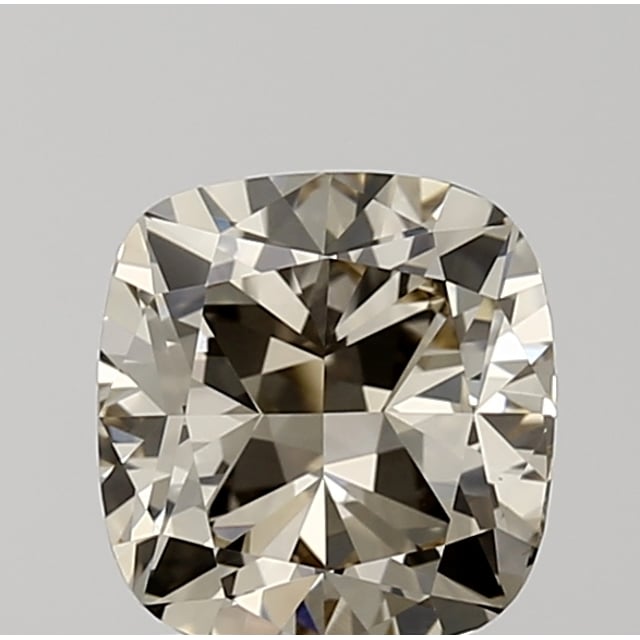
The Fancy Color Research Foundation published its third-quarter index on 4 November, under a heading about a year of stability: "The Index eased by just 0.1% in the third quarter and stands 0.5% below its level of a year ago." Rapaport wrote it up the same day. By color, the release reports that "Pink diamonds edged up 0.1%, their second consecutive quarterly gain, while Blue and Yellow diamonds eased by 0.2% and 0.4% respectively."
Those three colors are the entire index. That is the part of the release a champagne buyer needs, because it means none of the 2,572 stones indexed on this site is in it, and the quarterly figure says nothing about any of them.
What the index counts
The foundation's FAQ is explicit about the grid. The index "covers the three most commonly traded color categories which are yellow, pink and blue, spanning the Fancy, Fancy Intense and Fancy Vivid saturations", and it "covers weight sizes that include: 1, 1.5, 2, 3, 5 and 10 carats". Rapaport's write-up describes three intensity grades and seven carat weights, and FCRF's quarterly releases discuss an 8-carat cell as well, so read the published list as the floor of the grid rather than all of it.
The prices are wholesale, which matters before anyone sets a quarterly percentage beside a retail price tag: "They are the buying prices of companies trading in the main centers, not retail asking prices and not auction hammer prices", gathered in Hong Kong, New York, Geneva and Tel Aviv.
The foundation states the limit itself. The index "is not every saturation and every size in existence, but it covers the part of the market where most trade takes place". That is a reasonable thing for an index to do, and it is also the reason none of it carries across to a brown stone.
The most common fancy color is the one not tracked
GIA's own wording on brown is blunt: "Brown is the most common fancy diamond color and also the earliest to be used in jewelry." GIA attributes the trade names, cognac and champagne among them, to the marketing that followed abundant Australian production in the 1980s. So the hue missing from the index is not an obscure one.
A stone is admitted here only when its GIA report records brown — either a brown notation beside a D-to-Z letter, or a fancy-color grade with brown as the dominant color. Those are the two rules in how we verify every stone, and neither route can land a stone inside yellow, pink or blue.
For the fancy-graded stones there is a second exclusion. GIA's modifier terms run "Fancy Light, Fancy, Fancy Intense, Fancy Deep, Fancy Vivid or Fancy Dark", which places Fancy Light a step below the Fancy saturation where the index's coverage starts. And the smallest weight cell is a one-carat stone, which puts a sub-carat diamond outside the grid on size as well.
| GIA wording on the report | Stones here, 2026-11-06 snapshot | Inside the FCRF index |
|---|---|---|
| Faint Brown notation beside a letter | 2,017 | No — graded D-to-Z, not as a fancy color |
| Very Light Brown notation | 139 | No |
| Light Brown notation | 17 | No |
| Fancy Brown | 347 | No — brown is not a tracked hue |
| Fancy Light Brown | 52 | No — hue, and a saturation below Fancy |
The fancy-graded part of this index is 347 plus 52, or 399 stones. They are the only diamonds here graded on the same system the FCRF index is built on — GIA grades colored diamonds on "hue (the color), tone (relative lightness or darkness), and saturation (intensity)" rather than on the absence of color — and not one of them falls inside it. Champagne, fancy brown and chocolate sets out what separates a notation from a fancy grade, and why the fancy browns here cost less than the name suggests.
The other series the trade quotes stops at H
Rapaport's monthly release of 3 November defines its index on round, D-to-H, IF-to-VS2 GIA-graded goods. That window describes the near-colorless diamond on the other side of the price comparison on every card here, not the champagne stone itself; we covered that release on 3 November in small near-colorless prices turned down in October.
Put the two together and the gap is structural rather than accidental. One series covers colorless-to-near-colorless rounds; the other covers three fancy hues at a carat and above. A 1.2-carat Fancy Brown cushion sits between them, and a K Faint Brown oval sits outside both.
What our index shows — data snapshot 2026-11-06, counted 6 November 2026
2,572 unique verified natural brown diamonds, deduplicated by GIA report number, across 4,425 retailer listings at 9 retailers, with 1,029 of those stones listed at more than one retailer. By GIA wording: 2,017 Faint Brown, 139 Very Light Brown, 17 Light Brown, 347 Fancy Brown, 52 Fancy Light Brown. Median asking price $1,371, range $91 to $243,430. 2,216 stones sit below their matched near-colorless G–H benchmark, at a median discount of 44%. Retailer asking prices on one snapshot, not records of completed sales.
The two comparisons that need no index
With no series to read, what is left is listings — and two of the figures above are comparisons in their own right.
The first is the same stone at two sellers. Of the 2,572 stones on the snapshot, 1,029 are listed by more than one retailer, and because listings are matched by GIA report number those are one physical diamond at several stores at several asking prices. No index is involved in the gap between two prices for one report number, which is the subject of why the same champagne diamond costs different amounts. champ. holds no inventory: it reads the report behind each listing, collapses the duplicates into one card and sends you to the retailer.
The second is the struck-through figure on each card. The code matches each stone to live listings for a natural GIA-graded G–H diamond of the same shape, the same clarity with no widening to an adjacent grade, the same cut tier on GIA's Excellent, Very Good and Good scale, and a carat weight inside a window drawn so it never crosses a trade threshold where price per carat steps up, then takes the lower quartile of those matched prices per carat. Color is what the comparison measures, so a stone's own grade never enters the match — a Fancy Brown cushion and a Faint Brown cushion of the same clarity and cut are both priced against the same G–H cushion. The method and its limits are on the prices page and in how our near-colorless price benchmark works. Both sides of that figure are retail asking prices, which is a different measurement from a wholesale buying price.
What the release does not tell you
The Q3 release also reports the long run: since 2005 the overall index is up 201.8%, with pink up 390.1%, blue up 238.8% and yellow up 46.4%. Those are wholesale buying prices for three hues, in saturations starting at Fancy and weights starting at a carat. Reading any of it onto a brown diamond would be an assumption dressed as data, and the quarterly direction — Fancy Vivid the only intensity grade to gain ground overall, led by Fancy Vivid Pink diamonds at 1.0% — is a statement about buyers of vivid pinks.
What would make a brown-diamond price story is a dated series: matched prices by saturation and weight, over several quarters, built on a fixed population. Neither FCRF nor Rapaport publishes one, and a single snapshot of asking prices, which is what this site holds, cannot show a direction either.