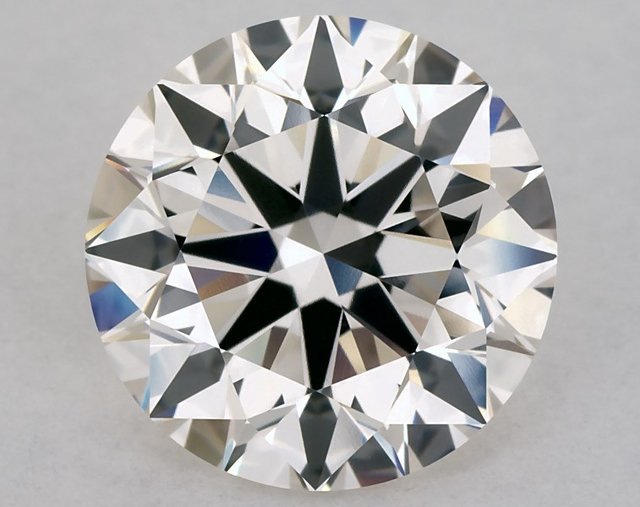
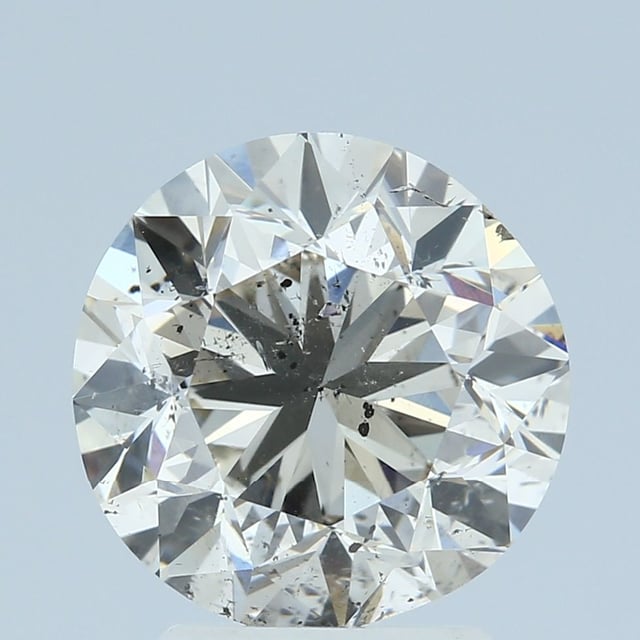
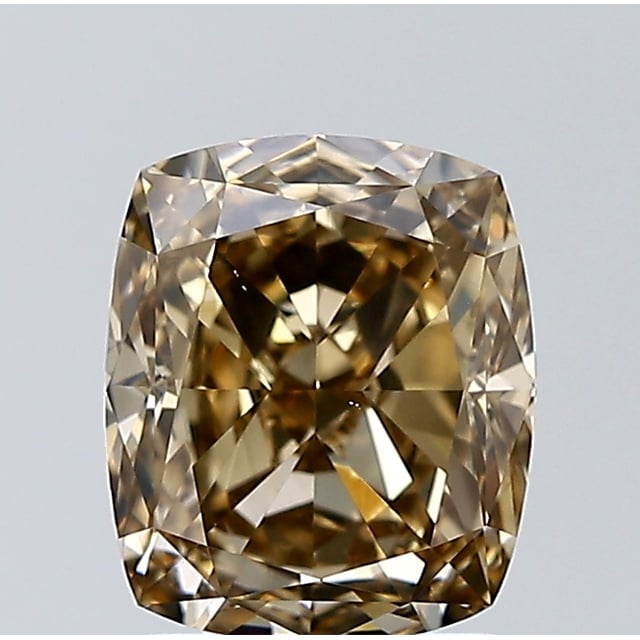
Lab-grown stones accounted for 53% of the diamond engagement rings sold at US specialty jewelers in 2025 and 27% of what was spent on them. Both figures come from a value-chain study of the lab-grown trade published on 3 November by the analyst Edahn Golan with Eyal Axelrod of Lexa International, and the distance between them is the price argument in one line: half the rings, a quarter of the money.
champ. does not list lab-grown stones. This index covers natural champagne diamonds and natural champagne diamond rings, admitted on the wording of their GIA reports. The study is worth reading here anyway, for two reasons. For most people pricing a champagne diamond the stone on the other browser tab is a lab-grown one. And this study prices the whole chain behind a lab-grown ticket, which turns out to have very little to do with the diamond in it.
Where the money in a lab-grown ring goes
Golan's figures are estimates built from primary research among growers, traders and retailers, for the calendar year 2025 — a data period, not a reading of the market this week. On his account production of gem-quality lab-grown diamonds reached "an estimated record 69.4 million carats", about 30% below the 98.8 million carats of natural rough mined in the same year.
| 2025, lab-grown | Estimate |
|---|---|
| Gem-quality production | 69.4 million carats |
| Cost to grow | $753 million, or $10.85 per carat |
| Rough value | $1.13 billion, or about $16 per carat |
| Cutting and polishing | $1.23 billion |
| Diamond content at retail | $12.4 billion |
| Retail sales of the finished jewelry | about $23.8 billion |
Two of those lines carry the explanation. Cutting and polishing cost more than the rough it was applied to, $1.23 billion against $1.13 billion. And only about 3% of what consumers spent reached the growers at all, with "roughly 95% of the value" created after the stones left them. Natural rough, the study notes, averaged about $93 per carat at the mine against roughly $16 for lab-grown rough.
A price built that way is a price set downstream. It reflects the setting, the labor, the retailer and whatever promotion is running, far more than it reflects the stone — which is the structural reason a lab-grown listing cannot be compared across sellers the way a natural one can.
Half the rings, a quarter of the money
The consumer-side figures were reported by JCK on 3 November, from the same study. Lab-grown stones took "53% of diamond engagement rings sold but only 27% of their sales value". Average spending on a lab-grown-set engagement ring fell nearly 8% to $2,448. Falling prices let buyers go larger instead, with the average loose lab-grown diamond reaching 2.26 ct. The United States supplied 73% of global demand, China 8% and India 5.5%.
On price the direction over the year was down, and steeply: stones of a carat and over fell 13% year on year in midstream trading, three-carat stones fell 47%, and wholesale prices across sizes "had converged around $100 per carat". One figure in the study points the other way for retailers rather than buyers: their unit purchases of finished lab-grown jewelry rose 33% against a 25% rise in units sold to consumers, which is inventory building up.
What that budget reaches on this index
$2,448 is a finished ring — stone, metal and labor priced as one object. Every price below is a loose stone, which is a different measurement, and the two should not be laid side by side without saying so. Finished natural champagne diamond rings from independent jewelers sit in the rings section, which is where a like-for-like comparison with that figure belongs.
On the loose side, the median asking price across the 2,639 stones indexed here was $1,430 on the 2026-11-03 data snapshot, with listings from $91 to $243,430 — so more than half of them were asking less than the lab-grown market's own average ring spend. Size is what that money does not buy. Band by band on the 17 November 2026 build the median runs $1,592 at 1.00-1.49 ct and $5,924 at 2.00-2.99 ct, so the 2.26 ct a lab-grown buyer averaged in 2025 is a different order of money in a natural stone.
That is the trade, stated plainly: at this budget a lab-grown stone buys carats, and a natural champagne diamond buys about a carat with a GIA report you can pull and read. What the same money buys works the choice through at a fixed budget, and the 1 carat and 2 carat bands hold the listings themselves.
What our index shows — data snapshot 2026-11-03, counted 4 November 2026
2,639 unique verified natural brown diamonds, deduplicated by GIA report number, across 4,672 retailer listings at 9 retailers, with 1,083 of those stones listed at more than one retailer. By GIA wording: 2,090 Faint Brown, 139 Very Light Brown, 18 Light Brown, 339 Fancy Brown, 53 Fancy Light Brown. Median asking price $1,430, range $91 to $243,430. 2,253 stones sit below their matched near-colorless G–H benchmark, at a median discount of 44%. Loose-stone asking prices on one snapshot, not records of completed sales, and separate from finished-ring prices.
The line the study does not carry
There is no brown in it. The value chain is counted in carats and dollars, with no color breakdown, and no published lab-grown price list reaches a brown stone either: the 7 October wholesale list quoted near-colorless letters only, as the earlier piece on that list set out. A stone sold as a lab-grown champagne diamond therefore has nothing to be priced against.
The stones here are graded on the two scales GIA publishes. On the D-to-Z scale, which measures the relative absence of color, the grade is a letter and GIA adds a brown notation on the same line where the hue falls in the brown range — what "faint brown" means covers how that is assigned and how visible it is face-up. On the fancy-color scale there is no letter and "color is the dominant value factor". A lab-grown brown is neither of those things: it is usually as-grown color from lower-grade growth, or a post-growth treatment, and it is graded in nearly every case by IGI rather than GIA, which lab-grown champagne diamonds vs natural takes apart in detail.
The comparison that needs no view on the cycle
Of the 2,639 stones on the 2026-11-03 snapshot, 1,083 are listed by more than one retailer: the same physical diamond, matched by GIA report number, carrying more than one asking price. That is the only comparison on either side of this argument with nothing uncontrolled in it, and why the same champagne diamond costs different amounts works through what moves the spread. Lab-grown stones are grown to specification in quantity, so two listings with matching specifications are usually two different stones and the same comparison cannot be made.
What the study does not settle
It is one analyst's estimate, built with one partner from primary research rather than audited trade accounts, and its headline figures describe 2025 rather than today. The annual direction was down, but Golan's own Q3 list, published 7 October, had round categories about 2% dearer on the quarter — a decline and a quarterly uptick, not a contradiction. His forecast that lab-grown production could pass natural output by volume as early as 2027 remains a forecast.
The movement that touches a champagne diamond's price tag more directly came the same week on the natural side: Rapaport reported on 3 November that its 0.30-carat index fell 5.5% in October as inventories grew. That index is the near-colorless side of the comparison struck through on every card here, and the mechanics of that benchmark are on the prices page and in what October's fall does to the saving.