Two numbers in the same report moved in opposite directions. De Beers mined 6.8 million carats of rough diamonds in the third quarter of 2026, 11% fewer than in the same quarter of 2025, and its Venetia mine in South Africa has now cut the last carats it will produce before a two-year pause. Over the nine months to September, the average price De Beers realized per carat of rough fell 37%, to $97 from $155. Output contracted and rough got cheaper at the same time, because demand fell faster than production did.
So the scarcity reading of this week's headlines does not survive the document the headlines are drawn from. And for anyone pricing a natural champagne diamond today, neither figure reaches the listing: both describe uncut rough sold between a miner and its trade customers, and a champagne diamond on a retailer's site was cut, graded and priced months or years earlier.
champ. holds no inventory. It reads the GIA report behind each listing, collapses the same physical stone into one card when several retailers hold it, and links out to the retailer; every figure below drawn from this index is a retailer asking price on the snapshot date given, not a record of a completed sale.
What the production report says
Anglo American published its third-quarter production report on 20 October, covering the three months to 30 September. The De Beers section reads:
| Operation | Q3 2026 carats | Change on Q3 2025 |
|---|---|---|
| Botswana | 4.8 million | −20% |
| Canada (Gahcho Kué) | 1.1 million | +108% |
| Namibia | 0.5 million | +8% |
| South Africa (Venetia) | 0.4 million | −37% |
| De Beers total | 6.8 million | −11% |
Botswana's fall was planned plant maintenance at Orapa, and De Beers says work on the Jwaneng processing plant in the fourth quarter will decrease output there substantially again. Canada's rise came from processing higher-grade ore. South Africa's fall is Venetia, which "ramped down production and processing ahead of its production pause"; National Jeweler put its quarterly output at 418,000 carats against 659,000 a year earlier, and the report expects no further carat production from it in 2026, with closure preparation continuing into early 2027.
The sales lines are where the price story sits. De Beers sold 9.8 million carats of rough across two Sights in the quarter, 8.7 million of them on the consolidated basis it reports revenue against, for $731 million. A year earlier the same lines read 5.7 million carats, 4.6 million consolidated, and $700 million — far more carats this quarter for roughly the same money. Across the nine months the consolidated average realized price was $97 per carat against $155, which the company attributes to an 18% fall in its rough price index, to 67 against a December 2006 base of 100, and to a shift in what it was selling.
One line in the report is an accounting change rather than a mining one. De Beers took full ownership of Gahcho Kué on 16 October, following enforcement of security over Mountain Province Diamonds' 49% interest, and will report the mine at 100% from the fourth quarter. Its own note is that this raises its attributable figures without changing the quantity of diamonds in the world. The upward revision to full-year guidance, to 25–28 million carats from 21–26 million, is mostly that.
Why a mine's last carat does not reach a listing
Venetia is a large asset to stop: it produced 2.2 million carats in 2025 and employs about 4,400 people, and the pause was announced in July as part of a wider cost program. None of that argues for a different price on a polished stone this quarter.
A rough price index records what a miner charges its sightholders for uncut material. Between that and a listing sit sorting, cutting, polishing, grading, wholesale distribution and a retailer's own pricing, and each step has its own margin and its own inventory already bought at older prices. The production report makes no claim about polished prices and publishes no polished figures. It also reports carats and dollars per carat across all of De Beers' goods without breaking either down by color, so there is nothing in it that is specific to a brown diamond.
The polished reference that does move alongside these stones is a near-colorless one, and this site has covered what it reaches: Rapaport's 1-carat index and why it does not cover champagne diamonds. The other input that lands directly on a US price tag is import duty rather than mine supply, taken up in the tariff authority piece.
The part of the report that does touch these stones
De Beers describes trading conditions in the quarter as stabilising, with better consumer demand in the United States and India, and names one continuing pressure: synthetic lab-grown diamonds "continued to affect demand for lower-value natural diamonds", concentrated in the more price-sensitive part of the market.
That segment is the one a champagne buyer shops in. On the 2026-10-21 data snapshot the median asking price across this index was $1,355, with listings from $91. Reading the company's own framing forward, sustained pressure on demand for inexpensive natural stones is an argument for softer asking prices in that band rather than firmer ones — a reading of a sentence in a mining report, not a forecast, and not something a single snapshot of our own listings can confirm or refute.
What our index shows — data snapshot 2026-10-21, counted 22 October 2026
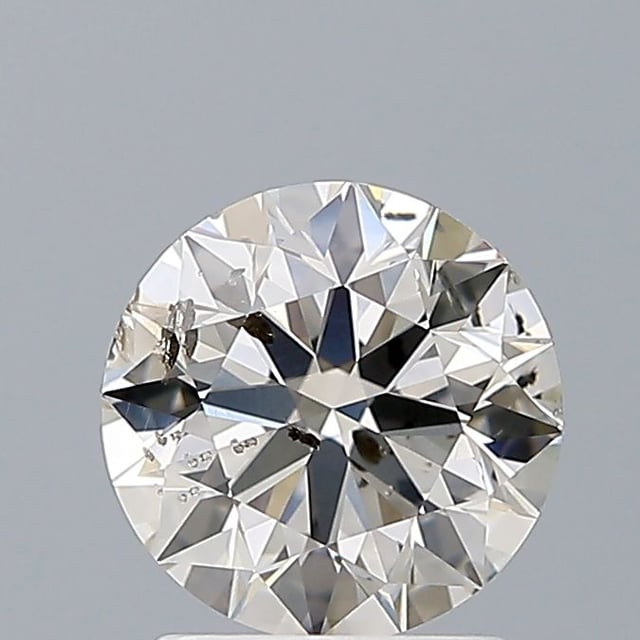
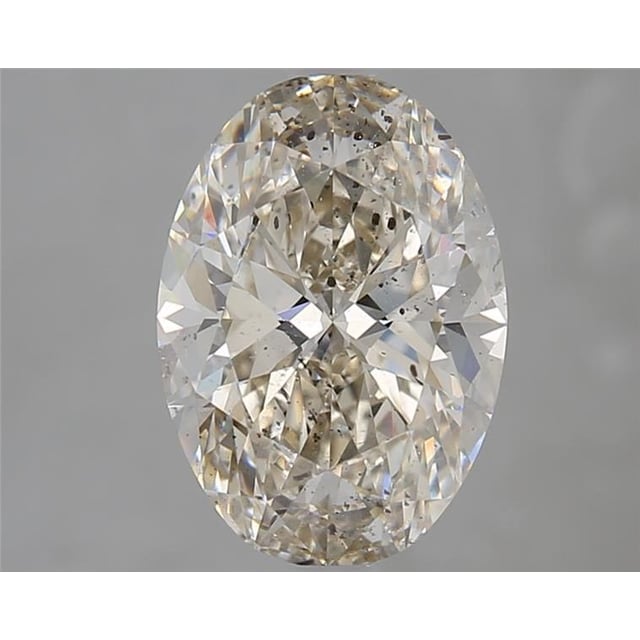
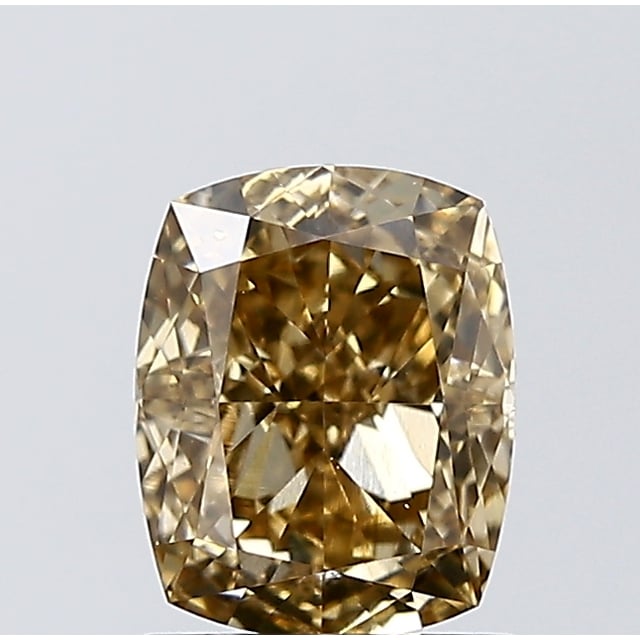
2,692 unique verified natural brown diamonds, deduplicated by GIA report number, across 4,699 retailer listings at nine retailers, with 1,114 of those stones listed at more than one retailer. By GIA wording: 2,149 Faint Brown, 134 Very Light Brown, 18 Light Brown, 339 Fancy Brown, 52 Fancy Light Brown. Median asking price $1,355, range $91 to $247,705. 2,314 stones are listed below their matched near-colorless G–H benchmark, at a median discount of 44%. Retailer asking prices on one snapshot, not records of completed sales, and one snapshot cannot show a trend.
The one closure that was about brown
Mine closures have touched these stones before. Argyle, in Western Australia, ceased mining on 3 November 2020 after 37 years, and Rio Tinto's own page lists brown among the colors it supplied, alongside white, yellow, blue, violet and the pink and red stones it is remembered for. It is also where the C1-to-C7 champagne scale came from, a scale that appears on no GIA report — the subject of our champagne diamond color chart.
Six years after that mine stopped, this index held 2,692 natural brown diamonds on 21 October, 1,397 of them round and 339 on the fancy brown scale. Brown comes out of most deposits rather than one, which is why a single closure did not empty the category. Neither the production report nor the coverage of Venetia breaks output down by color, so no one can say from these documents what share of Venetia's 418,000 third-quarter carats would have been polished into brown stones. What a grading report can and cannot establish about where a diamond came from is in where champagne diamonds come from.
What would actually move the number on a card
The struck-through figure above each price here is relative, not absolute. It is built from live near-colorless G–H listings matched to the stone on shape, the same clarity with no widening to an adjacent grade, the same cut tier on GIA's Excellent, Very Good and Good scale, and a carat window drawn so it never crosses a trade threshold, with the figure taken at the lower quartile of those matches. Because the comparator is pulled from current listings, a fall in near-colorless polished prices narrows the stated discount even when the champagne stone's own asking price has not moved. The method is on the prices page and in how our price benchmark works.
The comparison that needs no view on mine supply at all is the one with two prices on the same diamond. Of the 2,692 stones on the 2026-10-21 snapshot, 1,114 are listed by more than one retailer — one physical stone, matched by GIA report number, at more than one asking price, which is the subject of why the same champagne diamond costs different amounts. Finished natural champagne rings from independent jewelers sit in the rings section.
What to watch instead
Rough production and rough price indices answer a question about the mining industry. The question a buyer is asking is answered by polished price reporting, by the near-colorless band a champagne stone is compared against, and by what the same report number costs at the next retailer. If the physical restriction of rough supply does eventually show up in polished prices, it will appear in those figures first, and this index will record it in the asking prices it reads each day rather than in a quarterly carat count.